
State Bank slashes interest rate by 1% to 11%
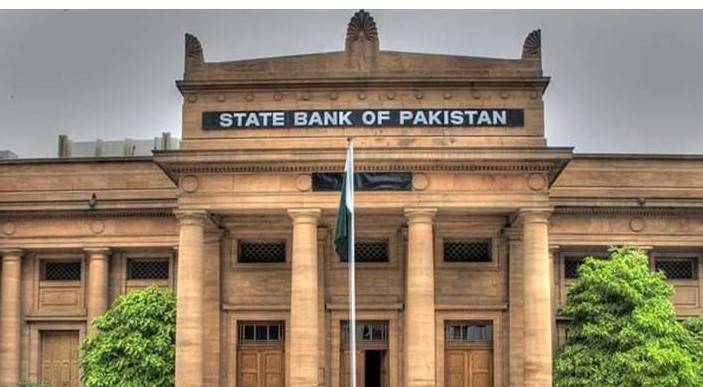

The State Bank of Pakistan’s Monetary Policy Committee (MPC) Monday announced a 100 basis point cut in the policy rate, bringing it down to 11 percent. The new rate will take effect from May 6, 2025.
The MPC cited a significant easing in inflation, particularly over March and April, as the primary driver for the cut. Falling administered electricity tariffs and sustained declines in food prices have helped bring headline inflation to just 0.3 percent year-on-year in April. Core inflation has also slipped to 8 percent, thanks to a favourable base effect and tepid demand conditions.
“The inflation outlook has clearly improved compared to our last assessment,” the Committee noted, though it maintained a cautious tone given ongoing global uncertainties—especially trade tariff tensions and geopolitical instability. In light of these risks, the MPC emphasised that a measured policy stance remains critical for economic stability.
Growth picks up, but risks linger
The second quarter of FY25 saw Pakistan’s provisional real GDP growth hit 1.7 percent year-on-year, nudging cumulative first-half growth to 1.5 percent. Revised data also showed Q1 growth improving to 1.3 percent from the earlier estimate of 0.9 percent.
High-frequency indicators like car and petroleum product sales, as well as electricity generation, point to gradually recovering economic activity. However, large-scale manufacturing (LSM) continues to underperform, weighed down by contractions in certain construction-linked and low-weight sectors. In contrast, the garment, textile, pharma, and automobile industries showed signs of revival. Agriculture painted a mixed picture, with wheat output beating the target but falling short of last year’s level.
Despite challenges, the MPC maintained its FY25 growth projection at 2.5–3.5 percent and sees momentum continuing into FY26—though this forecast is clouded by global volatility and uncertain weather patterns for the upcoming Kharif season.
External accounts see surplus, but financial inflows lag
Pakistan’s current account recorded a healthy surplus of $1.2 billion in March, thanks largely to all-time-high workers’ remittances. This pushed the total surplus for July–March FY25 to $1.9 billion. While exports of value-added textiles grew and the oil import bill shrank due to falling global prices, the trade deficit spiked to $3.4 billion in April, raising some red flags.
Nevertheless, the MPC expects the current account to remain in surplus through FY25. SBP’s foreign exchange reserves are projected to rise to $14 billion by June, contingent on the realisation of expected official inflows.
Tax revenues up, but targets still slippery
The Federal Board of Revenue (FBR) posted a 26.3 percent year-on-year jump in tax revenues for July–April FY25, although collections still lag behind targets. Non-tax revenues are expected to climb, thanks to recent hikes in petroleum development levies. The government’s fiscal discipline has been relatively intact, but the MPC flagged that achieving the targeted primary surplus could be difficult without deeper reforms.
The Committee welcomed recent provincial legislation aimed at taxing agricultural income and underscored the need for broader tax base expansion and restructuring of state-owned enterprises (SOEs).
Credit expansion shows economic confidence
Broad money supply grew by 13.3 percent year-on-year by mid-April, driven by increased lending to the private sector. Credit uptake was particularly strong in textile, chemical, refinery, and fertilizer sectors, and personal loans and auto financing also picked up. This indicates easing financial conditions and improving business confidence. Currency in circulation saw its usual Eid-related bump in March, but has since partially reversed.
Inflation outlook: Cooling off, but not without risks
April’s inflation print came as a welcome surprise—just 0.3 percent—mainly driven by cheaper wheat, subdued global commodities, and electricity price cuts. Core inflation also softened after months of stickiness.
Still, the MPC warned of potential risks ahead: food price swings, energy price adjustments, global supply chain disruptions, and volatile commodity markets could push inflation off-track. Even so, the Committee expects inflation to hover within the 5–7 percent target range over the medium term.
Reporter Ashraf Khan