
NA session heats up as Govt, Opposition clash over fuel price hike
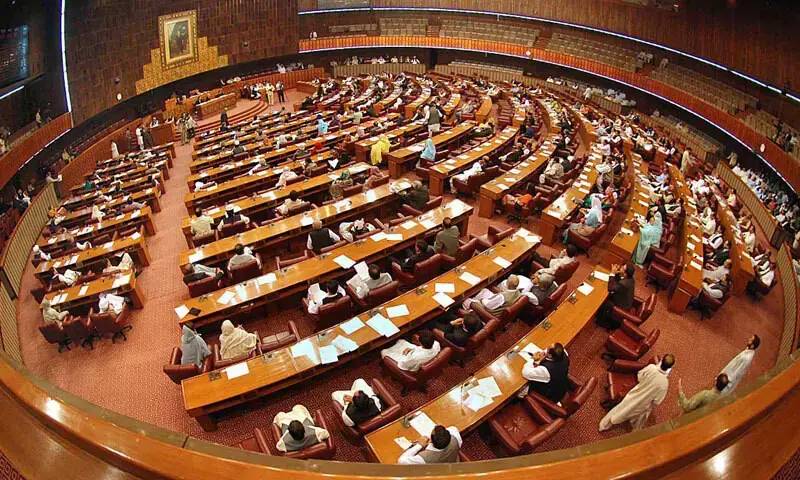

A session of the National Assembly, chaired by Speaker Ayaz Sadiq, Monday witnessed a heated debate on rising petroleum prices, with opposition and treasury members exchanging sharp arguments over the issue.
During the session, MNA Shahid Khattak criticized the government for increasing fuel prices, saying the move had placed an unbearable burden on the public.
He recalled that even a minor increase in petrol prices in the past had drawn strong criticism from current ruling party leaders.
“You have dropped an economic bomb on the poor in the darkness of night,” he said, urging the House to hold a detailed discussion as people struggle to cope with inflation.
MNA Noor Alam Khan also demanded prioritizing debate on inflation over routine proceedings, questioning claims by the government about economic stability. “If the economy is strong, why were petroleum prices increased so drastically?” he asked.
On the treasury benches, Tariq Fazal Chaudhry defended the government, stating that cabinet members had voluntarily refused their six-month salaries and austerity measures such as grounding official vehicles had been implemented. He supported holding a discussion, a view echoed by Syed Aminul Haq and Naveed Qamar.
Responding to the criticism, Finance Minister Muhammad Aurangzeb said the government had been actively managing the situation since tensions escalated in late February.
He noted that a committee was formed by Prime Minister Shehbaz Sharif and that daily meetings had been held for several weeks to monitor developments.
Petroleum Minister Ali Pervaiz Malik attributed the price hike to global factors, particularly disruptions in the oil supply chain following regional conflict. He stated that Pakistan relies on imports for 80–90 percent of its energy needs and that the disruption in the Strait of Hormuz, through which a significant portion of global oil passes, caused a sharp increase in international prices.
He added that the government absorbed financial pressure of up to Rs50–60 billion weekly to shield consumers from the full impact. Malik further said crude oil prices had surged globally, while war-related risks drove insurance costs to unprecedented levels.
Highlighting government efforts, the minister said authorities arranged Rs140 billion to mitigate the oil shock and ensured uninterrupted supply. He noted that Pakistan’s long-term LNG agreement with Qatar faced temporary disruptions, while support from Saudi Arabia helped maintain oil supplies.
Malik also revealed that a high-level consultation was held under President Asif Ali Zardari, bringing together key stakeholders, including military leadership, to devise a unified strategy.
He said a subsidy program had been launched in coordination with provincial governments, including input from Bilawal Bhutto Zardari, and financial assistance had already been transferred to beneficiaries.
Opposition leader Barrister Gohar Ali Khan, however, rejected the explanation, accusing the government of failing to justify the steep increase. He argued that while global conflicts affect all countries, Pakistan had imposed one of the highest price hikes.
“If adequate reserves were available, why was the increase necessary?” he questioned.
In response, Malik said the opposition lacked complete information and offered to brief them further on the complexities of the situation.