
Israel warns of more Lebanon strikes if Hezbollah not disarmed
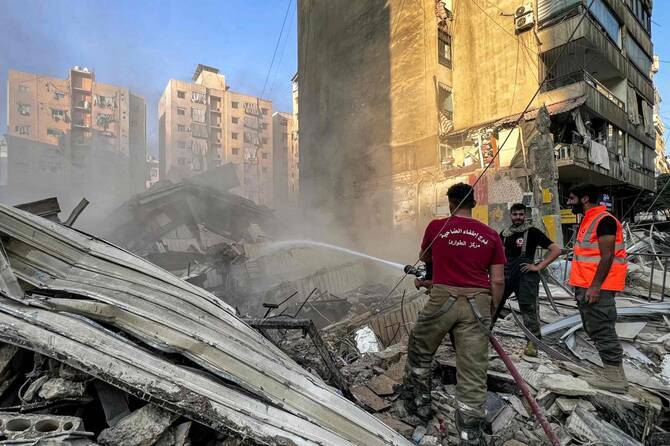

Israel warned Friday that it would keep striking Lebanon until militant group Hezbollah has been disarmed, hours after hitting south Beirut in what Lebanese leaders called a major violation of a November ceasefire.
Thursday's attacks on what the Israeli military said were underground Hezbollah drone factories came after an Israeli evacuation call on the eve of Eid al-Adha, a key Muslim religious festival, and sent huge numbers of residents of Beirut's southern suburbs fleeing.
It was the fourth and heaviest Israeli bombardment of the heavily populated area, known as a bastion of support for Hezbollah, in the six months since a ceasefire deal aimed at ending hostilities between Hezbollah and Israel. The last attack was in late April.
"There will be no calm in Beirut, and no order or stability in Lebanon, without security for the State of Israel," Israeli Defence Minister Israel Katz said in a statement.
"Agreements must be honoured and if you do not do what is required, we will continue to act, and with great force."
The state-run National News Agency reported around a dozen strikes, while Health Minister Rakan Nassereldine said several people were wounded by flying glass.
AFP photographers on Friday saw huge destruction as residents, some wearing masks, inspected the still-smouldering debris and damage to their homes.
A Hezbollah statement said a preliminary assessment showed nine buildings were completely destroyed and dozens of others damaged.
A woman in her 40s who lives near one of the strike sites said she fled on foot with her young children including a three-month-old baby.
"Thank God" the building was not destroyed, she told AFP after returning Friday morning to find the windows of her flat shattered.
'Blatant act'
Fatima, 40, another south Beirut resident, said she and her family were continuing with their usual Eid traditions on Friday.
"Life goes on," she said, adding that she and her children, aged seven and nine, only returned home in the early hours after fleeing.
Hezbollah sparked months of deadly hostilities by launching cross-border attacks on northern Israel in stated solidarity with its Palestinian ally Hamas following its October 7, 2023 attack.
Lebanon's leaders accused Israel of a "flagrant" ceasefire violation by launching strikes ahead of the holiday.
President Joseph Aoun late on Thursday voiced "firm condemnation of the Israeli aggression" and "flagrant violation of an international accord... on the eve of a sacred religious festival".
Prime Minister Nawaf Salam condemned the strikes as a violation of Lebanese sovereignty.
Hezbollah lawmaker Ali Ammar on Friday urged "all Lebanese political forces... to translate their statements of condemnation into concrete action", including diplomatic pressure, to halt the Israeli attacks.
Hezbollah backer Iran called the strikes "a blatant act of aggression against Lebanon's territorial integrity and sovereignty", foreign ministry spokesman Esmaeil Baqaei said.
The war left Hezbollah massively weakened, with top commanders including longtime leader Hassan Nasrallah killed and weapons caches incinerated.
Under the ceasefire, overseen by a monitoring committee whose members include the United States and France, Lebanon should disarm Hezbollah, once reputed to be more heavily armed than the state.
A Lebanese military official told AFP the committee received no warning before the Israeli evacuation order.
The Lebanese army "attempted to go to one of the sites... but Israeli warning shots prevented it from carrying out its mission", the official said, requesting anonymity.
'Refusal to cooperate'
Lebanon's army said the Israeli military's ongoing violations and "refusal to cooperate" with the ceasefire monitoring mechanism "could prompt the (Lebanese) military to freeze cooperation" on site inspections.
The Israeli military had said Hezbollah was "operating to increase production of UAVs (drones) for the next war", calling the activities "a blatant violation" of the truce understandings.
Under the ceasefire, Hezbollah fighters were to withdraw north of the Litani river, about 30 kilometres (20 miles) from the Israeli border, and dismantle any remaining military infrastructure there.
Israel was to withdraw troops from Lebanon but has kept them in five areas it deems "strategic" and has continued to launch regular strikes on south Lebanon.
The Lebanese army has been deploying in the south and removing Hezbollah infrastructure, with Salam saying Thursday it had dismantled "more than 500 military positions and arms depots" in the area.
Israel's military also issued an evacuation warning for the southern village of Ain Qana. It then struck a building there that it alleged was a Hezbollah base, according to the NNA.