
Iran Guards target US bases in Gulf as Israeli attack kills Lebanon troops
Pentagon denies Iranian missiles damaged US 5th fleet headquarters in Bahrain: US military strikes radar installations in Iran: Trump says Tehran has '22 percent' of missiles left: Says Iran negotiations 'going quite well': Tehran says frozen funds key to progress in US talks: Lebanese soldiers killed in Israeli strike
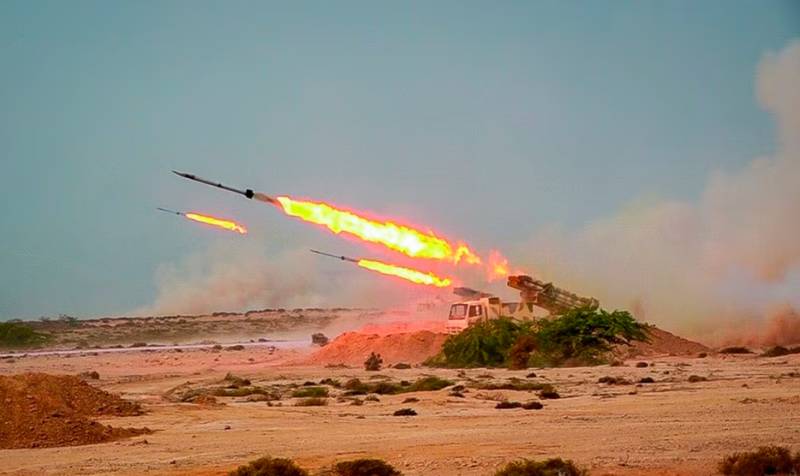

Iran's Revolutionary Guards said Saturday they hit "enemy bases" in the Gulf with a volley of missiles, state media reported, after US forces said they struck radar sites in Iran.
"Following the invasion of the child-killing and terrorist US army into Sirik and Qeshm Island, enemy bases in the region were hit by aerial missiles," state broadcaster IRIB reported, quoting the Guards.
US military officials said Iran launched seven ballistic missiles toward neighbouring Gulf nations of Kuwait and Bahrain on Friday, hours after reporting four Iranian "one-way attack" drones were thwarted.
In a statement posted to X, US Central Command (CENTCOM) said it intercepted six of the missiles Iran launched and the seventh "did not reach its intended target."
"There are currently no reports of harm to US personnel, and Iranian claims of damaging US 5th fleet headquarters in Bahrain are false," the statement said.
Contrary to Centcom statement, explosions were heard early Saturday in Kuwait and Bahrain after US strikes against Iran, according to AFP correspondents.
Multiple explosions were heard in areas near Kuwait International Airport, reported AFP's correspondent in Kuwait, whose military announced it was responding to "hostile" missile and drone attacks.
In Bahrain's capital Manama, an AFP correspondent there reported hearing explosions and interceptions, as air raid alerts rang out.
"The siren has been sounded ..Citizens and residents are urged to remain calm and head to the nearest safe place," the Bahrain’s interior ministry said on X.
US sells $2b anti-drone weapons to Kuwait
The United States announced its approval of a $1.98 billion arms sale to Kuwait, one of the Gulf countries hit by Iranian strikes during the Middle East war.
In a statement on Friday, the US State Department said it would allow purchases of counter-drone technology from defence company Anduril, which was founded by a supporter of President Donald Trump.
"This proposed sale will support the foreign policy and national security objectives of the United States by improving the security of a major non-NATO ally that has been an important force for political stability and economic progress in the Middle East," the statement said.
Earlier this week, Kuwait officials "condemned Iranian aggression" when a drone strike on its international airport killed one person and injured 63 others.
Tehran denied involvement in the attack, saying it was "an error in the American Patriot systems," referring to a US anti-missile battery.
The attacks came despite the April 8 ceasefire that paused the war sparked by the February 28 US-Israeli bombing of Iran, and has largely held despite sporadic exchanges of fire.
US strikes radar installations in Iran
The United States military said it attacked radar sites on Iran's southern coast Friday in the latest flare-up to threaten the ceasefire in the Mideast war.
US Central Command said in a statement that its forces shot down four Iranian one-way attack drones launched toward the Strait of Hormuz, then attacked Iranian coastal surveillance radar sites in the city of Goruk and on Qeshm Island.
"The attack drones posed an immediate threat to regional maritime traffic," while the strikes on radar installations "defend against further attacks," the statement said.
Iranian state broadcaster IRIB reported on Saturday that "several explosions were heard" in Sirik in southern Iran at around 2:30 am (2300 GMT Friday).
"No official source has commented on the origin of the sound or its details," the broadcaster said on Telegram.
Kuwait's military said early Saturday it was responding to "hostile" missile and drone attacks, days after a strike on the country's international airport killed one and wounded dozens.
"Kuwaiti air defenses are currently responding to hostile missile and drone attacks," the military said on X, without specifying their origin.
A ceasefire has been in place between the United States and Iran since April 8, but subsequent talks to try to put a more permanent end to the conflict have so far been unsuccessful.
US President Donald Trump is under pressure to find a way out of the war, which has delivered a shock to markets and proven unpopular at home as midterm elections loom.
Trump acknowledged in an interview with NBC News late Friday that Iran still has war-fighting capacity.
"They have some missiles, they have some drones. I would say, percentage wise, maybe 21, 22 percent of their missiles," Trump said.
Iran's military said Friday it had fired "warning missiles" at two US destroyers in the Gulf of Oman -- a claim promptly denied by the US military.
Two days earlier, Kuwait said it had intercepted 30 ballistic missiles fired as part of "heinous Iranian aggression."
Iran says frozen funds key to progress in US talks
The release of frozen Iranian funds has become a key issue in negotiations between Tehran and Washington aimed at ending their war, a senior Iranian official said.
Iran has been subject to asset freezes and sweeping sanctions by the United States and other Western countries since its 1979 Islamic revolution that toppled the US-backed Shah, Mohammad Reza Pahlavi.
In an interview broadcast on Friday, Mohsen Rezaei, a former commander of the Islamic Revolutionary Guard Corps and an adviser to Iran's supreme leader, said the talks were failing over the release of Iranian assets.
"If he (Trump) wants to reach an agreement with Iran, this $24 billion is a test of trust that Iran wants to have with Trump," he told CNN, according to an English translation of his remarks provided by the channel.
"This is a test that America must pass and the path will be opened," he said, adding that "this is our own money, not America's money".
While there is no official figure for the total amount of frozen Iranian assets, media reports have estimated the sum at between $100 billion and $123 billion.
Iran has conditioned an agreement to end the war on several demands, including the release of the frozen funds.
Fighting broke out on February 28 when the United States, backed by Israel, attacked Iran, killing former supreme leader Ayatollah Ali Khamenei and several senior military commanders.
The attacks prompted Iran to launch retaliatory missile and drone strikes against Israel and US allies in the Gulf.
A ceasefire took effect on April 8 but diplomatic efforts to permanently end the war have yet to produce a settlement.
Among its conditions, Iran has also called for an end to hostilities on all fronts, including in Lebanon, where Tehran-backed Hezbollah fighters have been battling Israel.
Despite their ceasefire, tensions remain high between Tehran and Washington.
Rezaei warned that Iran would "drag the war" beyond the Gulf if the United States resumed hostilities, bringing "another dimension to the war".
But he added that "the possibility of war is low".
Lebanese soldiers killed in Israeli strike
Several soldiers have been killed in an Israeli strike on a vehicle in south Lebanon, Beirut's military said Saturday, days after the two countries announced a conditional truce following talks in the United States.
"A number of military personnel, including an officer, were martyred in a barbaric Israeli raid targeting a military vehicle on the Khardali–Nabatieh road," the Lebanese army said in a statement posted to X.
A ceasefire that was supposed to end the fighting in Lebanon between Israel and Iran-backed militant group Hezbollah took effect on April 17, but has not been respected.
Hezbollah and Israel have frequently exchanged accusations of violating the truce, with each side justifying its attacks with alleged violations committed by the other side.
A further conditional truce was announced by Lebanese and Israeli envoys this week in Washington.
It would require Hezbollah to stop firing, withdraw from near the Israeli border and would see Lebanon's army deploy to new "pilot zones" in the area, where it will exercise exclusive control.
But Hezbollah has rejected the agreement, calling for a full Israeli withdrawal from Lebanese territory.
On Saturday, Israel renewed evacuation orders for five villages in Lebanon's south and east, telling residents to move north of the Zahrani River.
"In light of the terrorist Hezbollah's violation of the ceasefire agreement, the IDF is forced to act against it with force," the Israeli military's Arabic-language spokesman Avichay Adraee posted on Telegram.
Lebanon was drawn into the wider Middle East war when Hezbollah attacked Israel on March 2 to avenge the February 28 killing of Iran's supreme leader.
Israel responded with an extensive campaign of airstrikes in Lebanon and a ground invasion.
Iran insists Lebanon be included in any agreement with the United States to end their wider war.
Lebanese President Joseph Aoun said in an interview with CNN that aired on Friday that Iran must stop interfering in Lebanon.
"It's not your country, it's our country," he said. "It's not your job to interfere into our country."
"They are using Lebanon as a bargaining chip in their negotiation with the United States. It's unacceptable," he added.
"Hezbollah must understand that (there is) no other way but to sit and talk, no other way to solve this problem and to save what's left except through negotiation and diplomacy," Aoun added.
"The majority of the Lebanese people are fed up with war."
Trump says Iran negotiations 'going quite well'
US President Donald Trump on Friday expressed optimism about ongoing negotiations with Iran, saying the situation appeared to be moving in a positive direction despite Tehran recently describing the talks as being at a “deadlock".
Speaking to reporters upon arriving in Wisconsin for an event, Trump said, “The situation with Iran seems to be going quite well."
The remarks stand in contrast to comments from a senior Iranian official, who has argued that negotiations remain stalled and that progress depends on Washington agreeing to release billions of dollars in frozen Iranian assets.
Trump reiterated that the central objective of the US campaign had been to prevent Iran from acquiring a nuclear weapon, suggesting that the goal had largely been achieved.
“We had to extinguish a nuclear weapon," Trump said. “This was going to be a very capable country that was going to have a massive nuclear presence, and we weren’t going to let that happen."
“We’ve largely finished that," he added.
The US president maintained that the crisis could ultimately be resolved through diplomacy, but once again left open the possibility of military action if negotiations fail. “One way or the other, it’s finished," Trump said. “You’ll see the finish with a piece of paper or finished a more difficult way."
Trump also appeared to downplay the scale of the conflict, despite months of military exchanges involving Iran, the United States and Israel. “It’s really not much of a war," he said. “But it’s a military conflict. It’s practice."
Iran FM urges Aoun to save Lebanon from 'real foe'
Iranian Foreign Minister Abbas Araghchi urged on Saturday Lebanese president Joseph Aoun, who had criticised Tehran for interfering in his country, to save Lebanon from its "real foe".
"Based on Mr. Aoun's comments, one would think it's Iran that has occupied 1/5 of Lebanon, displaced 1/4 of Lebanese and bombing his country on daily basis... Save Lebanon from your real foe, Mr. President," Araghchi wrote on X.–Agencies