
Pakistan, Afghanistan resume ceasefure talks in Istanbul

Pakistani and Afghan negotiators resumed ceasefire talks in Turkey on Thursday, aiming to prevent a return to hostilities following their worst clashes in years.
Relations between the neighbours have soured in recent years, with Islamabad accusing Kabul of harbouring militant groups that carry out attacks in Pakistan.
The two countries, former allies who share a 2,600-kilometre (1,600-mile) frontier, agreed on October 19 to a ceasefire mediated by Turkey and Qatar, although its details have not been finalised.
A tense round of negotiations in Istanbul spanning several days ended last week with an agreement to extend the ceasefire and to meet again on Thursday (today). It was not clear who would be leading the delegations.
Host Turkey said at the conclusion of last week's talks that the parties had agreed to establish a "monitoring and verification mechanism" to maintain peace and penalise violators.
Negotiators are now expected to hammer out the details of that mechanism and other issues concerning the implementation of the ceasefire. But mistrust abounds. Both sides have accused the other of not acting in good faith and warned of a resumption of fighting should the truce collapse.
Pakistani officials have also described Kabul as acting like a proxy of arch-rival India, which has forged close ties with the Afghan Taliban since it returned to power in 2021.
The Kabul explosions that sparked the conflict last month coincided with India rolling out the red carpet for UN-sanctioned Afghan Foreign Minister Amir Khan Muttaqi.
Khawaja Asif warns against failure of talks
Defence Minister Khawaja Asif has warned that a collapse in negotiations could push Islamabad into direct conflict with the Taliban.
Talking to a private TV channel, Khwaja Asif cautioned that Pakistan would be forced to consider military options if the discussions fail to yield progress. “If the negotiations fail, the situation will deteriorate further. We have our options. Considering how we are being targeted, we may respond in the same manner," he said.
Before its return to power in Afghanistan, Islamabad had had historically close ties with the Taliban.
At the core of the current dispute are interlocking security grievances that have poisoned relations since 2021.
Islamabad insists that Kabul must stop providing sanctuary to the Pakistani Taliban and other militant groups that allegedly use Afghan territory to plan and launch cross-border attacks.
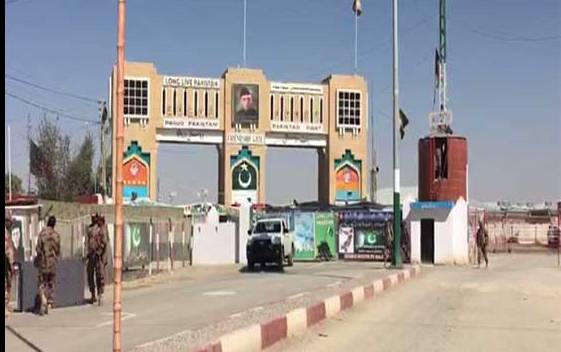
The border between the two countries has been closed for weeks, causing significant economic losses to traders on both sides.
Joint Statement on the Talks Between Afghanistan and Pakistan Through the Mediation of Türkiye and Qatar https://t.co/y1SH30i88Q pic.twitter.com/wH4GW3SC9k
— Turkish MFA (@MFATurkiye) October 30, 2025
Frontier at the heart of tensions
The border between Afghanistan and Pakistan has been a flashpoint during confrontations between the South Asian neighbours, most recently during deadly clashes in October.
The Taliban administration, like previous Afghan governments, does not recognise the border known as the Durand Line, describing it as "imaginary".
However, Islamabad maintains that the frontier demarcation is recognised internationally.
Here's what you need to know as talks resume in Turkey to firm up a fragile truce:
- What is the Durand Line? -
The Durand Line is named after British diplomat Sir Mortimer Durand, who drew the boundary in the late 19th century with the agreement of Afghan authorities of the day.
Stretching more than 2,600 kilometres (1,600 miles) across mountainous terrain, from Iran in the southwest to China in the northeast, it divides Pashtun communities, the ethnic group from which the Taliban largely draws its support, and cuts off Afghanistan from the sea.
The border is highly porous, with some buildings straddling both Pakistan and Afghanistan.
Islamabad has built trenches and fenced most of the border, a move Kabul has repeatedly condemned.
- Who crosses the border? -
Millions of Afghans have lived in Pakistan for decades, many without documentation. Large numbers have been expelled or forced to return in recent years.
Around 500,000 Afghans have returned from Pakistan in 2025 alone, according to the United Nations.
Six official crossing points exist, but many use informal routes.
The border is also a vital commerce artery. Pakistan is Afghanistan's largest trading partner, and trucks routinely carry goods such as fruit and vegetables across.
The Afghanistan-Pakistan Chamber of Commerce estimates losses at around $50 million since the border's closure on October 12.
Only Afghan migrants returning from Pakistan are currently allowed to cross.
- What fuels the tensions? -
Security concerns have intensified since the Taliban returned to power in Kabul in 2021.
Pakistani air strikes in Afghanistan's eastern Paktika province in December 2024, targeting what Islamabad described as "terrorist hideouts", reportedly killed nearly 50 people.
Pakistan accuses Kabul of sheltering armed groups -- especially the Pakistani Taliban (TTP) -- that launch attacks from Afghan soil.
The Afghan Taliban denies harbouring such groups and rejects the border itself, calling it a colonial relic.
Taliban Defence Minister Mohammed Yaqub objected when Qatar referred to the border in its October 19 ceasefire announcement, which Afghan officials linked to the Durand Line. Yaqub told a news conference it "will never be called a 'border'".
- What's next? -
The October clashes, which began with explosions in Kabul and prompted a retaliatory border response from Afghanistan, killed more than 70 people and wounded hundreds in the ensuing violence.
A ceasefire brokered by Turkey and Qatar has largely held, but negotiations in Istanbul last week failed to produce a lasting agreement.
Those talks are set to resume on Thursday.
Both sides have warned that failure to reach a deal could lead to renewed fighting.