
Global fuel price relief to reach consumers soon, says Ali Pervaiz Malik
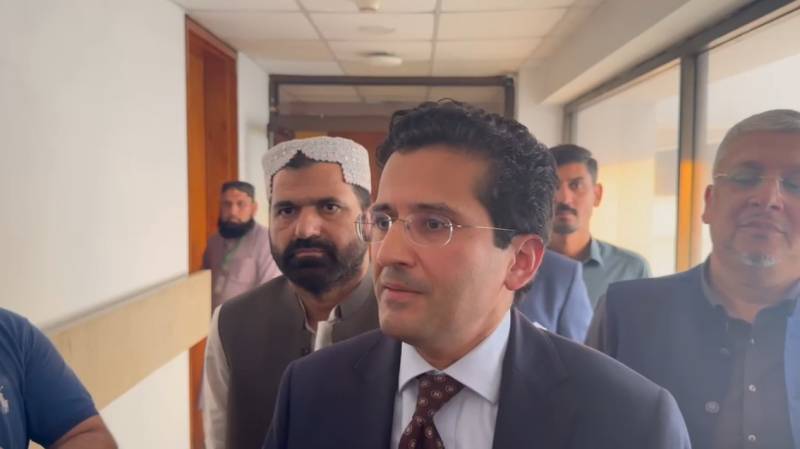

Federal Minister for Petroleum Ali Pervaiz Malik on Tuesday assured that the government would pass on the full benefit of any decline in international petroleum prices to consumers, while outlining a broad reform agenda for the country's petroleum, gas and refining sectors during a meeting of the National Assembly's Standing Committee on Petroleum.
The minister also defended the country's petroleum pricing mechanism, announced progress on refinery upgrades and deregulation, and called for strengthening the Oil and Gas Regulatory Authority (OGRA).
Global price relief to benefit consumers
Speaking to the media after the committee meeting, Malik said reducing the burden of fuel prices on the public remained one of the government's top priorities.
"The full benefit of any decline in the global market will be passed on to the public," he said, adding that the pricing mechanism being used by OGRA had remained in place for nearly two decades.
He explained that OGRA determines petroleum prices by calculating the average of international market prices along with Pakistan State Oil's import costs under a transparent formula.
The minister recalled that Prime Minister Shehbaz Sharif had earlier allocated Rs130 billion to provide subsidised fuel for motorcyclists and public transport users, saying the government's objective was to provide maximum relief while maintaining fiscal stability.
Pakistan still dependent on imported fuel
Briefing the committee, Malik said Pakistan imports around 70 per cent of its petrol requirements, making domestic fuel prices heavily dependent on international markets.
He noted that while crude oil prices had declined globally, refined petroleum products remained comparatively expensive.
"Cheaper crude oil does not automatically mean cheaper petrol," he said, explaining that local prices are linked to the internationally recognised Platts benchmark, while insurance and freight charges had risen sharply during recent regional conflicts.
Despite the challenges, he said Pakistan experienced no fuel shortages during the crisis because the government took timely and difficult decisions to ensure uninterrupted supplies.
"If even one fuel station had run dry, the country could have faced a serious situation," he remarked, noting that some countries had even deployed their armed forces to manage fuel shortages.
Petroleum levy and pricing mechanism
Responding to questions from lawmakers, the minister said petroleum levy collections were deposited into the federal treasury and were an important source of government revenue.
He acknowledged that abolishing the levy would substantially reduce petrol and diesel prices but warned that the government would then have to find alternative sources of revenue or increase borrowing.
Currently, around Rs80 per litre is collected as petroleum levy on petrol and approximately Rs70 per litre on diesel.
He stressed the need to educate the public about the difference between international fuel prices and retail prices in Pakistan.
Major reforms planned in petroleum sector
The minister informed lawmakers that the government was pursuing wide-ranging reforms aimed at increasing transparency and competition in the petroleum sector.
He said deregulation would encourage greater private-sector competition, ultimately benefiting consumers through lower fuel prices.
Malik also announced that the Refinery Upgradation Policy had been submitted to the federal cabinet and expressed hope that it would receive approval at the next cabinet meeting.
Once approved, the policy would pave the way for upgrading local refineries and producing Euro-5 standard fuels.
He emphasised that consumers would not bear the financial burden of refinery inefficiencies, saying the Prime Minister had directed that additional costs should not be passed on to the public.
Gas sector restructuring and energy security
The minister said reforms in the gas sector were progressing with the support of the World Bank.
He said the government was implementing phased deregulation of the gas sector while simultaneously preparing for the privatisation of gas companies.
Malik added that strengthening energy security also required expansion of petroleum infrastructure, including increased oil storage capacity, improved port governance and the introduction of night navigation facilities at ports to accommodate larger cargo vessels.
OGRA chairman appointment under process
The minister said OGRA needed to be strengthened by appointing a permanent full-time chairman.
He revealed that although advertisements had been issued for the position, no suitable candidate had been found.
A summary regarding the appointment had been prepared for the Prime Minister, and if necessary, international experts could also be considered through a headhunting process.
He clarified that OGRA functions under the Cabinet Division rather than the Ministry of Petroleum.
LPG pricing dispute discussed
The committee also discussed the implementation of LPG prices after lawmakers questioned why OGRA was not enforcing officially notified rates.
Malik said LPG prices were linked to international propane and butane prices, noting that only 30 to 40 per cent of Pakistan's LPG demand was met through domestic production, with the remainder being imported.
He added that an LPG pricing dispute remained pending before the courts and that the ministry had issued written instructions to OGRA regarding implementation of notified prices.
The committee directed OGRA to provide a complete record of its enforcement actions and explain why official LPG prices were not being implemented effectively.
CSR funds questioned
Earlier in the meeting, committee members also questioned the use of Corporate Social Responsibility (CSR) funds.
Committee member Naveed Qamar criticised the reported use of CSR funds on consultants, calling it "a criminal act" and insisting that such funds should only be spent for their intended public welfare purposes.
Heated exchange forces adjournment
The meeting ended on a tense note after a heated exchange between committee member Gul Asghar Khan and Petroleum Minister Ali Pervaiz Malik over LPG and RLNG prices.
Parliamentary Secretary Mian Khan Bugti also entered the debate, leading to further arguments between committee members.
Intervening to restore order, the committee chairman urged participants to maintain parliamentary decorum, saying, "This is a committee, not a place for confrontation."
Observing that tempers had flared, the chairman adjourned the meeting before all agenda items could be taken up.