
Jailed Iran rights campaigner Narges Mohammadi wins Nobel Peace Prize
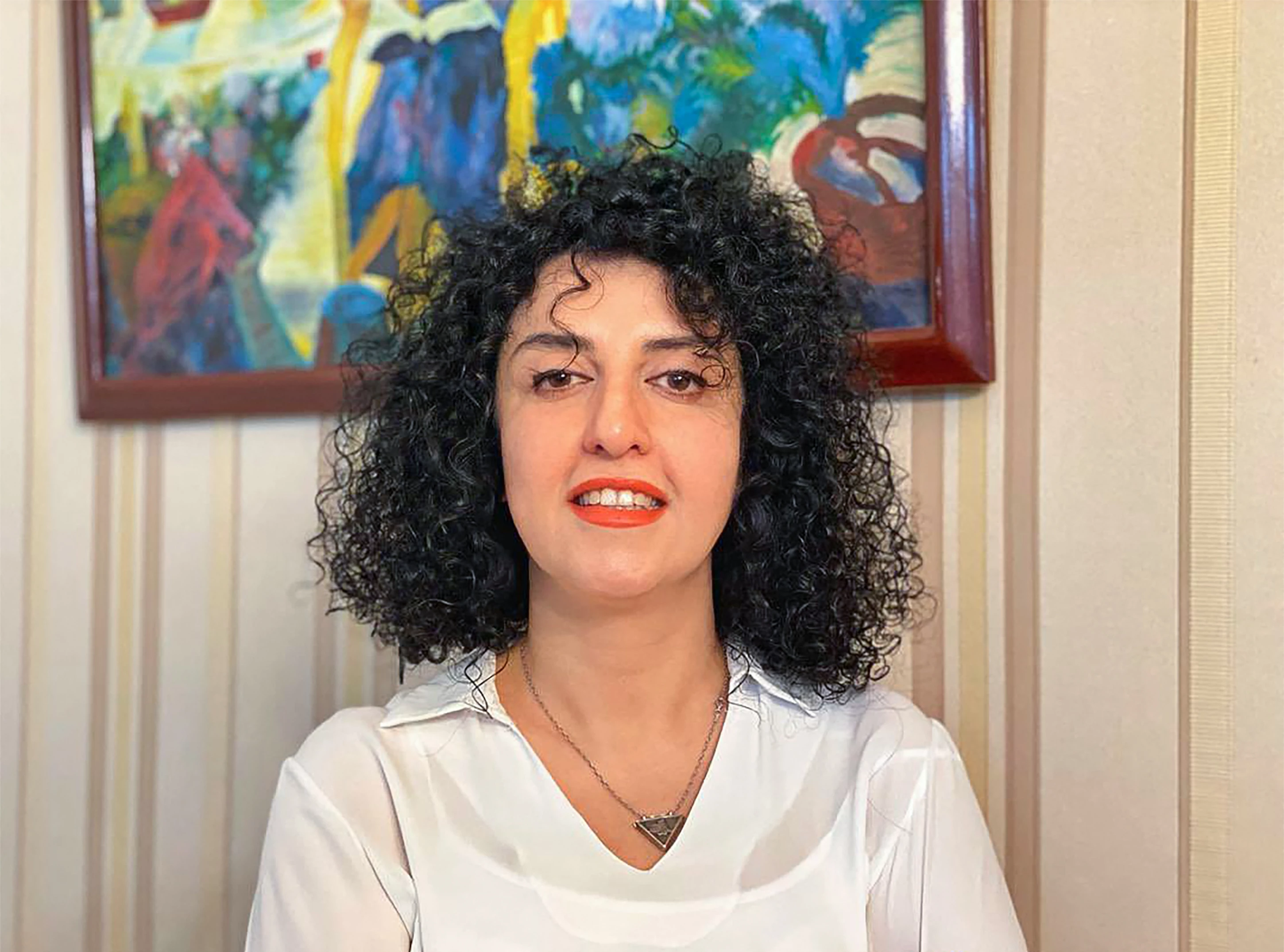

The Nobel Peace Prize was on Friday awarded to imprisoned rights campaigner Narges Mohammadi, honoured for her fight against the oppression of women in Iran.
Mohammadi's award comes after a wave of protests that swept Iran after the death in custody a year ago of a young Iranian Kurd, Mahsa Amini, arrested for violating Iran's strict dress rules for women.
Mohammadi, a 51-year-old journalist and activist, has spent much of the past two decades in and out of jail for her campaign against the mandatory hijab for women and the death penalty.
She is the vice-president of the Defenders of Human Rights Centre founded by Iranian human rights lawyer Shirin Ebadi, herself a Nobel Peace Prize laureate in 2003.
Mohammadi was honoured "for her fight against the oppression of women in Iran and her fight to promote human rights and freedom for all," said Berit Reiss-Andersen, the head of the Norwegian Nobel Committee in Oslo.
"Her brave struggle has come with tremendous personal costs. Altogether, the regime has arrested her 13 times, convicted her five times, and sentenced her to a total of 31 years in prison and 154 lashes," Reiss-Andersen said in the jury's citation.
Speaking to reporters after the announcement, she called for Mohammadi's release.
"If the Iranian authorities make the right decision, they will release her. So she can be present to receive this honour, which is what we primarily hope for," she said.
The recent protests in Iran "accelerated the process of realising democracy, freedom and equality in Iran," a process that is now "irreversible", Mohammadi told AFP last month in a letter written from her prison cell.
She and three other women held with her at Tehran's Evin prison burned their hijabs to mark the anniversary of Amini's death on September 16.
Iran is ranked 143rd out of 146 countries on the World Economic Forum's gender equality ranking.
Iranian authorities cracked down harshly on last year's "Woman, Life, Freedom" uprising.
A total of 551 protesters, including 68 children and 49 women, were killed by security forces, according to Iran Human Rights, and thousands of others were arrested.
The movement has since continued under other forms.
In what would have been unthinkable a year ago, women now go out in public without the headscarf, in particular in Tehran and other big cities, despite the risks.
Wearing the hijab is one of the pillars of the Islamic republic.
Authorities have stepped up controls, using surveillance cameras among other things, and have arrested actresses who post pictures of themselves on social media without the hijab.
- 'No prospect of freedom -
In September, Iran's conservative-dominated parliament announced heavier penalities for women who refuse to wear it.
"This year's Peace Prize also recognises the hundreds of thousands of people who in the preceding year have demonstrated against the theocratic regimes policies of discrimination and oppression targeting women," Reiss-Andersen said.
Offenders will face heavy prison sentences if the "Hijab and Chastity" bill is approved by Iran's Guardian Council.
Incarcerated this time since November 2021, Mohammadi has not seen her children, who live in France with her husband, for eight years.
Considered a "prisoner of conscience" by Amnesty International, she told AFP in her letter that she had "almost no prospect of freedom."
The prize comes on the 20th anniversary of the Nobel Peace Prize awarded to Ebadi, who was honoured "for her efforts for democracy and human rights", especially those of women and children.
This year's prize also symbolically coincides with the 75th anniversary of the UN Universal Declaration of Human Rights.
In 2003, Ebadi defied conservative Iranians by refusing to wear the hijab when she received her prize in Oslo.
If she remains behind bars, Mohammadi will not be able to make the trip to Oslo to receive her award, consisting of a diploma, a gold medal and $1 million, at the annual prize ceremony on December 10.
The Peace Prize has on several occasions honoured jailed activists, including last year when it went to Ales Bialiatski of Belarus, whose prize was accepted by his wife, and Chinese dissident Liu Xiaobo in 2010, whose chair remained empty.
UN urges Tehran to free Nobel winner
The United Nations urged Iran to free Narges Mohammadi and all human rights defenders jailed by Tehran, after the imprisoned women's rights campaigner won the Nobel Peace Prize on Friday.
Mohammadi, 51, a journalist and activist, has spent much of the past two decades in and out of prison for her campaign against the mandatory hijab for women and the death penalty.
"The women of Iran have been an inspiration for the world," the UN human rights office told AFP.
"Their courage and determination in the face of reprisals, intimidation, violence and detention has been remarkable. They have been harassed for what they wear and what they do not wear, and face increasingly stringent legal, social and economic measures against them.
"Narges Mohammadi's case is emblematic of the huge risks that women take to advocate for the rights of all Iranians. We call for her release and the release of all human rights defenders jailed in Iran."
Human rights office spokeswoman Elizabeth Throssell added at a press briefing in Geneva that the Nobel award for Mohammadi "really highlights the courage and determination of the women of Iran and how they are an inspiration".
UN spokeswoman Alessandra Vellucci said respect for women's rights had always been an "extremely important point" for the United Nations.
"We stand for the rights of women around the world, including in Iran," she told the briefing.
UN Secretary-General Antonio Guterres "has been very clear in his defence in the human rights of women and girls in Iran", she added.
Family says Nobel 'historic' in freedom struggle
The Nobel Peace Prize awarded to jailed Iranian rights campaigner Narges Mohammadi is a "historic and profound moment for Iran's fight for freedom," her family said, while regretting she could not share this "extraordinary moment".
Her family said on her official Instagram page, which they maintain while she is behind bars, that the honour belongs to all Iranians, "especially the courageous women and girls of Iran who have captivated the world with their bravery in fighting for freedom and equality".
"This prestigious recognition serves as an enduring testament to the Narges Mohammadi's tireless civic and peaceful work in bringing change and freedom to Iran," the family said.
Mohammadi, now held in Tehran's Evin prison, had even from jail supported the protests that erupted in September last year following the custody death of Mahsa Amini who had been arrested for allegedly violating the dress rules for women.
A longstanding campaigner against the death penalty and the obligatory hijab in Iran, Mohammadi has spent much of the last two decades in-and-out of jail and has most recently been incarcerated since November 2021.
"Regrettably, Narges is not with us to share this extraordinary moment.
"We cannot witness her joyous reaction to this remarkable and splendid news due to her unjust imprisonment," the family said.
But it added: "As Narges always says: Victory is not easy, but it’s certain."