
Moscow Format Meeting urges regional cooperation, rejects foreign military presence in Afghanistan
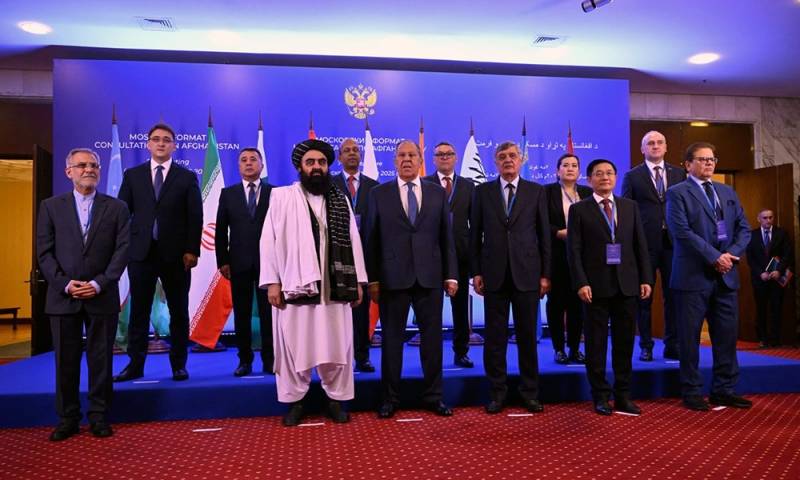

The seventh Moscow Format Consultations on Afghanistan concluded in Moscow on October 7, with participating countries issuing a joint statement rejecting any attempts by foreign powers to deploy military structures in Afghanistan or its neighboring states.
According to a statement from the Russian Embassy, the participants termed such actions “unacceptable,” stressing that they do not serve the interests of regional peace and stability.
The remarks come shortly after reports that former US President Donald Trump had indicated Washington’s intention to once again acquire Bagram Airbase in Afghanistan.
The meeting brought together representatives from Afghanistan, India, Iran, Kazakhstan, China, Kyrgyzstan, and Pakistan, along with special envoys and senior officials from Russia, Tajikistan, and Uzbekistan. A delegation from Belarus attended as a guest, while, for the first time, an Afghan delegation led by Foreign Minister Amir Khan Muttaqi participated as a full member.
The joint statement reaffirmed the participants’ support for an independent, united, and peaceful Afghanistan, emphasising the need to enhance economic and trade relations, investment cooperation, and regional partnerships. The parties underscored the importance of Afghanistan’s participation in regional economic projects and highlighted progress in health, agriculture, poverty reduction, and disaster prevention to help the country achieve self-reliance and sustainable development.
The countries also reiterated their commitment to providing humanitarian assistance to the Afghan people and urged the international community to accelerate aid delivery while avoiding its politicisation.
On security matters, the participants stressed the strengthening of counter-terrorism cooperation at both bilateral and multilateral levels, calling on Afghan authorities to take comprehensive measures to ensure that Afghan territory is not used against any neighbouring country or other state.
Terrorism was described as a serious threat to Afghanistan, the wider region, and global stability. The meeting also underlined the importance of regional coordination and structures in ensuring long-term peace and development.
The participants urged the countries responsible for Afghanistan’s current situation to honour their commitments toward the nation’s economic recovery and future development, reinforcing the need for collective regional responsibility over external interference.