
Major breakthrough as scientists cure mice of breast cancer in two weeks
Vaccines for cancer and heart disease could be ‘ready by end of decade’ saving millions of lives
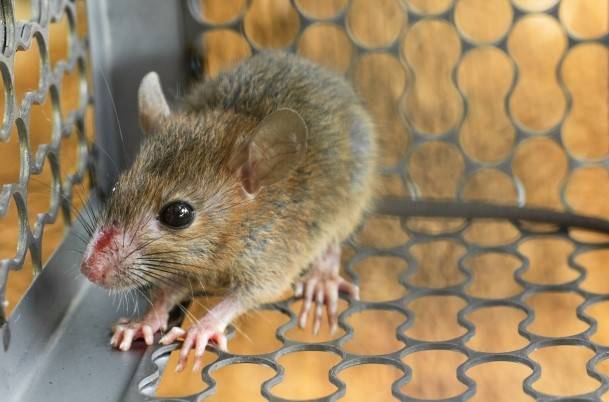

A tiny implanted battery has cured mice of breast cancer in two weeks, sparking hopes for human sufferers.
The device works by creating a tiny current in salt water injected into surrounding tumour tissue which soaks up oxygen.
Research scientists said the battery is self-charging and last up to 500 hours.
The device starves cancer cells of oxygen — a condition called hypoxia.
The technique also boosts the effectiveness of special drugs injected to target areas of hypoxic cells.
Lead author Professor Fan Zhang, of Fudan University in Shanghai, China, said: “After 14 days, the tumours in the five mice that received both the working battery and drug treatment had decreased by an average of 90 per cent — with four of these mice experiencing tumour disappearance.
“Tumours in the other test mice which did not have the combination of battery implant and drugs either remained the same size or increased.”
The drugs used are known as HAPs — hypoxia-activated prodrugs.
They are not currently approved for clinical use due to limited evidence of their effectiveness.
But Professor Zhang explained: “Tumours typically deplete the oxygen in the surrounding non-cancerous tissues as they grow, resulting in the cells becoming oxygen-free, or hypoxic.
"Hypoxia-activated prodrugs aim to take advantage of this feature by only targeting hypoxic cells — minimising damage to healthy cells and reducing side effects.
“The battery can cover the tumour and persistently consume the oxygen within it for more than 14 days.”
But Professor Randall Johnson, of Cambridge University, warned inducing hypoxia in a tumour can increase risk of cancer spread.
He added: “While this didn’t appear to occur in these mice, the costs and benefits of the battery’s use in people needs to be assessed before human treatment.”
Vaccines for cancer and heart disease could be ‘ready by end of decade’
Vaccines for cancer and heart disease could be ready by the end of decade, experts say. Scientists at leading pharmaceutical company Moderna believe millions of lives could be saved as the firm may have ground-breaking treatments on offer in just five years' time.
Researchers say the success of the Covid jab has fast-tracked progress with vaccines for some autoimmune diseases - with 15 years' worth of progress "unspooled" in just 12 to 18 months, reports the Guardian.
Dr Paul Burton, chief medical officer at Moderna, which made one of the Covid vaccines, says the firm is developing jabs to target different cancer types.
He told the outlet: “I think we will be able to offer personalised cancer vaccines against multiple different tumour types to people around the world.”
Dr Burton also said mRNA therapies may become available to treat rare diseases that were "previously undruggable".
He added that in time, multiple respiratory infections could be treated with just one injection.
Dr Burton said :“I think that 10 years from now, we will be approaching a world where you truly can identify the genetic cause of a disease and, with relative simplicity, go and edit that out and repair it using mRNA-based technology.
"I think what we have learned in recent months is that if you ever thought that mRNA was just for infectious diseases, or just for Covid, the evidence now is that that’s absolutely not the case.
“It can be applied to all sorts of disease areas; we are in cancer, infectious disease, cardiovascular disease, autoimmune diseases, rare disease.
"We have studies in all of those areas and they have all shown tremendous promise."
The Sun reported last month how single dose Covid-style cancer vaccines could destroy tumours and stop them coming back.
Research in mice found an mRNA injection, like those used in Pfizer’s coronavirus jab, could tackle cervical cancer caused by the HPV virus.
The disease kills around 900 UK women per year and often has young patients - Big Brother star Jade Goody died of it aged just 28.
A study by the University of Sao Paolo in Brazil found the treatments boosted white blood cells and helped the body battle tumours.
Lead author Dr Jamile Ramos da Silva said: “Even single low doses of the vaccines elicited strong immune responses.
“They led to complete tumour regression in 80 per cent of the mice at advanced stages.”
The mRNA vaccines are injected through a drip and provide a genetic code for the body’s immune system to read and ramp up production of attack cells.–The Sun