
Senate session marks ‘historic day’ amid ceasefire praise, political divides and economic concerns
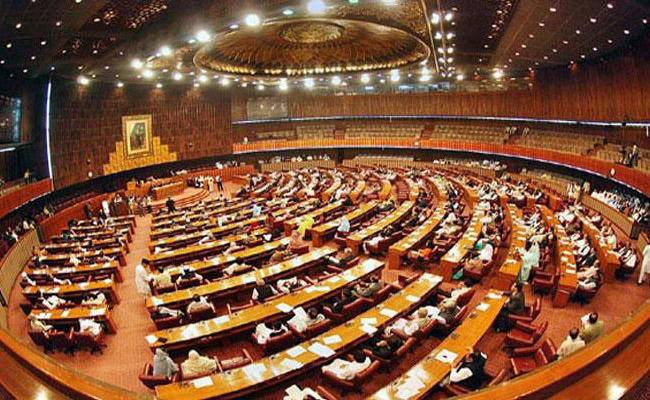

The Senate session began on Wednesday under the chairmanship of Yousaf Raza Gilani, with lawmakers from both treasury and opposition benches describing recent diplomatic developments and a ceasefire between US and Iran as a “historic day” for Pakistan, while also highlighting internal political and economic challenges.
Addressing the House, Minister for Law and Justice Azam Nazeer Tarar apprised the Senate that Friday would be observed across the country as a “Day of Prayer” to express gratitude and seek continued peace in the region.
The minister said it was a historic moment for Pakistan, as the country’s diplomatic efforts had contributed to de-escalation in the region.
He said that under acumen leadership of President Asif Ali Zardari, Prime Minister Shehbaz Sharif, Deputy Prime Minister Mohammad Ishaq Dar, and Field Marshal Syed Asim Munir, Pakistan played an active role in promoting peace and preventing a wider conflict.
The minister said the Federal Cabinet, in its meeting chaired by the Prime Minister, had decided that the entire nation would offer collective prayers on Friday as a mark of gratitude and for lasting peace.
He said Pakistan had been honoured to host key engagements related to the peace process and expressed hope that the ongoing ceasefire and dialogue between Iran and the United States of America (USA) would succeed.
Azam Nazeer Tarar said both the United States and Iran had acknowledged Pakistan’s efforts and agreed to move forward through dialogue, adding that the country would continue to play a constructive role.
He urged both treasury and opposition members to demonstrate unity on the issue, saying that nations progress when they stand together in difficult times.
Addressing the House, Special Assistant to the Prime Minister Haroon Akhtar termed the situation a global crisis and said Pakistan’s leadership had played a pivotal role in managing it.
He credited Prime Minister Shehbaz Sharif, Field Marshal Asim Munir, and Deputy Prime Minister Ishaq Dar for steering the country through complex challenges, including maintaining balanced relations without provoking any side.
Haroon Akhtar said Pakistan’s global standing had improved significantly, noting that countries which once overlooked Pakistan were now acknowledging its role. He expressed optimism about increased foreign investment and industrial growth, adding that the country now had an opportunity to emerge as a strong economic player in Asia. He also highlighted improvements in energy management, stating that the government had addressed the energy crisis more effectively while remaining mindful of the concerns of ordinary citizens.
Senator Sherry Rehman echoed similar sentiments, calling it a historic moment and thanking foreign diplomats for their engagement. She said the situation had brought the region close to severe consequences but Pakistan’s efforts helped avert a major disaster. She acknowledged the contributions of national leadership, including President Asif Ali Zardari, and maintained that Pakistan would be remembered for promoting peace and dialogue. She also remarked that no side could have emerged victorious from such a conflict.
From the opposition benches, PTI parliamentary leader Ali Zafar welcomed the ceasefire as a positive development but criticised aspects of the government’s handling of the situation. He expressed disappointment over recent statements by the foreign minister and warned that external actors could still attempt to destabilise the ceasefire.
He called for the formation of a comprehensive regional security framework and urged the government to brief Parliament on future strategy. Highlighting domestic issues, he pointed to rising inflation, increased costs of oil, food, and transport, and said poverty levels had worsened, stressing the need for urgent economic relief.
Leader of the Opposition Raja Nasir Abbas focused on the principle of justice, stating that sustainable peace could not be achieved without it. He criticised international actions, particularly those of the United States, alleging violations of international law and attributing the escalation of conflict to attacks on civilians.
He said nations were compelled to negotiate only after facing resistance and claimed that certain global powers had been defeated. He emphasised that Pakistan should play a role in promoting dialogue, especially as future negotiations were expected to take place in Islamabad. Domestically, he called for adherence to the rule of law, release of political prisoners, and reconciliation among political forces.
Senator Pervaiz Rashid described the session as a significant moment in parliamentary history and urged that resources spent on military capabilities should instead be directed toward poverty alleviation. He also referred to past political tensions and criticised actions taken against current leadership during opposition years.
Former caretaker prime minister Anwaar-ul-Haq Kakar termed the development a major national success, stating that millions of Pakistanis had contributed to this achievement. He called for continued efforts toward global peace and suggested observing the occasion with prayer and gratitude, adding that Pakistan was moving towards greater self-confidence.
Adviser to the Prime Minister Rana Sanaullah said Pakistan’s diplomatic engagement had helped prevent further escalation in the region and protected the broader Muslim world from conflict.
He praised the leadership for high-level diplomacy and urged political parties to turn planned protests into a day of prayer. Addressing economic concerns, he said fluctuations in oil prices were linked to global market trends and challenged claims regarding profiteering in fuel trade.
JUI-F Senator Kamran Murtaza congratulated both the government and the nation, stating that even the opposition must acknowledge positive developments. He credited the prime minister, foreign minister, and military leadership for their role and called for unity among Muslim countries through a coordinated mechanism. He also emphasised the importance of economic stability and transparent elections.
PTI Senator Humayun Mohmand highlighted internal political challenges, arguing that lasting peace within the country was not possible without transparent elections and political tolerance.
He criticised restrictions on opposition protests and questioned whether the public would benefit from any reduction in fuel prices, alleging profit margins within the refining sector.
Senator Dinesh Kumar described the development as a moment of national pride, stating that Pakistan’s role in promoting peace was being recognised globally. He appreciated the leadership’s efforts and said the entire nation, including minority communities, should celebrate and express gratitude.
ANP leader Aimal Wali Khan also termed the day historic, stressing that dialogue remained the only path forward for nations. He called for lasting peace within Pakistan and better relations with neighbouring countries. He also raised concerns over internal governance issues, including restrictions faced by political representatives.
The session reflected a broad consensus on Pakistan’s diplomatic role in promoting peace at the international level, while also exposing continuing divisions over domestic governance, economic management, and political freedoms.