
Trump's strict policies put American solar expansion at risk
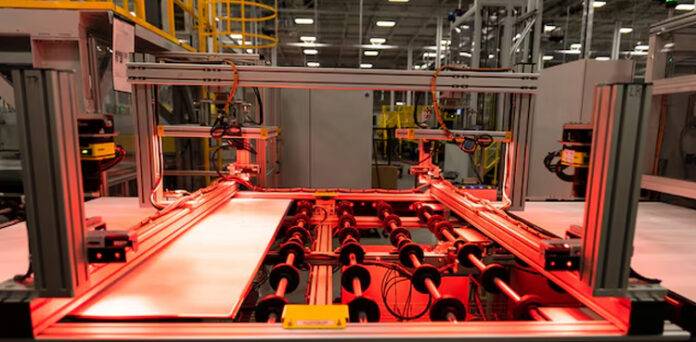

Stern policies targeting China-linked solar companies introduced under US President Donald Trump have disrupted investment in new solar manufacturing plants across the United States, according to a Reuters report.
The report said several major US solar companies, along with banks and insurance firms, are avoiding business with domestic solar factories that have ties to Chinese companies, creating widespread uncertainty in the sector.
At least six new solar manufacturing plants have been affected, many of which were originally developed with Chinese involvement.
The disruption has placed more than one-third of US solar production capacity at risk, the report added.
Major residential solar provider Sunrun is also reportedly moving away from Chinese suppliers as regulatory pressure increases.
Energy lawyer Keith Martin said the tightening restrictions are making it harder to finance solar and battery storage projects, as investors become cautious about compliance risks.
With rising demand from artificial intelligence (AI) data centres, energy analysts say the US urgently needs to expand power generation capacity, with solar and battery storage seen as the fastest solutions.
Aaron Halimi, chief executive of Renewable Properties, warned that the new restrictions could push electricity costs higher for consumers and businesses.
The report also noted that China currently controls around 80% of global solar equipment manufacturing. Chinese firms had invested billions in US projects following the 2022 climate legislation under former President Joe Biden.
According to the Solar Energy Industries Association, about $43 billion in solar investments have already been announced, with expectations of more than 48,000 jobs.
Under new rules, Chinese ownership in companies benefiting from US subsidies is capped at 25%, while firms under “effective Chinese control” are also restricted.
However, the US Treasury Department has yet to issue full implementation guidance, leaving the industry in continued regulatory uncertainty.