
The Mosaic of Terrorism in Pakistan: Part 7
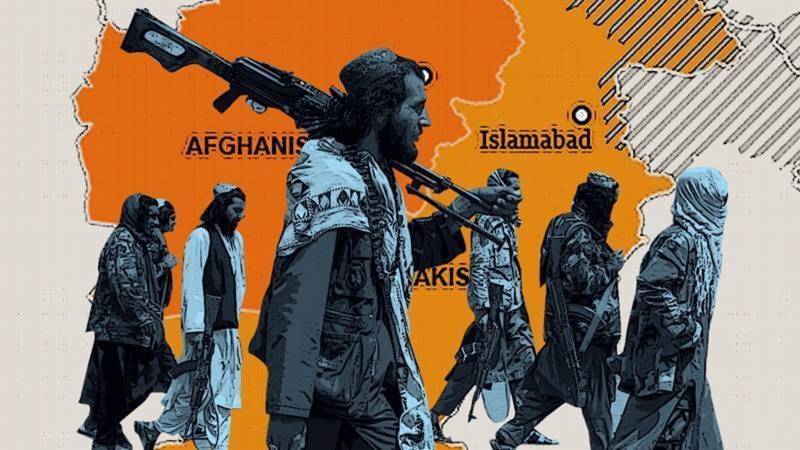
While Pakistan was being ravaged by the twin monsters of sectarian and ethnic terrorism, another much more serious and deadly menace was taking shape, which would haunt us to date. While the country transitioned from military rule to a democratic one, it got enmeshed in the web of international geopolitics. Unfortunately, Pakistan, after the end of the Afghan jehad, allowed itself to become a pivot in the global jihadist landscape, with deadly results for the country.
The Afghan jehad had attracted fighters from a majority of Muslim nations. It had fostered a generation of transnational jihadists who believed that jehad was a religious obligation. Spearheaded by the Americans and bankrolled by various Muslim countries, Pakistan and especially the erstwhile N.W.F.P. became home to thousands of them. Since no ironclad system was in place to keep a check on their activities within the country, and with the millions of Afghan refugees coming and settling in camps in Pakistan, it was nearly impossible to monitor them.
Organised crime became rampant. Inimical spy agencies got hold. Kidnappings started. Bank robberies became more pronounced. Since the majority of these fighters were from an extremist sect, linkages developed across sectarian lines. The provision of arms and ammunition became a flourishing business. This was accompanied by the proliferation of drugs. Thus, the entire fabric of Pakistan underwent a major negative impact.
Al-Qaeda was formed by Osama Bin Laden in 1988 in Peshawar with logistic and manpower support from various jihadist organisations in Pakistan and other countries. It began as a logistical network to support the Mujahideen against the Soviet Union. It shifted its headquarters to Sudan for a while but returned to Afghanistan in 1996, under the patronage of the Taliban militia. They established a foothold in the FATA area and set up training camps in Afghanistan.
Transnational jehadi activity also developed as this nexus grew in strength. After the defeat of the Soviets, the thousands of fighters who were super proud of defeating a superpower, despite being relatively poorly equipped and trained, had no plan of going back to their own countries. The jihadists slowly meandered their way to Chechnya, Bosnia, Kashmir and other theatres. Pakistan witnessed the birth and growth of various jehadist organisations like Lashkar-e-Tayyaba, Harkat-ul-Ansar, Hizbul Mujahideen and others. The cardinal principle of governance — that violence can only be inflicted by the state — was violated, and non-state actors multiplied, gaining power, ultimately challenging the state itself.
Karachi, already bleeding because of sectarian-ethnic strife, also became a refuge for Arab fighters. It became a fertile ground for jehadi fund-raising, recruitment and planning, and a nexus developed between them and the sectarian and ethnic organisations.
Moreover, a large number of students from Uzbekistan, Chechnya, Indonesia and other countries started studying in madrassahs in NWFP and Punjab, morphing the transnational base of militancy into an international syndicate.
The phenomenon called Taliban, which means “student” in Pashto language, had the deepest impact on Pakistan. The Taliban emerged in 1994 during the Afghan Civil War. In 1996, they captured Kabul, and established the Islamic Emirate of Afghanistan. From the concept of strategic depth to strategic blowback, relations between Pakistan and Afghanistan oscillated between co-existence and hostility. From the refugee crises to internal militancy, economic burden, sectarian tensions and other facets, Afghanistan shaped Pakistan’s security, politics and society.
Meanwhile, Tehreek-e-Taliban Pakistan also evolved and started challenging the writ of the state in the tribal areas. They developed linkages with “Punjabi Taliban”, who primarily belonged to southern Punjab. At one time, 9 out of 10 leaders of jihadist organisations belonged to South Punjab. Thus, a deadly jehadi-sectarian nexus developed, resulting in an exponential increase in violence. Afghanistan also provided a safe haven for the TTP and Punjabi Taliban, as after committing a crime, they would run away to it.
Taliban’s hardline Sunni-Deobandi ideology strengthened the sectarian discourse within Pakistan. It led to radicalisation of Deobandi clerics and religious parties. Madrassah curricula also underwent a change. Militant recruitment increased. Resultantly, the sectarian canvas underwent a total overhaul, with the people of Pakistan paying a huge price. It is pertinent to point out that the fear of a two-border war played a role in the calculation of Pakistani policymakers. With India becoming active in Afghanistan and slowly developing its consulates along the Pakistan-Afghanistan border, it was but natural for Pakistan to get rattled.
Thus, the period 1988–1999 witnessed the evolution of a most dangerous Frankenstein monster, which became an existential threat for Pakistan: SEITM (Sectarian-Ethnic-International Terrorism Multitude). Because of a weak central government and the musical chairs played between the two main political parties, the policy and national resolve required to eliminate this monster was absent. The fabric of society was ripped apart. Sects were used to justify the thousands killed in the name of the sectarian divide. Ethnicity further eroded the national unity and the heart of Pakistan bled, without any doctor to stop the flow of innocent blood. And the cherry on this cake was the transnational and international terrorism vendetta which was provided an impetus by the ascendancy of the Taliban in Afghanistan.
It was indeed a very sad era of our history.