
Govt announces parliamentary debate on creation of more provinces next month
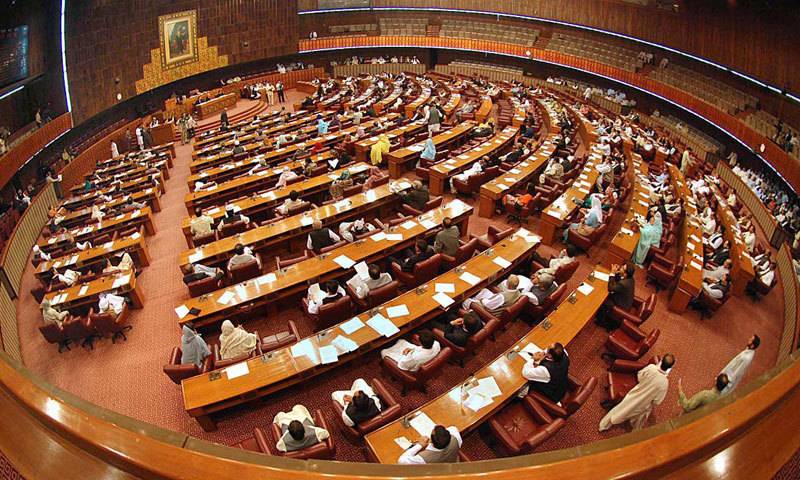

As debate over creation of more provinces gains momentum in the country, Minister for Parliamentary Affairs Tariq Fazal Chaudhry announced on Thursday that the federal government will hold debate on the key topic in the National Assembly and Senate during the upcoming parliament session in October, reported 24NewsHD TV Channel.
Tariq Fazal Chaudhry said that parliament was the appropriate forum for discussion on the creation of new provinces and that different perspectives will be brought before both houses.
He said that the National Assembly and Senate would not holding sessions in September but were expected to meet in October. “The real forum for discussion on the creation of new provinces is Parliament,” Tariq Fazal Ch said.
The announcement comes after weeks of renewed political debate over whether Pakistan’s four-province structure remains suited to a population of around 260 million and whether smaller provinces or empowered local governments would provide better governance and service delivery.
Minister for Parliamentary Affairs clarified that the federal capital was not being considered for conversion into a province. He said Islamabad was instead moving towards a new governance model aimed at improving its administrative affairs. “There is no proposal under consideration to make Islamabad a separate province,” he said, adding that work was under way on a new governance model for the capital. The new provinces issue was reignited in late July when Interior Minister Mohsin Naqvi called for the creation of additional administrative units or provinces, arguing that Pakistan’s existing governance structure had failed to adequately respond to the country’s administrative and development needs.
Naqvi has since defended the proposal, saying the question should ultimately be decided by the people. He has argued that smaller units could improve governance while preserving the cultural identities of existing regions.
Earlier Planning Minister Ahsan Iqbal subsequently proposed either creating as many as 15 new provinces or establishing around 160 fully empowered district governments, saying the existing two-tier federal and provincial system had failed to produce adequate improvements in social indicators.
The debate has since expanded beyond the question of simply creating provinces, with politicians, economists and governance experts discussing stronger local governments, greater fiscal devolution and administrative restructuring as possible alternatives or complementary reforms.
A national debate organised by the Sustainable Development Policy Institute in August brought together representatives of the PML-N, PPP, PTI, MQM-P, JI and JUI-F, as well as policymakers, technocrats and civil society representatives.
South Punjab, Bahawalpur and Hazara
The most prominent existing demands for new provinces include South Punjab, Bahawalpur and Hazara. The demand for a separate South Punjab province has been on the political agenda for years. The National Assembly passed a resolution in May 2012 calling for the creation of a province to be known as Janoobi Punjab and specifically asked the Punjab Assembly to initiate the constitutional process under Article 239(4).
In 2019, the PML-N introduced a constitutional amendment bill in the National Assembly seeking the creation of both South Punjab and Bahawalpur provinces. The proposed South Punjab province was to comprise the Multan and Dera Ghazi Khan divisions, while Bahawalpur province was to comprise the existing Bahawalpur division.
The bill also proposed changes to parliamentary and provincial representation and other constitutional provisions. The demand for Hazara province in Khyber Pakhtunkhwa is also longstanding. The KP Assembly passed a resolution in favour of a separate Hazara province in 2014, while constitutional amendment bills have subsequently been introduced in Parliament.
The issue received another boost last month when former federal minister Muhammad Ali Durrani said a constitutional amendment seeking the restoration of Bahawalpur and creation of Hazara province would be brought before Parliament. He also referred to the longstanding demand for South Punjab.
Istehkam-i-Pakistan Party President Abdul Aleem Khan has also backed Hazara, South Punjab and Bahawalpur provinces, saying growing populations and administrative needs required additional provinces.
Sindh resists division
The debate has encountered its strongest resistance in Sindh, where the Pakistan People’s Party has opposed any move to divide the province. The Sindh Assembly unanimously passed a resolution on September 3 rejecting any proposal to divide Sindh or alter its territorial boundaries.
The resolution described Sindh as a historic, civilisational and constitutional entity and opposed changes to its territorial integrity. The PPP has maintained that any move to create a new province must follow the constitutional procedure and have broad political consensus.
PPP Parliamentarians Secretary General Nayyar Hussain Bokhari said earlier this month that a constitutional amendment was required and that the matter could not be settled through political statements or executive action.
PPP Chairman Bilawal Bhutto Zardari reiterated on Wednesday that the issue should be debated in Parliament rather than at business forums, saying political differences over the matter should be resolved through the parliamentary process.
MQM-P, meanwhile, has maintained its demand for additional provinces and administrative units, particularly in the context of Sindh.
Federal Health Minister Mustafa Kamal said his party had not backed away from the demand, while MQM-P leaders have called for a national dialogue among political parties to build consensus.