
Brazil, US reach deal to combat organized crime
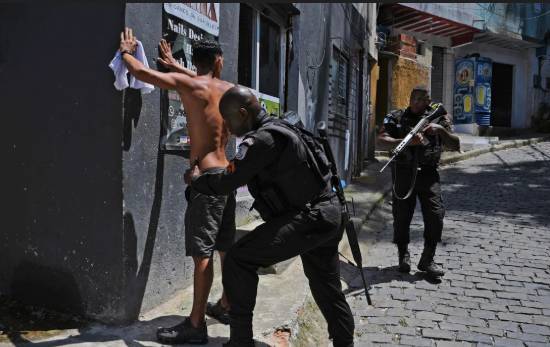

Brazil announced Friday an agreement with the United States to step up information sharing to combat arms and drug trafficking, as Washington intensifies its efforts to crack down on these crimes.
The new deal will see customs authorities in both countries exchange information to identify potential drugs and weapons shipments travelling from the United States to Brazil.
Brazilian Finance Minister Dario Durigan said the initiative was the "first significant step" to boost co-operation in fighting criminal organizations, following a meeting between President Luiz Inacio Lula da Silva and his US counterpart Donald Trump last October.
Over the past 12 months, Brazil has seized more than half a ton of weaponry originating from the United States, Robinson Sakiyama of Brazil's customs agency told a press conference.
Authorities also recovered more than a ton of drugs -- specifically synthetics and hashish -- in the first three months of the year.
The agreement was announced amid a debate over whether the United States plans to designate Brazil's powerful organized crime gangs Comando Vermelho (Red Command) and Primeiro Comando da Capital (PCC) as terrorist groups.
Brazil's Foreign Minister Mauro Vieira told the Globonews broadcaster last month that he had made clear to his US counterpart Marco Rubio that the government "opposes that classification."
Brasilia considers the organized crime factions to be criminal and not terrorist organizations.
Durigan said this question was not raised in a meeting with US officials in Brasilia on Friday before the deal was announced.
A State Department spokesperson told AFP last month that advance notice was not given on such designations.
Customs agency official Sakiyama said that the Brazilian delegation had urged that the new cooperation be conducted "with respect for the sovereignty of both countries."
In March, Trump and allies in Latin America launched a joint initiative named "Shield of the Americas," focused on combating organized crime, illegal immigration and foreign interference on the continent.
Brazil, Mexico and Colombia did not attend the meeting.
Relations between Brasilia and Washington remain strained despite the meeting between Lula and Trump last year which smoothed some diplomatic tensions and led to a reduction in trade tariffs.