
Russia lauds Pakistan’s neutral stance as ambassador outlines Moscow’s view on Ukraine peace efforts
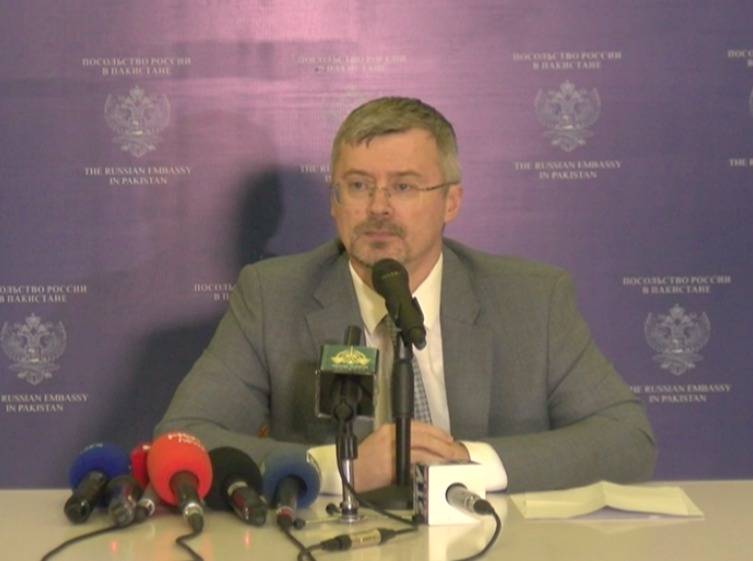

Russian Ambassador Albert P. Khorev, speaking at a detailed press conference at the Russian Embassy, expressed strong appreciation for Pakistan’s neutral and “balanced” position on the Ukraine conflict.
He thanked Islamabad for maintaining neutrality both in its diplomacy and in United Nations deliberations, saying Pakistan’s support for a negotiated settlement aligns with Russia’s preference for a diplomatic solution.
US–Russia Contacts on Peace Plan
Khorev disclosed that a high-level meeting took place in Moscow on December 3, involving Russian President Vladimir Putin and U.S. negotiators Steve Witkov and Jared Kushner. The discussions, he said, lasted five hours and centred on a peace plan put forward by former U.S. President Donald Trump.
According to Khorev, the proposal builds on understandings reached between the Russian and U.S. presidents during talks in Anchorage on August 15, later modified after exchanges involving the U.S., Europe and Ukraine. Despite these efforts, he described the overall negotiation process as “difficult,” citing resistance from European governments.
European Approach Criticised
The ambassador claimed that some European states continue to operate under what he called the “illusion of Russia’s strategic defeat,” and argued that this attitude is hampering diplomatic progress. He also criticised European initiatives such as the “Register of Damage to Ukraine,” the “International Claims Commission,” and efforts toward a special tribunal, insisting Russia views these mechanisms as “null and void.”
Khorev said Moscow considers such steps hostile and accused European states of seeking legal justification to seize frozen Russian assets—measures he warned could destabilise Western financial systems without altering the course of the war.
Claims on Ukrainian Children and Corruption Allegations
Addressing Western accusations concerning Ukrainian children taken to Russia, the ambassador asserted that Ukraine had been unable to provide documentation for even 1,000 cases during this year’s negotiations, offering instead a list of 339 names. He said work on their return continues under Russia’s Presidential Commissioner for Children, Maria Lvova-Belova.
Khorev further levelled corruption allegations against Ukraine’s leadership, claiming Kyiv’s government has been “unconstitutionally” in power since May 2024 and citing a recent scandal involving what he described as $100 million in graft. He alleged that evidence, including bags of cash and luxury fixtures recovered from the home of an associate of President Volodymyr Zelensky, suggested far larger sums.
Sanctions, Energy and Global Economic Impact
The Russian envoy criticised Western sanctions as “illegal,” arguing they have harmed global production, trade and investment. Citing IMF data, he said global growth in 2024 stalled at 3.2%, with near-zero expansion in Europe and Japan. He added that the European Commission itself had acknowledged the severe industrial impact of cutting energy ties with Russia.
Khorev warned that long-term economic pressure on Moscow is accelerating the development of non-Western trade routes and reducing reliance on the dollar and euro.
Eurasian Security Vision
Turning to security architecture, Khorev said the Ukraine conflict has “practically destroyed” the Euro-Atlantic security system built around NATO, the OSCE and the EU. He highlighted Russia’s push for a new Eurasian security framework rooted in the Greater Eurasian Partnership—a concept first proposed by President Putin in 2015.
He noted that the Forum Against Neo-Colonialism, held on November 14 and attended by around 30 countries from Asia, Africa and Latin America, endorsed principles of non-intervention and multipolarity. Russia, he said, is willing to include European states in this emerging security structure if they abandon what he described as hostile postures.
Russia’s Security Posture
While insisting Moscow has “no intention of attacking Europe,” Khorev warned that Russia is prepared to respond fully to any aggression. He referenced Russia’s modern non-nuclear weapons systems, including the “Borysvetnik” missile platform and “Poseidon” submarine drones, as part of its deterrence capabilities.
The press conference, wide-ranging in scope and firm in tone, provided a detailed look at Moscow’s current diplomatic messaging—emphasising gratitude toward Pakistan, criticism of Europe, and Russia’s vision for a new security and economic order across Eurasia.
Reporter: Anwer Abass