
2.4m evacuated from Punjab, 150,000 relocated to safe zones: NDMA chairman
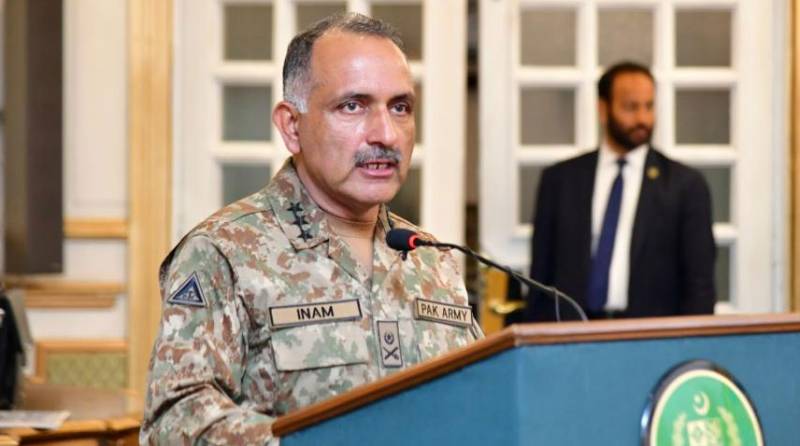

NDMA chairman Lt Gen Inam Haider Malik said that 2.4 million people have been evacuated from Punjab and relocated to safe zones.He said once the water recedes, NDMA will start rehabilitation work on over 5,000 villages and fields.
Addressing a press conference at NDMA office, Lt Gen Inam Haider Malik said it will take some time, around four to five weeks, for the water to dry. Once roads, communications and infrastructure are improved, the rehabilitation work will start. The NDMA chief said that the provincial government, NGOs, military formations and volunteers played their role and assisted the government greatly during flood relief operations.
NDMA Chairman Lt Gen Inam Haider Malik said that currently, 150,000 people have been relocated to safe zones. “This number may rise over the coming days,” he said. “The [Sindh] PDMA, Rescue 1122 and the Sindh government are working according to our instructions.
These are the early warnings we shared some weeks ago with the relevant authorities and both provincial governments, he added. The NDMA chief said that preparations will be made with recommendations from the relevant authorities through a national dialogue process. Pakistan will ready itself on the basis of adaptive resilience, he stated.
NDMA Chairman Lt Gen Inam Haider Malik said that Pakistan is facing the final monsoon spell of this season and added that during the past two days, the floodwater heading south was losing steam. The water in our rivers came in two layers, he explained. “The first is hitting Guddu Barrage, the other is at Panjnad. Based on this information, we expect that it will stabilise in the next two to three days.”
The NDMA chief noted that the prime minister and chief of army staff are properly documenting the losses of lives, homes, livestock and livelihoods since August 25.
“All military formations and responders are part of the national response,” Lt Gen Malik said. He said the unusual flow in the Sutlej, Chenab and Ravi Rivers, which we saw at the start of these floods, have now stabilised.
Climate Change Minister Musadik Malik said that the monsoon will end in the coming days. “We will, God willing, manage the floodwater flowing,” he said. “Within a month, we will present our next plan.” He said that approximately 932 people had died in the floods. Continuing the briefing, Climate Change Minister Musadik Malik said that all of the information about the floodwater gave the authorities a “head start” to evacuate up to 2.5 million people and relocate them to safe zones.
“It takes time for water to reach Sindh, but since August 25 till today, there have been constant reports about how much floodwater there is,” the minister said. “We will do whatever we can to protect our people and children. God forbid there is destruction, but if there’s a disaster in Pakistan, we will not compromise.
“We are all standing together; we have stood with the Punjab government, Khyber Pakhtunkhwa, Gilgit-Baltistan and Azad Jammu and Kashmir. We are one voice, one soul and standing shoulder-to-shoulder with Sindh.” Federal Climate Change Minister Musadik Malik has stated that floodwater from Punjab is expected to reach the Panjnad barrage within two to three days. During a televised briefing alongside NDMA Chairman Lieutenant General Inam Haider Malik, he said that 2,000 tonnes of aid from NGOs have been distributed.
“Military personnel, district administration, welfare groups, provincial officials — they are all out there and putting their lives at risk,” he said. “There has been severe damage, but I want to tell Pakistan that there has been a major effort.” The minister stated that the flooding which started in Sialkot and Narowal crossed through Shahdara and Lahore, before moving to Jhang and through Sargodha.
“The second wave of flooding has reached Panjnad, or it will reach within two to three days,” he added.
The floodwaters that wreaked havoc in Punjab have now entered the Indus River, causing a rapid increase in water levels at the Guddu and Sukkur Barrages, APP reports. According to an official from the irrigation department on Thursday, over the past 24 hours, the water levels at both barrages have risen by thousands of cusecs. The latest data shows that the inflow at the Guddu Barrage stands at 502,861 cusecs, while the outflow is 407,970 cusecs. At the Sukkur Barrage, the inflow is 440,985 cusecs, and the outflow is 412,735 cusecs. The Kotri Barrage has an inflow of 257,754 cusecs and an outflow of 254,354 cusecs.
The rising water levels in the Indus River have inundated several areas in the riverine region, with floodwaters entering numerous villages. The administration and relevant agencies have stepped up their rescue operations to evacuate affected communities. The authorities have urged residents in flood-prone areas to relocate to safer locations and take necessary precautions to ensure their safety. The situation is being closely monitored, and efforts are underway to mitigate the impact of the floods.