
Hopes for peace fade as US-Iran talks end in deadlock
US-Iran talks end without deal after 24-hour lengthy negotiations in Islamabad as key issues remain unresolved: Vance leaves Pakistan without agreement but signals scope for future dialogue:Vance says US showed flexibility, awaits Iran’s response to final offer: Key issues discussed include nuclear programme, sanctions and Strait of Hormuz: Iran cites ‘unreasonable’ US demands; Washington says final offer rejected: Pakistan praised for mediation as leaders vow to continue peace efforts: Pakistan urges both sides to stick to ceasefire despite failed negotiations
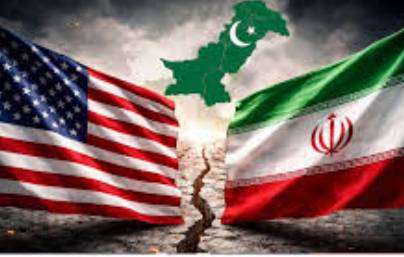

Lengthy negotiations between the United States and Iran concluded in Pakistan without a formal agreement, despite what officials described as extensive and constructive engagement on key regional issues, 24NewsHD TV channel reported on Sunday.
According to the report, United States Vice-President JD Vance said that while no deal had been reached, the talks had been useful in addressing important matters. He noted that Washington had presented its “best offer” and would now wait to see how Iran responds.
He added that the United States had shown flexibility during the discussions, but Iran had chosen not to accept the proposed terms. He also reiterated that Iran must not be allowed to acquire nuclear weapons.
Vance expressed gratitude to Shehbaz Sharif and Syed Asim Munir for facilitating the talks before departing for Washington. He was seen off by Field Marshal Asim Munir, Deputy Prime Minister Ishaq Dar, and Interior Minister Mohsin Naqvi.
Meanwhile, Iranian Foreign Ministry spokesman Esmaeil Baghaei said in a statement that significant issues were discussed during the talks. These included the Strait of Hormuz, nuclear matters, war compensation, sanctions relief, and a complete end to conflict affecting Iran and the wider region.
The Iranian Foreign Ministry spokesperson also expressed appreciation to the government and people of Pakistan for hosting and supporting the negotiations.
Although no agreement was reached, officials on both sides indicated that the dialogue had helped clarify positions and could provide a basis for further diplomatic engagement.
Officials said the negotiations continued for nearly 24 hours, during which both sides exchanged multiple messages and draft proposals.
Discussions covered a wide range of issues, including the Strait of Hormuz, Iran’s nuclear programme, war-related damages, the lifting of sanctions, and a broader end to conflict in the region.
Prime Minister Shehbaz Sharif praised both delegations for their constructive engagement, describing the talks as an important step towards lasting peace. He reaffirmed Pakistan’s commitment to continuing its role as a mediator in efforts to stabilise the region.
Deputy Prime Minister Ishaq Dar, briefing the media, said several rounds of comprehensive discussions had taken place. He expressed hope that both countries would move forward with a positive approach for sustainable peace and prosperity.
Dar added that both sides had responded positively to the Prime Minister’s request to engage in dialogue and acknowledged the role played by Pakistan’s leadership in facilitating the process.
According to AFP and Iranian state media, talks between the United States and Iran aimed at ending the conflict in the Middle East have ended without an agreement in Islamabad, with both sides blaming each other for the failure on Sunday.
AFP reported that United States Vice-President JD Vance left Pakistan after announcing that negotiations had failed to produce a deal.
Speaking at a press conference, he said Washington had presented what he described as its “final and best offer”, but no agreement could be reached.
Pakistan's Dar says 'imperative' for US, Iran to uphold ceasefire
AFP reported that Pakistan's foreign minister insisted on Sunday Washington and Tehran must uphold a ceasefire agreement after marathon talks between the two sides to end the war in the Middle East ended without an agreement.
"It is imperative that the parties continue to uphold their commitment to ceasefire," said Ishaq Dar, whose government hosted the talks and acted as a mediator.
"Pakistan has been and will continue to play its role to facilitate engagement and dialogue between the Islamic Republic of Iran and the United States of America in the days to come," he said in a brief statement broadcast by state media.
Trump says secured victory in conflict with Iran
Same as Al Jazeera reported that Mr Vance had left Islamabad shortly after the announcement, while sources close to the Iranian delegation suggested that the United States had been seeking an excuse to withdraw from the negotiations. They added that responsibility for the next step now lay with Washington.
Meanwhile, United States President Donald Trump said that his country had already secured victory in the conflict with Iran, regardless of the outcome of the talks.
Tensions in the wider region remain high. Iran rejected claims by the United States that two of its vessels had passed through the Strait of Hormuz and warned that any attempt by foreign military ships to cross the waterway would face a strong response.
The collapse of the Islamabad talks has raised fresh concerns about the stability of the ceasefire and the prospects for lasting peace in the region.
In a separate development, Israeli forces continued strikes in southern Lebanon, with at least 13 people reported martyred in an attack on the town of Tefahta.
Vance says talks failed to reach deal with Iran on ending Mideast war
AFP reported Iran and the United States failed to reach an agreement to end the war in the Middle East, US Vice President JD Vance said Sunday after marathon talks in Islamabad, adding that he was leaving negotiations after giving Tehran the "final and best offer".
Vance said Washington was seeking a "fundamental commitment" from Iran that it would not develop a nuclear weapon, but that "we haven't seen that" after holding the highest-level meeting between the two sides since the 1979 Islamic revolution.
However, he signalled that he was still giving time to Iran to consider the offer from the United States, which on Tuesday said it would pause attacks with Israel for two weeks pending negotiations.
The United States and Israel had attacked Iran in February 28, sparking retaliation from Tehran that has plunged the Middle East into conflict and the global economy into tumult.
Iran and the US had entered the talks mediated by Pakistan with maximalist positions, with Washington also piling pressure by saying it had sent minesweeping ships through the vital Strait of Hormuz.
Signs of strain in the negotiations appeared when Iranian media accused the United States of making "excessive demands" on the Strait of Hormuz, through which one-fifth of the world's oil transits.
Separately, US President Donald Trump also contended several hours into the talks on Saturday, he did not care about the outcome.
Instead, Trump insisted the United States had already triumphed on the battlefield by killing Iranian leaders and destroying key military infrastructure.
"Whether we make a deal or not makes no difference to me. The reason is because we've won," Trump said.
Finally after 21 hours of talks in the Pakistani capital, Vance told reporters that no deal could be found yet.
"We leave here with a very simple proposal, a method of understanding that is our final and best offer. We'll see if the Iranians accept it," Vance he said.
- Leverage -
Iran had sought the presence of Vance due to his top position and his reported initial opposition to the war.
Iran was in the middle of negotiations on its nuclear programme in February with Trump's real-estate friend Steve Witkoff and son-in-law Jared Kushner when the United States and Israel to launch their attack. The first salvos of the war killed Iran's long-ruling supreme leader, Ayatollah Ali Khamenei.
Both Kushner and Witkoff were part of Vance's team in Pakistan. The 70-strong Iranian delegation was led by Mohammad Bagher Ghalibaf, the powerful speaker of parliament, and included Foreign Minister Abbas Araghchi.
Iran quickly exercised leverage after being attacked by exerting control over the Strait of Hormuz, sending global oil prices soaring and piling political pressure on Trump as Americans complained of rising costs at the pump.
The US military said Saturday that two Navy warships transited through the strait to begin clearing it of mines and ensure it is a "safe pathway" for tankers.
The Iranian military denied that any American warships had entered the waterway and threatened to respond if they do so.
"Any attempt by military vessels to pass through the Strait of Hormuz will be dealt with severely," the Revolutionary Guards' Naval Command said in a statement, according to state broadcaster IRIB.
It said that Iranian promises of safe passage during a two-week ceasefire applied only to "civilian vessels under specific conditions".
The United States is heavily impacted by soaring oil prices on global markets but imports less directly from the Gulf than many of its European allies -- which Trump has berated for not joining a war that they were not consulted about beforehand.
"We'll open up the strait even though we don't use it, because we have a lot of other countries in the world that do use it that are either afraid or weak or cheap," Trump said.
Iran demands for any agreement to end the war include unfreezing sanctioned Iranian assets and ending Israel's war against Hezbollah in Lebanon, which Vance has said will not be up for discussion in Islamabad.
- Mutual suspicion -
Ghalibaf, speaking shortly after landing in Pakistan, made clear that Iran remained highly suspicious of the United States.
"Our experience in negotiating with the Americans has always been met with failure and broken promises," Ghalibaf said.
Vance said before leaving the United States that if Iran was "willing to negotiate in good faith, we're certainly willing to extend the open hand".
But he said the United States would not be receptive "if they're going to try to play us".
Experts said Iran's delegation showed it was serious about leaving Pakistan with a deal.
"The size, seniority and breadth of the Iranian delegation...signal both Tehran's sincerity in these negotiations and its expectations and confidence," said Trita Parsi, executive vice president of the Quincy Institute for Responsible Statecraft and author of a book on US-Iran diplomacy.
Israel has insisted that the ceasefire does not affect its invasion of Lebanon, where Israel has carried out massive strikes and sent troops in response to fire from Hezbollah, the Iranian-backed Shia Muslim movement.
Lebanese authorities said Israeli strikes on the country's south on Saturday killed 18 people, bringing the total death toll from Israel's operations since the war broke out past 2,000.
Israel and Lebanon will hold their own talks next week in Washington. Israeli Prime Minister Benjamin Netanyahu in a televised statement Saturday said he wanted a peace deal with Lebanon that "will last for generations".
But Israel has ruled out a ceasefire with Hezbollah, signalling it will instead seek to pressure the historically weak central government in Beirut.
Netanyahu said the joint US-Israeli campaign had already succeeded in "crushing" Iran's nuclear and ballistic missile programmes.
Iran has repeatedly denied seeking an atomic bomb and the UN nuclear watchdog reported no imminent threat of Tehran going nuclear.
In Tehran, a 30-year-old resident told AFP ahead of talks that he was sceptical negotiations would be successful, describing most of what Trump says as "pure noise and nonsense".