
Iran declares Hormuz strait closed, US military insists traffic flowing
Iran targets US bases in UAE, Qatar and Bahrain as CENTCOM says 140 precision strikes targeted missile, drone and naval facilities across Iran
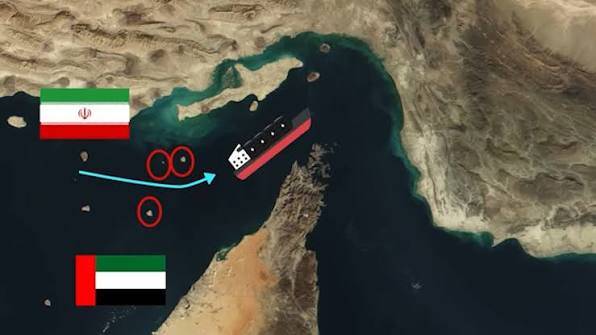

Iran said the Strait of Hormuz was closed on Sunday while the United States insisted it remained open, after the confrontation over the vital waterway again sparked US and Iranian strikes.
The strait, essential to global oil and gas supplies, has become a central point of contention between the two foes, repeatedly leading to exchanges of fire despite an agreement aimed at ending the Middle East war that was struck last month.
The latest exchange was prompted by another Iranian attack on a commercial ship in the waterway whose crew was forced to abandon it after it went up in flames.
Before the war began with surprise US-Israeli strikes against Iran on February 28, there was free passage through Hormuz, but Tehran now insists that it will control the strait, while Washington is adamant it cannot.
"Following this incident... the Strait of Hormuz will be closed until further notice and until the end of American interventions in this region," Iran's Revolutionary Guards said Sunday, according to state news agency IRNA.
The US military's Central Command countered on X that the strait was "open to all vessels seeking to lawfully transit the international waterway".
It said US forces were "positioned and prepared to ensure" freedom of navigation, adding: "Iran does not control the strait. Traffic is flowing."
Control of the waterway has become key leverage for Iran, with an adviser to the country's supreme leader on Sunday saying it was more important than "dozens of atomic bombs".
- 'Hit them very hard' -
Iran said it had targeted two ships in Hormuz, accusing them of ignoring instructions to use an approved transit corridor or "violating regulations", IRNA said.
The attacks prompted a barrage of US strikes across Iran in response, with the US military saying it had hit about 140 targets in its third round of attacks this week.
Iranian media reported explosions in Bandar Abbas, Sirik, Jask and on Qeshm Island, as well as in Khuzestan province, with one soldier reported killed in the southern city of Jask.
US President Donald Trump told CNN that "we hit them very hard last night", and said the Iranian attack had come despite the two sides being close to a deal on Saturday.
"They were giving up everything, and then all of a sudden two hours after that they hit a ship with a drone," he said
Iran's response to the US strikes came quickly, with sirens and explosions heard in Qatar, the United Arab Emirates and Bahrain, AFP journalists and local authorities reported.
Qatar said three people were injured by Iranian attacks, while the UAE issued a warning for incoming missiles but later said they did not enter its territory.
Kuwait also said it was working to intercept an attack, and Jordan said three Iranian missiles fell inside the kingdom.
Iran's Guards said they also hit Oman, which has rarely been targeted.
They claimed to have destroyed "the logistical support centres for naval vessels and the refuelling facilities for US aircraft carriers at the port of Duqm".
Muscat summoned the Iranian ambassador and handed him a formal protest -- a rare move for the sultanate, which has been attempting to balance competing demands from Washington and Tehran.
The attack came just hours after the country hosted Iran's foreign minister to discuss the Strait of Hormuz.
- 'Blatant' attack -
Sunday's attack on a Cyprus-flagged container ship in the waterway left one Indian sailor missing, New Delhi said.
Muscat, meanwhile, said it had rescued 23 crew members from a commercial ship.
Iran said it had fired "warning shots", but the US military accused Tehran of "blatantly" attacking the vessel.
The crew abandoned ship and were on a lifeboat, British maritime agency UKMTO reported, around 17 kilometres (10 miles) east of Oman.
Separate Iranian strikes on ships in Hormuz had triggered fighting earlier this week, along with heated rhetoric.
Iran's supreme leader Mojtaba Khamenei has vowed revenge for the killing of his father and predecessor on the first day of the war, and said Iran had compiled a list of individuals to be targeted.
Trump on Saturday said any attempt to assassinate him would lead the United States to "completely decimate" Iran.
He has declared the ceasefire over while leaving the door open for talks, and mediators have been trying to salvage a diplomatic solution.
The top diplomat for Pakistan, which has been mediating, called for "de-escalation" on Sunday during a phone call with his Iranian counterpart, Islamabad said.
"Dialogue and diplomacy remain the only viable path to resolving disputes and achieving lasting peace," said Foreign Minister Ishaq Dar.
Sirens and explosions were heard in Qatar, the United Arab Emirates and Bahrain, AFP journalists and local authorities reported, the latest escalation to undermine an interim agreement between Washington and Tehran aimed at ending the Middle East war.
The Pentagon said it had struck Iran early Sunday after the Revolutionary Guards fired on a Cyprus-registered container ship they said was sailing an "unauthorised route" through the Strait of Hormuz.
Iranian media reported explosions in Bandar Abbas, Sirik, Jask and on Qeshm Island as well as in Khuzestan province, which borders Iraq, with no immediate reports of casualties. Hours later, air raid sirens sounded over Bahrain, while the United Arab Emirates and Qatar said they intercepted missile attacks.
Iran's Revolutionary Guards had earlier said they struck and stopped a vessel ignoring repeated instructions to use an approved shipping corridor, according to state news agency IRNA. "Following this incident... the Strait of Hormuz will be closed until further notice and until the end of American interventions in this region," the Guards said.
Although Iran called the strike on the ship "warning shots", the US military said Tehran "blatantly attacked" a Cyprus-flagged container ship transiting the Strait of Hormuz.
A crew member was missing and the vessel had been disabled by fire and damage to its engine room, US Central Command (CENTCOM) said. The crew abandoned the vessel and were on a lifeboat, British maritime agency UKMTO reported, adding the incident occurred around 17 kilometres (10 miles) east of Oman.
"In response, the United States is imposing a heavy cost by continuing to degrade Iran's ability to attack civilian mariners and commercial ships freely transiting the strait," it said on X.
CENTCOM said later the military had hit approximately 140 Iranian military targets as it finished the third round of strikes this week, carried out at the direction of US President Donald Trump. US defense secretary Pete Hegseth said simply: "Iran made a poor choice. Now they pay."
Iran's Guards later announced through state media that they had retaliated by striking US bases and radar sites in Jordan, Kuwait, Bahrain and Qatar with ballistic missiles and drones. Earlier strikes by Tehran on vessels in the strait had also triggered exchanges of fire between Iran and the United States, sparking heated rhetoric between the adversaries.
Iran insists on controlling the passage of ships and plans to charge fees, a stance Washington has rejected. Under customary international law, states are not generally permitted to charge tolls on straits used for international navigation.
- 'Vengeance' -
The latest strikes came as Iran's supreme leader vowed revenge for the killing of his father and predecessor, hours after Trump threatened severe reprisals in the event of any attempt on his life.
Trump has declared their ceasefire over while leaving the door open for talks, and mediators have been trying to salvage a diplomatic solution.
"Vengeance is the will of our nation and must inevitably be carried out," new supreme leader Mojtaba Khamenei said in a written message.
"This matter depends neither on my personal existence nor on that of other officials. Whether we are present or not, it will come to pass," he wrote in his first message since his father's funeral this week.
He said Iran had compiled a list of individuals to be targeted. Khamenei has not been seen in public since before the war, and was reportedly wounded in the strikes that killed his father.
Hours earlier, Trump had posted on his Truth Social platform that any attempt to assassinate him would lead the United States to "completely decimate" Iran.
With threats flying, mediators have been working to bring diplomacy back on track.
Iran's Tasnim news agency reported Friday that a Qatari delegation was visiting Iran to "try to reinforce Qatar's role as a mediator".
Iran adviser says Hormuz 'more important' than nuclear bombs
An adviser to Iran's supreme leader said on Sunday that the Strait of Hormuz was more important than "dozens of atomic bombs", vowing to protect the vital waterway.
"This strategic passage is more important than dozens of atomic bombs, and the Islamic Republic of Iran will protect it," Mohsen Rezaee was quoted by the ISNA news agency as saying. Western countries accuse Iran of seeking to create an atomic bomb, but Tehran has insisted its nuclear programme is for peaceful, civilian purposes.