
The Battle for Groundwater and the Lahore High Court’s Historic Judgment
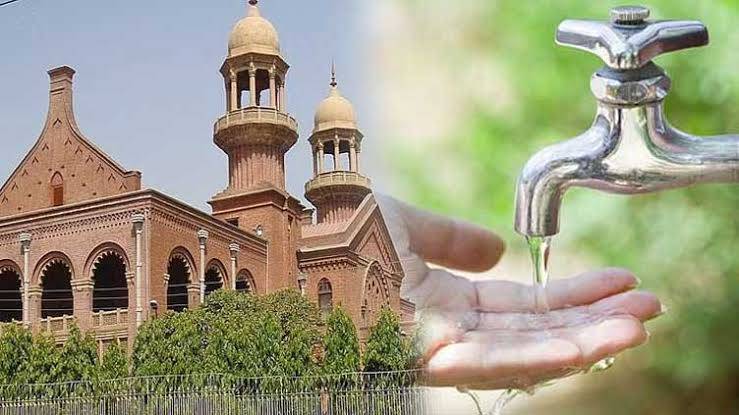

The 288-page judgment issued by the Lahore High Court in the eight-year-old public interest litigation concerning environmental protection and the conservation of groundwater is not merely a judicial order; it represents an environmental manifesto for future generations. The judgment addresses a fundamental question: if we fail to protect water, land, trees, canals and the natural rainwater system today, what will we leave behind for the generations to come?
The case, initiated through a petition filed by citizen Haroon Farooq in 2018, gradually evolved into a broad environmental movement under the continuous supervision of the Lahore High Court. During the proceedings, Justice Shahid Karim brought a range of issues—including environmental protection, pollution, plantation, groundwater, rainwater management, traffic and urban planning—under judicial oversight, despite many of these matters traditionally being regarded as purely administrative concerns.
The greatest significance of the judgment lies in the fact that the court has treated water not merely as a natural resource but as a national and collective responsibility.
Lahore’s Groundwater: A Silent Crisis
Until recently, Lahore’s groundwater level had been continuously declining. Population growth, unplanned construction, excessive use of water at service stations, industrial consumption, irrigation of parks and golf courses, and the reduction of opportunities for rainwater to seep into the ground had placed enormous pressure on the city’s water reserves.
This water crisis did not emerge overnight. It was the result of years of neglect, poor planning and the assumption that water was an unlimited resource.
According to the judgment, over the past five years, continuous monitoring by the High Court and compliance with its various orders have resulted in the stabilization of Lahore’s groundwater level, bringing the process of further depletion to a halt.
If this progress is sustained, it could be regarded as an extraordinary environmental achievement in Lahore’s history.
Water Conservation at Service Stations
The activation of water recycling plants at 563 service stations across Lahore is one of the most significant practical outcomes of the case.
Previously, the use of hundreds of litres of clean water to wash a single vehicle had become routine. With recycling systems now in place, approximately 280 litres of clean water are being saved per vehicle.
At first glance, this may appear to be a relatively small measure. However, when its cumulative impact is considered in a city with millions of vehicles, it becomes a major water conservation initiative.
The real lesson is that protecting water does not always require massive dams or gigantic projects. Sometimes, a recycling plant installed at a small service station can make a significant difference on a collective scale.
Greywater Recycling for Large Houses
Making greywater recycling plants mandatory for houses measuring more than 10 marlas or one kanal is another important step towards sustainable urban planning.
Water used for bathing, washing clothes and other household purposes can, after appropriate treatment, be recycled and reused. This can reduce pressure on clean water supplies.
The real challenge, however, is not merely the creation of laws but ensuring their consistent implementation. If environmental requirements are properly considered while approving plans for new houses, Lahore’s urban infrastructure can be made considerably more resilient to future water shortages.
Golf Courses and Groundwater
The ban on extracting groundwater for the irrigation of golf courses represents an important policy shift.
The restriction concerning major clubs, including Royal Palm and Lahore Gymkhana, reinforces the principle that groundwater is not the property of any particular class, institution or organization. It is a shared natural resource belonging to the entire city.
If ordinary citizens are expected to use water responsibly, the same principle must apply to large institutions, clubs and commercial activities.
Wudu Water: From Waste to Reuse
The recycling of water used for ablution in mosques is perhaps one of the most inspiring and replicable aspects of these initiatives.
Recycling tanks have been made operational at 194 mosques across Punjab to conserve ablution water. The Data Darbar project alone is saving approximately 60,000 to 70,000 gallons of water every day for the irrigation of parks.
This initiative demonstrates that environmental protection is not solely the responsibility of governments, courts or experts. Religious, social and civic institutions can also play a vital role in conserving water.
Restoration of Canals After 35 Years
The restoration of 19 canal channels in Lahore that had remained closed for 35 years is another historic development.
The supply of canal water to areas including the Governor House, Aitchison College, Bagh-e-Jinnah, Model Town and Racecourse parks will help reduce pressure on groundwater.
Lahore was once closely connected with an extensive network of canals and irrigation channels. Urban expansion and construction gradually weakened this system. Restoring these channels is, in effect, an effort to revive the city’s traditional water infrastructure.
The “User Pays” Principle
The collection of more than Rs. 3.35 billion since 2018 in the form of aquifer charges for the commercial use of groundwater is another important aspect of the case.
The underlying principle is clear: the commercial exploitation of natural resources should not be free of cost.
If an institution derives an economic benefit from groundwater, it should also pay for the use of this natural asset. Such charges can discourage unnecessary consumption while generating funds for water conservation, groundwater recharge and environmental projects.
Rainwater: From a Flood Hazard to a Source of Life
During every monsoon, Lahore faces a strange contradiction: on the one hand, roads are flooded, while on the other, concerns continue to grow over declining groundwater levels.
This is not really a contradiction. It is a reflection of the city’s urban planning crisis.
When rainwater runs rapidly into drains and rivers instead of being allowed to seep into the ground, it contributes to urban flooding while simultaneously preventing the natural replenishment of groundwater reserves.
That is why rainwater harvesting, groundwater recharge and flood-management projects are critically important for Lahore’s future.
The Judgment Is Not Just for Lahore
It would be inappropriate to view this judgment solely in the context of Lahore.
Groundwater reserves in many major Pakistani cities are under increasing pressure. Karachi, Islamabad, Rawalpindi, Faisalabad, Multan and other cities are also facing growing risks due to population growth, construction and increasing demand for water.
The Lahore High Court’s judgment can serve as a model for other cities as well. However, for that to happen, provincial and federal institutions must view it not merely as a judicial decision but as a long-term environmental policy framework.
The Court Has Shown the Way; Now It Is the Government’s Responsibility
Within the scope of its judicial authority, the court has provided direction to the administration, monitored implementation and sought to ensure compliance with various environmental measures.
But courts cannot permanently replace the executive and administrative machinery.
The real test now lies with the government, local authorities, WASA, environmental agencies, development authorities, municipal institutions and citizens. The question is whether they will make these initiatives a permanent part of the system.
If environmental priorities change with every government, years of progress could be lost.
The Real Battle Against the Water Crisis Is Still Ahead
The stabilisation of groundwater levels is certainly welcome news, but it should not be regarded as the final destination.
The population is growing, new housing societies are being developed, high-rise buildings are being constructed and demand for water continues to increase.
Therefore, the next stage should not merely be to maintain the current groundwater level, but to increase and replenish underground water reserves.
Every new building should have rainwater storage and groundwater recharge systems. Every major commercial project should have a water-treatment plant. Industrial water consumption must be monitored, canals and channels must be maintained permanently, and effective mechanisms must be established to prevent water wastage.
These measures should no longer be considered optional.
The Final Question
Perhaps the most important aspect of this entire case is not a figure, a project or a judicial order, but a fundamental question:
What kind of Lahore do we want to leave behind for future generations?
A Lahore where people are forced to buy water from tankers, where underground reserves have been exhausted, where every heavy rainfall turns into an urban flood, and where greenery gradually disappears because of water shortages?
Or a Lahore where every drop of rain is conserved, wastewater is treated and reused, the canal system is restored, groundwater reserves are protected, and urban development moves in harmony with the environment?
Justice Shahid Karim’s 288-page judgment points towards the second vision of Lahore.
The court has played its role. Now it is up to governments, institutions and citizens to decide how seriously they will follow this path.
Because the water crisis is not a problem for tomorrow; it is a decision we must make today.
And perhaps the greatest lesson of this historic case is this: when the judiciary, administration and society unite around a common objective, the environmental future of an entire city can be transformed.