
India’s drone strikes in Myanmar again raise alarm over regional sovereignty
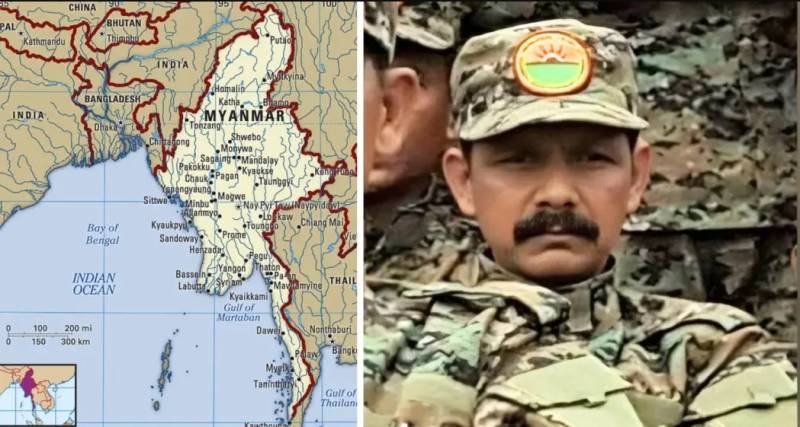

Indian military forces have allegedly conducted a series of cross-border drone strikes inside Myanmar on Sunday morning, triggering strong condemnation and raising concerns over violations of international law and regional sovereignty.
According to Indian media reports, the strikes occurred early on the morning of July 13, when more than 150 Israeli-made drones targeted camps belonging to the banned separatist group United Liberation Front of Assam-Independent (ULFA-I).
The primary target was reportedly located in Myanmar’s Sagaing Region, where ULFA-I’s Eastern Command headquarters is believed to be based.
The operation, allegedly carried out between 2 am and 4 am, marked one of the most aggressive cross-border actions attributed to Indian forces in recent times.
The ULFA-I, in an official statement, claimed that at least three senior commanders were killed in the attacks, including its lieutenant general, Nayan Medhi, known by his alias Nayan Asom.
It further alleged that a follow-up missile strike killed two more top leaders—Brigadier Ganesh Asom and Colonel Pradip Asom—during the funeral rites of Nayan Asom.
Nineteen others, including civilians, were reportedly injured in the attacks.
The outfit labeled the strikes as an act of aggression by “Indian occupational forces” and vowed retaliation.
It asserted that Indian military operations were ongoing along the border, extending from Longwa in Nagaland to Pangsai Pass in Arunachal Pradesh.
However, the authenticity of these claims could not be independently verified.
Despite detailed media coverage and confirmation by ULFA-I, the Indian Ministry of Defence has denied any involvement, with senior army officials stationed in Guwahati and Nagaland denying any knowledge of the operations.
Camps belonging to another rebel group, the People's Liberation Army, were also targeted, the ULFA added.
The ULFA is one of several insurgent groups in India, and wants independence for the northeastern state of Assam, while the PLA advocates for the secession of Manipur state.
Sources familiar with the operation claimed it was a covert mission supervised by India’s national security advisor, Ajit Doval, carried out without formal acknowledgment by the defence ministry.
Critics have accused the Indian government, led by Prime Minister Narendra Modi, of pursuing an increasingly aggressive and expansionist agenda in South Asia.
"This airstrike on Myanmar after Pakistan’s territory is a blatant violation of the country’s sovereignty and the UN Charter," a regional security analyst stated.
"It is part of a broader pattern of militarized foreign policy under the Modi administration."
The timing of the operation is particularly significant, coming amid mounting domestic criticism over the outcomes of India’s internal counter-insurgency campaign known as “Operation Sundoor.”
Analysts argued that the Myanmar strike may have been aimed at deflecting attention from perceived domestic failures while showcasing military strength abroad.
Security and diplomatic observers are alarmed at what they see as a growing Indian appetite for unilateral military action.
"This act underscores India's attempt to establish itself as a regional hegemon," said one geopolitical source.
India already faces strained relations with several of its neighbors—Pakistan, Nepal, China, Bangladesh, and Sri Lanka.
This aggressive posture only deepens instability in the region."
The strike, viewed by some as an extension of India’s Hindutva-driven foreign policy, has raised red flags about the militarization of Indian diplomacy.
Sources claim that the military is being increasingly used for political propaganda, leading to frustration within defense institutions.
In light of the developments, regional experts and diplomatic voices are urging the international community to respond swiftly.
"Global powers and institutions must take immediate notice of India’s escalating aggression," warned one observer. "If unchecked, such operations could plunge South Asia into a dangerous conflict."
As of now, the government of Myanmar has yet to issue a formal response.
Meanwhile, ULFA-I has vowed retaliation and claimed that Indian military operations in the area were ongoing as of Sunday morning.
The episode represents the second alleged drone strike by Indian forces on ULFA-I camps in Myanmar in just over a year, with a similar, though less deadly, incident reported in January 2024.