
Massive whale graveyard nearly 23,000 feet beneath Indian Ocean discovered
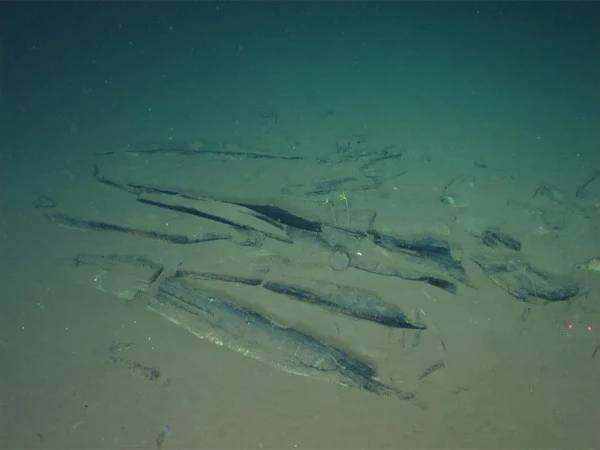

An international team of researchers has discovered a vast whale graveyard nearly 23,000 feet beneath the Indian Ocean, uncovering what scientists describe as one of the most remarkable deep-sea ecosystems ever found, 24NewsHD TV reported.
The extraordinary discovery was made in the Diamantina Fracture Zone in the southeastern Indian Ocean, where researchers identified a sprawling underwater site stretching approximately 745 miles and containing numerous whale remains alongside a variety of unusual marine life.
Scientists reported finding jellyfish, tube worms, brittle stars, sea cucumbers, squat lobsters and saltwater clams in the area. Some of these organisms are believed to be previously unknown to science and could represent entirely new species.
According to researchers, several whale skeletons discovered at the site may be as old as 5.3 million years, making the location one of the oldest known marine graveyards on Earth.
Situated nearly four miles below the ocean’s surface, the silent underwater “city of the dead” serves not only as a repository of ancient whale remains but also as a thriving habitat for deep-sea creatures that have rarely, if ever, been observed before.
Experts say whale falls—when whale carcasses sink to the ocean floor—can sustain unique ecosystems for decades or even centuries, providing food and shelter for specialized marine organisms. The newly discovered site offers a rare opportunity to study how such ecosystems evolve over millions of years.
The research was carried out by a joint team of scientists from Italy, China and New Zealand, who believe the discovery could significantly expand scientific understanding of deep-sea biodiversity, evolution and the long-term ecological role of whale remains in the ocean.
Researchers hope further exploration of the remote region will reveal additional species and provide new insights into one of the least explored environments on the planet.