
Iran–US Talks at the Edge
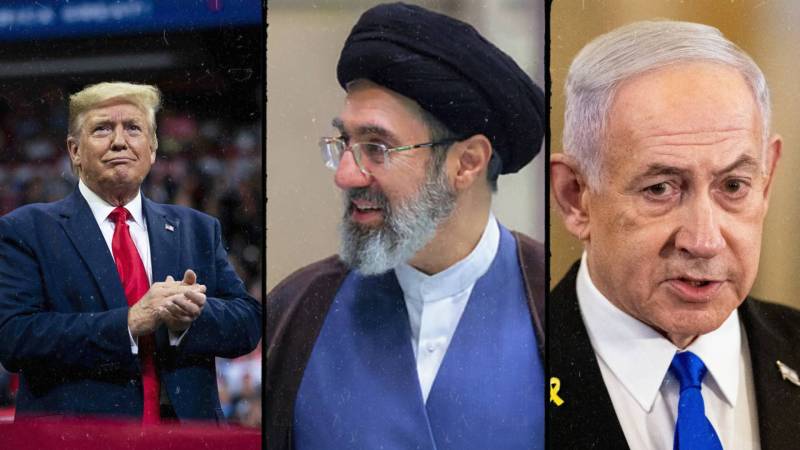

The prolonged and fragile negotiations between the United States and Iran once again exposed the deep strategic mistrust that has shaped relations between Tehran and Washington for more than four decades. Although the discussions never fully collapsed, they repeatedly approached failure because both sides entered the process with conflicting expectations, regional pressures, and political insecurities. The near-breakdown of the talks reflects not only the complexity of the Iranian nuclear issue but also the broader instability that continues to define the Middle East.
At the centre of the crisis remained an entrenched trust deficit. Tehran believes that Washington has repeatedly failed to honor long-term commitments, particularly after the unravelling of previous nuclear understandings. Iranian policymakers argue that agreements with the United States can easily be reversed due to shifting political leadership in Washington. This perception has made Iran deeply skeptical of American guarantees and diplomatic assurances. On the other hand, the United States continues to question Iran’s long-term nuclear intentions, fearing that Tehran could eventually move toward weaponization capability under the cover of civilian nuclear development.
This mutual suspicion created a negotiating environment where every concession was viewed as a strategic risk rather than a diplomatic opportunity. Iran insisted that sanctions relief must come first before any meaningful compromise on uranium enrichment or nuclear transparency. Washington, meanwhile, demanded stronger guarantees and stricter verification mechanisms before easing economic restrictions. In practical terms, both sides wanted the other to make the first move, resulting in repeated deadlock and diplomatic stagnation.
Another major obstacle was Iran’s perception that several American demands crossed the boundaries of national sovereignty. Tehran considers its missile program and regional influence part of its legitimate defense doctrine and strategic deterrence structure. Iranian leaders argue that regional realities, including security threats from Israel and instability across the Gulf region, require a strong deterrent capability. Consequently, demands related to missile limitations or restrictions on Iran’s regional alliances were viewed inside Iran as politically humiliating and strategically unacceptable.
Regional geopolitics further complicated the negotiations. The Middle East currently faces overlapping security crises involving maritime tensions in the Strait of Hormuz, Israeli-Iranian rivalry, proxy conflicts, and growing competition among regional powers. These dynamics reduced the political flexibility available to negotiators on both sides. Israel consistently pushed for a tougher Western position toward Iran, while Gulf states remained concerned about Tehran’s regional ambitions and expanding influence. Under such pressure, compromise became politically costly for both Washington and Tehran.
From Pakistan’s viewpoint, the negotiations highlighted an important geopolitical reality: military pressure alone cannot resolve the Iranian issue. Islamabad has consistently favored diplomacy, de-escalation, and political engagement over confrontation. Pakistan understands that any large-scale conflict involving Iran would destabilize the entire region, disrupt maritime trade routes, intensify sectarian tensions, and threaten already fragile regional economies.
For Pakistan, the consequences of prolonged US-Iran hostility are not theoretical; they are immediate and practical. Pakistan’s economy remains heavily connected to Gulf energy supplies, regional trade corridors, and maritime stability. Any escalation in the Gulf directly affects oil prices, shipping costs, foreign remittances, and investor confidence. Furthermore, instability along the Iran-Pakistan border can negatively impact cross-border trade, local security, and regional connectivity initiatives.
Pakistan therefore prefers a strategic environment where dialogue prevails over confrontation. Pakistan also recognizes that economic engagement with Iran holds significant long-term potential, especially in energy cooperation, border markets, and regional transit connectivity. Continued tensions between Washington and Tehran complicate these opportunities and create uncertainty for neighboring countries attempting to pursue balanced regional policies.
Domestic politics inside both countries also contributed significantly to the fragile nature of the negotiations. In Iran, hardline factions remain deeply suspicious of Western intentions and fear that compromise may be interpreted domestically as weakness. Iranian political leaders must therefore balance diplomatic engagement with ideological resistance. American administrations face pressure from Congress, strategic institutions, and regional allies not to appear lenient toward Tehran. This domestic political pressure narrowed the diplomatic space required for meaningful compromise.
Pakistan’s own diplomatic positioning during this period also deserves attention. Islamabad attempted to maintain balanced relations simultaneously with Iran, the United States, China, and Gulf Arab states. This balancing act increased Pakistan’s diplomatic relevance but also exposed the complexity of regional diplomacy. Pakistan cannot afford hostility with Iran due to geography and border realities, yet it also values strategic cooperation with Washington and strong economic ties with Gulf partners.
The negotiations therefore became more than a nuclear issue; they evolved into a test of regional strategic balance. Pakistan observed that no major stakeholder truly desired a full-scale regional war because the economic, political, and security costs would be catastrophic. Even amid sharp disagreements, both Tehran and Washington appeared aware that uncontrolled escalation could destabilize the entire Middle East and damage global economic stability.
In strategic terms, the negotiations did not completely fail. Rather, they revealed the limits of coercive diplomacy and the necessity of sustained engagement. Both sides continued talking because the alternative — military confrontation — carries unpredictable and potentially disastrous consequences. This alone suggests that diplomacy, despite repeated setbacks, remains the only realistic path forward.
For Pakistan, the lesson is clear. Durable peace in the Middle East cannot emerge through sanctions, military threats, or geopolitical isolation alone. Stability requires recognition of regional security concerns, respect for sovereignty, economic integration, and continuous diplomatic dialogue. Pakistan’s strategic interests lie firmly in regional de-escalation because peace in the Gulf directly contributes to Pakistan’s own economic security and geopolitical stability.
The near-collapse of the Iran–US negotiations ultimately demonstrated that mistrust still dominates international diplomacy in the Middle East. Yet it also showed that dialogue remains indispensable. As long as both sides continue to recognize the unbearable cost of conflict, diplomatic channels are likely to survive — even if progress remains painfully slow.