
Shah of Lahore: Building Pakistan’s new economy of citizenship
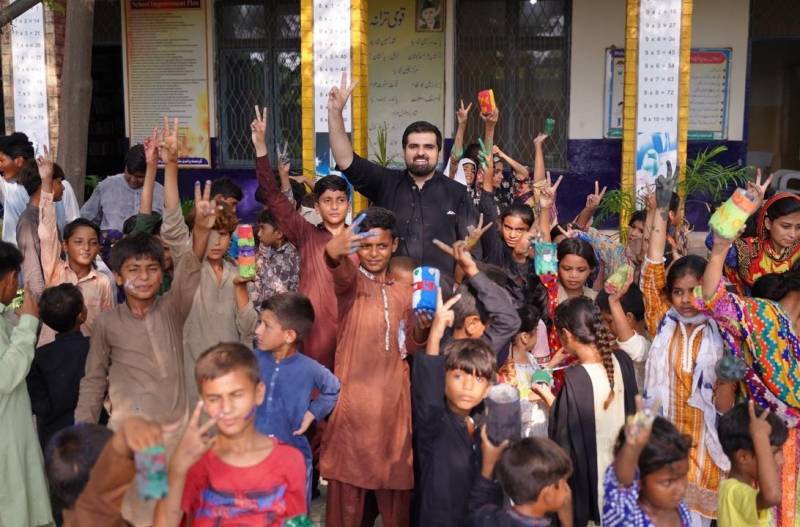

In a time when civic responsibility and technology are reshaping how societies function, Pakistan’s youth are quietly building a new economy of citizenship. At the centre of this change stands Syed Kashf Ahmed, widely known as Shah of Lahore, a development entrepreneur and civic innovator driving technology-based social impact across the country.
“Our work complements Pakistan’s national vision for youth engagement and climate resilience,” Kashf says. “Civic engagement is not charity. It is infrastructure, the social foundation that keeps nations strong.”
Kashf serves as the Founding Project Director of MilKar Pakistan, a nationwide civic network that connects volunteers, universities and communities through data-driven technology. What began as a small coordination idea has grown into Pakistan’s largest civic-engagement platform, mobilising more than 20,000 volunteers, completing 800 development projects and directly impacting 2.8 million citizens across all provinces.
The network now works with 105 universities and 151 partner NGOs that channel volunteers into health, education, environment and disaster-response projects. Under Kashf’s leadership, several universities have started recognising MilKar volunteer hours as credit-bearing components within degree programmes, linking higher education with national service and encouraging students to view civic work as a core academic requirement.
“MilKar’s success shows that structured volunteerism can strengthen human capital, improve employability and build civic leadership,” Kashf explains. “It is a sustainable framework that benefits both society and the economy.”
The approach also supports Pakistan’s growing impact economy by training youth in project management, data collection and digital coordination. Many participants later find work in development, media and technology sectors where their civic experience adds measurable value.
Beyond MilKar, Kashf leads the Digital Development Lab (DDL), a creative and policy-focused platform promoting civic storytelling, interfaith inclusion, cultural diplomacy and climate innovation. The lab’s principle is simple: tell stories that rebuild trust between citizens, government and the environment.
Through DDL’s flagship initiatives, LifeAtLahore and Lahore Cares, the team has executed city-wide storytelling, plantation and bird-feeder campaigns. Together these efforts have restored 15 urban green spaces and engaged more than 10,000 citizens in environmental awareness activities.
DDL has worked with development partners such as the European Union, the United Nations and the High Commission of Canada on civic and environmental projects that promote youth inclusion, interfaith harmony, climate awareness and digital participation. These collaborations highlight Pakistan’s growing role in global civic dialogue and cultural diplomacy.
Kashf’s leadership has earned multiple national and international honours, including the Commonwealth Innovation Award, the QS Impact Biodiversity Award, the P@SHA ICT Awards and the Prime Minister’s Youth Excellence Award at the CAYA Youth Conference.
For him, recognition is not the goal. “What matters,” he says, “is whether we can build institutions that outlive individuals.”
The next phase of his work focuses on creating Youth Majlis, a cross-border civic and cultural leadership network connecting Lahore and global cities through youth-led dialogue, governance innovation and climate action.
“Our generation is ready to move beyond slogans,” Kashf remarks. “The real test is whether we can turn empathy into long-term civic systems that support national resilience.”
With Pakistan entering an era of demographic and digital transformation, leaders like Syed Kashf Ahmed are redefining what development means. Through civic technology and cultural storytelling, Kashf is proving that progress is not measured only in numbers or GDP but also in the strength of communities and the dignity of participation.