
Blockading Strait of Hormuz is a dangerous strategic gamble for United States
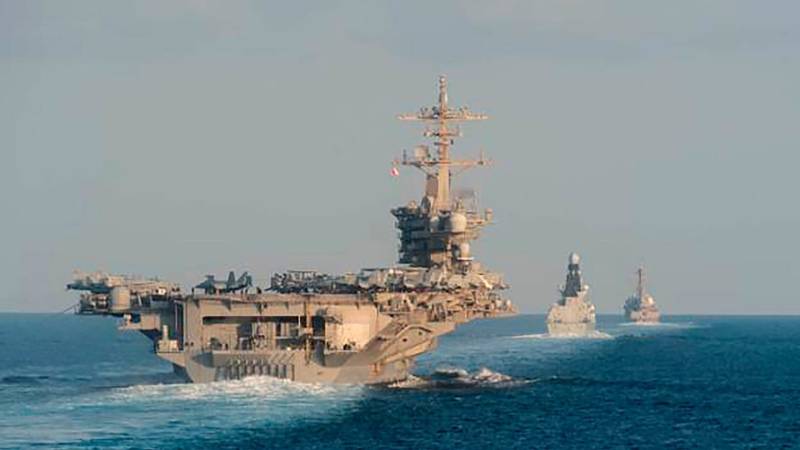

The Strait of Hormuz has long been regarded as the world’s most critical energy chokepoint. Nearly one-third of global seaborne oil passes through this narrow corridor. Against this backdrop, the United States’ increasing military posture in and around the Strait—effectively amounting to a “blockade of the blockade”—is not merely a tactical manoeuvre. It is a move with profound implications for global stability, economic security, and the future of great power competition.
Washington argues that its actions are aimed at safeguarding freedom of navigation and protecting global energy flows, particularly in the light of perceived threats from Iran. Yet, this justification masks a more complex and arguably more confrontational reality. In an already volatile environment, increased militarisation rarely leads to de-escalation. Instead, it raises the stakes, heightens mistrust, and pushes adversaries toward more aggressive postures.
From Tehran’s perspective, such actions are not defensive but coercive. Iran views the American presence as an infringement on its sovereignty and a direct attempt to contain its regional influence. This perception matters. In geopolitics, perception often shapes reaction more decisively than intent. As a result, the likelihood of retaliation—whether direct or through asymmetric means—becomes significantly higher.
One of the most immediate risks is that of accidental escalation. The Strait is a congested waterway, with naval vessels, commercial tankers, drones, and surveillance systems operating in close proximity. In such an environment, a minor miscalculation—a misinterpreted signal, a navigational error, or an unintended encounter—could spiral into a broader military confrontation. History offers numerous examples where unintended incidents triggered disproportionate conflicts.
Economically, the implications are equally severe. Even the perception of instability in the Strait of Hormuz can send oil prices soaring. If this “blockade of the blockade” strategy is intended to pressurise Iran, it simultaneously risks destabilising global markets. Energy-dependent economies in Europe and Asia would bear the brunt, facing inflationary pressures, disrupted supply chains, and slowed economic growth. In an already fragile global economy, such shocks could have cascading consequences.
The China factor further complicates the equation. As the world’s largest energy importer, China relies heavily on oil shipments passing through the Strait of Hormuz. Any attempt by the United States to assert greater control over this passage inevitably intersects with Beijing’s strategic interests. What may appear as a regional containment strategy against Iran could, in effect, be perceived as part of a broader effort to constrain China’s rise. Should China decide to respond—whether diplomatically, economically, or militarily—the crisis could rapidly transcend regional boundaries and evolve into a major power confrontation. China has already warned the United States that any move against China will be reciprocated accordingly. If the United States imposes tariffs on China, the United States will have to face a reciprocal response from China.
Moreover, it is worth questioning whether such a strategy can achieve its stated objectives. Coercive pressure often produces counterproductive outcomes. Rather than compelling compliance, it can entrench resistance. Iran, already under significant sanctions and pressure, may double down on its defiance. This could manifest in various ways: intensifying proxy activities, leveraging regional alliances, or even taking steps to disrupt shipping lanes directly.
The Gulf states, too, find themselves in a precarious position. While many are strategic partners of the United States, they are geographically and economically intertwined with Iran. Any escalation in the Strait would disproportionately affect them—threatening their infrastructure, economies, and internal stability. In essence, they stand to lose the most in a conflict not entirely of their making.
There is also the question of international law. The Strait of Hormuz is recognised as an international waterway, governed by principles that ensure freedom of navigation. Any attempt by a single power to exert unilateral control risks undermining these norms. It sets a precedent that other powers might follow, leading to a more fragmented and contested maritime order.
Ultimately, the concept of a “blockade of the blockade” is inherently paradoxical. While it may be framed as a stabilising measure, its practical effects could be deeply destabilising. It risks transforming a tense situation into an explosive one, drawing in regional actors and potentially global powers.
The United States faces a critical choice. It can continue down a path of militarised deterrence, with all its attendant risks, or pivot toward a more diplomatic and multilateral approach. Engaging Iran through dialogue, involving regional stakeholders, and reinforcing international legal frameworks offer a more sustainable path to stability. Without such a shift, the Strait of Hormuz may once again become the epicentre of a crisis —one whose consequences would extend far beyond the Gulf and reshape the global order in unpredictable and potentially devastating ways.