
Two Pakistani professors join J-PAL at Massachusetts Institute of Technology
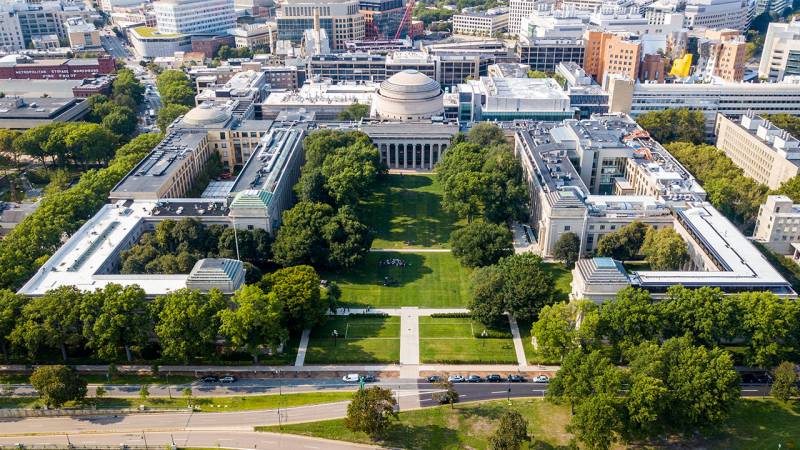

Two faculty members from the Lahore University of Management Sciences (LUMS) have made history by becoming the first academics from Pakistan invited to join the prestigious Abdul Latif Jameel Poverty Action Lab (J-PAL) at the Massachusetts Institute of Technology (MIT), LUMS announced in a statement.
Dr. Ali Cheema, Vice Chancellor of LUMS, is a professor of economics and politics and co-founder of the university’s Mahbub ul Haq Research Center. His work focuses on political economy, development, and governance. Dr. Farah Said, an associate professor of economics, specializes in gender, labor markets, and poverty. She has led several randomized controlled trials (RCTs) evaluating empowerment and development interventions.
“LUMS is proud to share that Dr. Farah Said and Dr. Ali Cheema have been invited to join J-PAL at MIT as Affiliated Professors — the first from any Pakistani university to receive this recognition,” the university said.
Founded by Nobel laureates Abhijit Banerjee and Esther Duflo, J-PAL is a global leader in promoting evidence-based policy to reduce poverty. Its network of Affiliated Professors includes top economists from around the world, including five Nobel Prize winners.
The appointment of Dr. Said and Dr. Cheema highlights their influential contributions to the fields of economics and political economy. Their research has been published in leading academic journals, including the Journal of Political Economy, American Political Science Review, Science, Economic Journal, and American Economic Journal: Applied Economics, LUMS noted.
“This milestone is a significant achievement for LUMS, for Pakistan’s academic community, and for the country as a whole, as we contribute to shaping global economic thought,” the statement added.
Reflecting on the recognition, both professors credited their colleagues, co-authors, and students for their collaborative success.
“This is an exciting time for Pakistani economists,” they said. “More scholars of Pakistani origin are making meaningful contributions to global research on pressing challenges facing our country.”
They also highlighted the growing presence of promising young Pakistani academics. “We’re seeing the rise of a new generation of scholars asking deep, important questions about why economic and political systems often fail to serve their people.”