
The Dizzying Whirl Sugar Game: Export, Fake Shortage, Import and Looting of Consumers
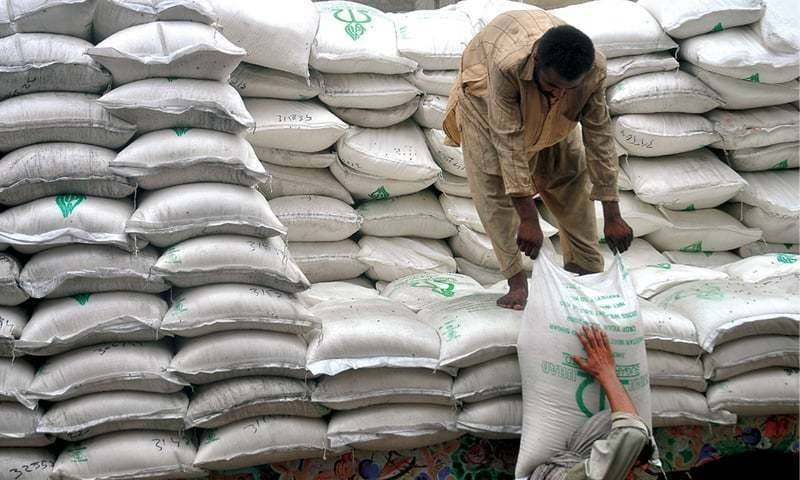

Pakistan’s sugar crisis is no longer simply a question of how much sugar the country produces, how much it exports, or what consumers pay at the grocery store. It has become a test of whether the state can regulate a politically influential industry in the public interest. The latest demand by the Pakistan Sugar Mills Association for permission to export 1.2 m metric tons of surplus sugar—633,000 metric tons immediately and another 564,000 metric tons within a month of the start of next crushing season—once again exposes structural weaknesses in Pakistan’s sugar policy.
On the surface, the demand appears commercially reasonable. If the country genuinely has a substantial surplus, exporting it could generate foreign exchange, improve mills’ cash flows and create storage space before the next crushing season. Sugar mills are businesses, and they have a legitimate right to seek profitable markets. But Pakistan’s history of sugar-price crises means that no export request can responsibly be treated as a routine commercial matter. The central question is not whether there is supposedly 1.2 m tons of surplus sugar. The central question is who verified that figure, how it was calculated, and what will happen to domestic prices after that sugar leaves the country?
This is where the role of government and bureaucracy becomes critical. For years, Pakistan has witnessed a disturbing policy cycle in which sugar can move from “surplus” to “shortage” with remarkable speed. First comes pressure for exports on the argument that domestic production exceeds consumption. Then stocks tighten, market prices rise, and consumers begin paying more. Eventually, the state is confronted with a shortage and pressure emerges for imports. The country therefore end up exporting sugar when it is relatively cheap and importing it later when international prices, freight costs and domestic shortages make it expensive. The result is a system in which private actors capture extraordinary gains while ordinary consumers and the national exchequer absorb high risks.
If such a cycle is deliberately engineered, it can't simply be described as market volatility. It represents a governance failure of potentially enormous proportions. The most troubling aspect is that such a system can't operate at scale without weaknesses—or complicity—within the state machinery. Sugar does not disappear from warehouses overnight. Production figures, stocks, transportation, exports, wholesale prices and imports generate documentary trails.
Government departments, provincial administrations, customs authorities, regulatory agencies and food authorities possess substantial information about the sugar supply chain. If fake shortage is created through excessive exports, hoarding or coordinated market manipulation, the state should have the capacity to detect it.
The question, is not merely whether sugar mills are exploiting consumers. The deeper question is whether parts of the bureaucratic and political system have become so closely intertwined with powerful commercial interests that effective regulation has been weakened.
Pakistan’s repeated sugar crises justify a serious investigation into the system that allows the same pattern to recur. A mafia does not necessarily operate through a single secret meeting or a written agreement. It can evolve into an ecosystem of influence, regulatory capture, political access, information asymmetry, preferential decisions and institutional inaction. This evolved system is more dangerous precisely because it can appear legal on paper.
An export permission may be issued through a formal government decision. A shortage may later be explained by market forces. Import permission may then be granted through another formal decision. Yet when these individually legal decisions are examined as a complete chain, the public may reasonably ask whether the system has been designed—or manipulated—to transfer wealth from millions of consumers to a small group of powerful interests.
The government must stop treating the sugar industry as merely another sector of the economy. Sugar is a basic food commodity. Its price directly affects household budgets of poor families, inflation expectations and political stability. A family can postpone buying a luxury item; it cannot simply eliminate essential food products from its consumption.
Before approving the proposed exports, the federal government should order an independent verification of national sugar stocks. The exercise should include physical stock inspections rather than reliance exclusively on figures supplied by industry representatives. Provincial consumption, monthly demand, commercial inventories, government reserves, anticipated production from the next crushing season and seasonal demand—including Ramadan requirements—must all be incorporated into the calculation.
The government should also establish a minimum strategic reserve that can't be exported under ordinary circumstances. Export permission should automatically be suspended if domestic stocks fall below a predetermined threshold or if retail and wholesale prices begin moving beyond a transparent benchmark.
More importantly, Pakistan needs a permanent sugar-monitoring mechanism rather than an emergency response every time prices explode. Digital tracking of production, warehouse stocks, mill inventories, wholesale transactions, exports and imports could make it considerably harder to manufacture a shortage behind bureaucratic paperwork. The government should know, almost in real time, how much sugar exists, where it is located and who controls it.
The Competition Commission of Pakistan and other relevant investigative institutions should also examine whether there has been coordinated behavior, hoarding, market manipulation or abuse of dominant positions whenever a dramatic mismatch develops between official stocks and market prices. If wrongdoing is established, penalties must reach beyond the cost of doing business. Otherwise, fines become little more than another expense that powerful businesses can absorb.
Why does government repeatedly allow policy to become reactive? A competent agricultural and food-security policy should forecast demand and production several months ahead. Instead, the state often appears to move from crisis to crisis—first responding to surplus, then shortage, then imports, and eventually another surplus. Such instability is not merely inefficient; it creates opportunities for those who understand how government decisions are made.
Bureaucratic discretion can become valuable in such an environment. Whoever knows when an export summary is being prepared, when a regulatory committee will meet, when an import restriction may be relaxed or when a government decision is to be announced can possess a commercial advantage worth billions of rupees. This is why transparency must extend beyond the final decision. The government should publish the data, assumptions, stock estimates and independent assessments on which major sugar-policy decisions are based.
Political influence is another dimension that cannot be ignored. Pakistan’s sugar industry is associated with powerful business and political networks. The existence of political connections does not itself establish wrongdoing. But when an industry repeatedly receives policy decisions that can significantly affect its profitability, the possibility of regulatory capture must be examined rather than dismissed.
The state must also distinguish between protecting the sugar industry and protecting inefficient or politically connected sugar businesses. Farmers, mill workers, transporters and legitimate investors have economic interests that deserve protection.
But protecting an industry can not mean guaranteeing private profits while socializing losses among consumers and taxpayers.
The government must finally understand that an export decision is not an isolated administrative act. It can influence domestic supply months later. Similarly, an import decision is not merely a response to shortage; it can represent a transfer of national wealth to foreign suppliers, traders and intermediaries. Every decision must be evaluated across the entire supply chain.
The export of 1.2 m metric tons should become an opportunity for institutional reform rather than another episode in the familiar sugar drama. If the surplus is genuine, transparent exports can be permitted. But they should be based on independently verified stocks, guaranteed domestic reserves, consumer-price safeguards and strict monitoring. And if the surplus figures cannot withstand independent scrutiny, the government should have the courage to reject or revise the export request.
Pakistan can't afford a system in which the profits are privatized while the shortages are socialized. It can't continue exporting when the market is comfortable, importing when prices are high, and asking ordinary citizens to pay the difference. Nor can bureaucracy remain a passive observer while politically influential commercial networks shape decisions that affect millions.
The real “sugar mafia,” should not be understood merely as a collection of mill owners. It should be understood as a networked system in which commercial power, political influence, bureaucratic discretion, weak oversight and regulatory gaps reinforce one another.