
Poaching, retaliatory killings, illegal trade: Pakistan’s pangolin population down by 80%
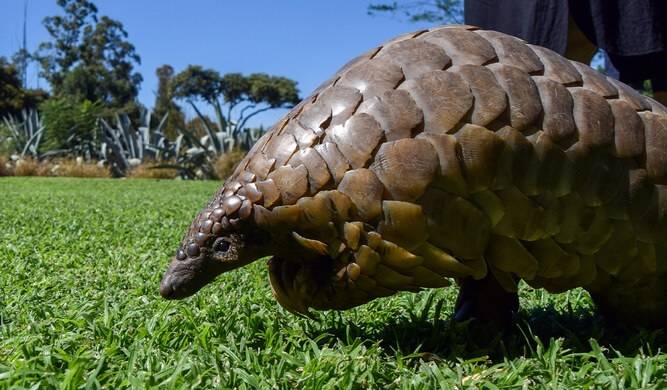

The World Wide Fund for Nature-Pakistan (WWF-Pakistan) reported on Friday that the population of pangolins in Pakistan has seen a significant decline, dropping by at least 80 percent compared to previous figures.
The Indian pangolin, the only species of pangolin found in the country, is classified as endangered on the IUCN Red List of Species. WWF-Pakistan stated in a press release marking World Pangolin Day, held on the third Saturday of February, that the species has vanished from 80 percent of its original range, particularly in the Potohar region.
"While it is difficult to pinpoint exact population figures, the overall number of pangolins has seen a severe decline," WWF-Pakistan explained.
The IUCN also predicts that the global population of the Indian pangolin may decrease by about 50 percent over the next two decades.
In Pakistan, the Indian pangolin is protected by both federal and provincial wildlife laws. Since 2016, it has been listed under Appendix I of CITES, which legally prohibits international trade of the species and its products, including scales.
Despite this, the pangolin faces numerous threats, including poaching, retaliatory killings, and illegal trade. The species is heavily hunted for its scales, which are sought after in traditional medicine and black markets. Habitat loss due to urbanization, agricultural expansion, and deforestation further exacerbates the problem. Additionally, studies show that Pakistan serves as a transit point for the illegal smuggling of pangolin scales to China and Southeast Asia, heightening the risks to their survival.
WWF-Pakistan has called for urgent actions from provincial wildlife departments and law enforcement agencies to curb illegal trade and increase penalties for poaching. There is also an immediate need to enhance monitoring of trade routes to prevent the smuggling of pangolin scales.
Muhammad Jamshed Iqbal Chaudhry, Senior Manager of Research and Conservation at WWF-Pakistan, emphasized the importance of these species in maintaining ecological balance. "To ensure these unique creatures can thrive, we must tackle illegal wildlife trade, safeguard their habitats, and undertake efforts such as reforestation projects in key areas like the Potohar Plateau, Margalla Hills, and Azad Jammu and Kashmir," he said.
Chaudhry also recommended the establishment of community-based Pangolin Protection Zones (PPZs) in critical population hotspots such as Rawalpindi (Punjab) and Mirpur (AJK), along with scientific studies to assess the pangolin population and distribution in Pakistan.
WWF-Pakistan praised the development of the Pangolin Conservation and Management Plan for Pakistan (2018-23) and the implementation of SMART (Spatial Monitoring and Reporting Tool) in key pangolin habitats in Punjab. A coordination system with Rescue 1122 has also been established to encourage public participation in reporting illegal pangolin trade to wildlife authorities. Additionally, strategies for managing human-pangolin conflict through SAFE Systems have been developed.
Currently, WWF-Pakistan is working with the provincial wildlife departments of Khyber Pakhtunkhwa (KP) and Punjab on pangolin conservation. The "Saving the Pangolin of Pakistan" project is being carried out in KP, where species distribution surveys have already been completed. A Pangolin Protection Zone, supported by community-based monitoring, is being set up in the southern districts of KP.
Furthermore, WWF-Pakistan plans a joint initiative with the Tikki Hywood Foundation (Zimbabwe) to install radio transmitters for studying the pangolin's habitat and establish a rehabilitation center.