
Trump blames Israel for delay in Iran deal signing
| Says Mideast deal is on despite Israeli strikes on Beirut | Iranian chief negotiator Ghalibaf says no point in continuing peace talks with US after Israeli attack
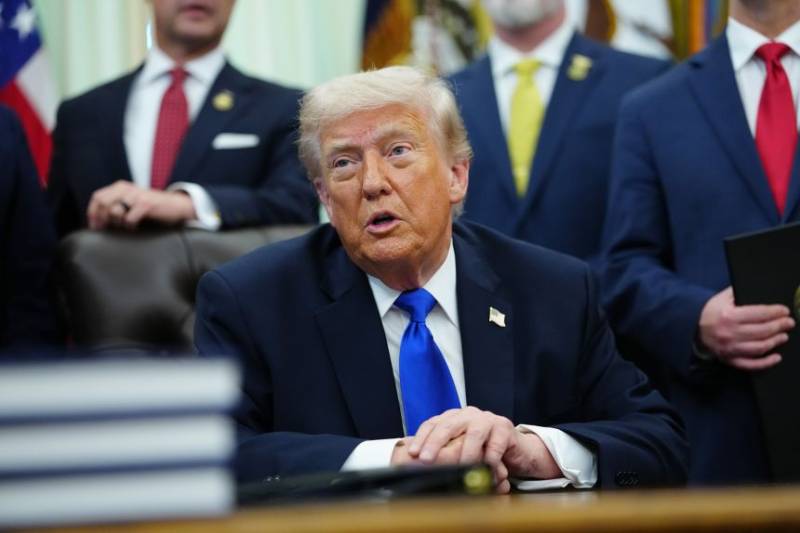

US President Donald Trump said Sunday that a peace deal with Iran was still on track to be signed within hours, despite an Israeli strike on Beirut that he said had delayed the plan.
"It shook it up. It delayed the signing by a few hours. It was supposed to be now. Now it is scheduled for a few hours from now," Trump said in a phone call to the Axios news outlet.
Trump fumed at Israeli Prime Minister Benjamin Netanyahu over the attack on Beirut, saying, "it is so bad -- I couldn't believe it. An hour before we are supposed to sign the deal."
Using a string of expletives, Trump told Axios he raged at Netanyahu after Israel struck Beirut's southern suburbs on Sunday, killing three people, in response to what it said was Hezbollah fire at northern Israel.
"Why did Bibi (Netanyahu) have to do a fucking attack?" Trump told Axios. "I was so pissed off. I let him know. He has no fucking judgement. I let him know that."
Tehran insists that any agreement to halt the war must include the parallel conflict in Lebanon, where Israel has been pursuing a campaign against the Iran-backed movement Hezbollah.
Trump earlier said that Israeli strikes on Beirut "should not have happened" as he vowed a regional peace deal was at hand, though he did not confirm reports it would be signed during the day.
"We are very close to a Deal that will bring peace to the region, including to Lebanon, and all sides should stand down," Trump said on social media. "This could be the beginning of a long and beautiful peace -- Let's not blow it!"
President Donald Trump on Sunday said Israeli strikes on Beirut "should not have happened" as he vowed a regional peace deal was at hand, though he did not confirm his earlier claim it would be signed during the day.
"We are very close to a Deal that will bring peace to the region, including to Lebanon, and all sides should stand down," Trump said on social media.
"This could be the beginning of a long and beautiful peace -- Let's not blow it!"
Israel struck Beirut's southern suburbs on Sunday, killing three people, in response to what it said was Hezbollah fire at northern Israel, an exchange that Trump said "should not disrupt" progress towards a pact.
"This morning's attack on Beirut should not have happened, particularly on a special day," Trump wrote, possibly a reference to his hopes of a signing on Sunday, his 80th birthday.
"There should be no more attacks by Israel anywhere in Lebanon, but there should also be no more attacks by any other party, including Hezbollah, against Israel."
Trump -- who has repeatedly declared a deal with Iran was all but concluded -- had said on Saturday that the framework accord was scheduled to be signed on Sunday.
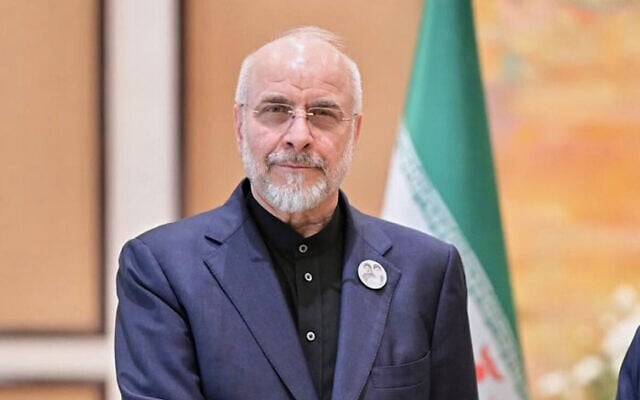
Meanwhile, Iranian chief negotiator Mohammad Bagher Ghalibaf said on Sunday there was "no point" in continuing peace talks with the United States after its ally Israel attacked Beirut's southern suburbs.
"The Zionists' aggression against Dahieh once again showed that the United States either lacks the will to implement its commitments or lacks the ability to do so," Ghalibaf said in a post on X.
"If you do not have the will or the ability to fulfil your commitments, then there is no point in talking about continuing down this path," he added, against the backdrop of ongoing efforts to finalise a peace deal between the warring parties. Iran says US unable or unwilling to uphold 'commitments', after Israel strikes Lebanon.
Earlier, US President Donald Trump said that a deal with Iran to end the war in the Middle East could be signed Sunday, and that the strategic Strait of Hormuz would be "open to all" immediately after.
Iran had offered a different timeline earlier in the day, but nonetheless signalled an agreement was in the offing, as both the warring parties and their mediators expressed increasing optimism that weeks of halting negotiations were drawing to a close.
The leader of key mediator Pakistan said a deal was closer "than ever before". The "finalisation" of this agreement is expected "within the next 24 hours", Pakistani Prime Minister Shehbaz Sharif said Saturday on X, adding that it will be signed electronically, without going into further detail or specifying what this would involve.
He said "technical level talks" are expected to follow next week. A Pakistani foreign ministry statement also said the signing was planned for Sunday.
The momentum came in spite of fresh skirmishes in the Strait of Hormuz, which Iran has blockaded since early in the war, throwing global markets into turmoil. "The Deal is scheduled to get signed tomorrow, and immediately after it is signed, the Hormuz Strait is OPEN TO ALL," a post on Trump's official Truth Social platform read on Saturday.
Since an April 8 truce paused the worst of the fighting, Trump has repeatedly insisted a deal was imminent, only for the wrangling to drag on.
Earlier, Lebanon's civil defence agency said an Israeli strike on Sunday on Beirut's southern suburbs killed at least three people, as Israel's military said it targeted Hezbollah.
The civil defence statement said that "the bodies of three martyrs were recovered from under the rubble and six wounded" were taken to hospital after the strike, which hit the Ghobeiry area of the Hezbollah stronghold.
Israel struck Beirut's southern suburbs on Sunday for the second time in a week in response to what it said was Hezbollah fire at northern Israel, while its military also carried out broader strikes on southern Lebanon.
The latest escalation came despite expectations that a deal between the United States and Iran to end the Middle East war could be imminent, as Tehran insists a ceasefire in Lebanon must be part of any deal.
Lebanon's official National News Agency (NNA) said a strike hit an apartment in the Ghobeiry neighbourhood of Beirut's southern suburbs, a Hezbollah stronghold known as Dahiyeh.
An AFP correspondent saw smoke and dust rising near a heavily damaged apartment as debris covered the street and people searched for survivors, with panic in the area after the strike along a busy road filled with shops.
Israeli officials including Prime Minister Benjamin Netanyahu have warned that Israel would strike south Beirut should the Iran-backed Hezbollah group target northern Israeli communities, a position they say has the backing of Washington.
The Israeli military earlier Sunday said three drones, suspected to have been launched by Hezbollah, struck northern Israel in separate incidents, causing no casualties.
Hezbollah on Sunday claimed several attacks on Israeli troops who have invaded south Lebanon but did not immediately claim any attack on north Israel.
Netanyahu's office said that the Israeli military had "carried out strikes in the Dahiyeh district of Beirut against terrorist targets belonging to the Hezbollah terrorist organisation, in response to Hezbollah's firing toward Israeli territory".
Israel's military said it had "precisely struck" a Hezbollah infrastructure site in Dahiyeh.
Two far-right Israeli ministers earlier Sunday had called for retaliatory strikes on Beirut's southern suburbs. "The shooting at northern communities is a test of the Dahiyeh Doctrine that the prime minister declared. I call on him to implement it decisively and firmly, and to bring down buildings in Dahiyeh," Finance Minister Bezalel Smotrich said on X.
"For every drone -- a missile; for every violation -- fire; for every UAV -- Dahiyeh must tremble," wrote National Security Minister Itamar Ben Gvir on X.
Israel's military also struck Beirut's southern suburbs last Sunday, hitting apartments in two buildings after saying it had intercepted rockets launched by Hezbollah into Israeli territory.
Iran launched missiles towards Israel in response to that attack, triggering Israeli retaliatory strikes before both sides halted fire.
Iran had repeatedly warned it would strike Israel if the Lebanese capital was targeted.
On Sunday, Lebanon's NNA reported Israeli strikes on more than a dozen locations in the country's south, both before and after the Israeli army issued evacuation warnings for almost 30 locations ahead of strikes there.
Israel's military activity in recent days has been focused on the region around the major south Lebanon city of Nabatieh, and many of Sunday's Israeli army evacuation warning locations were north of the city.
- Direct talks -
A military source told AFP on Sunday that a small Lebanese army force which had been present in Kfar Tibnit, adjacent to Nabatieh, evacuated its position there a day earlier after Israeli incursions into the village.
Requesting anonymity, the source emphasised that the Lebanese army was still present at the army barracks in Nabatieh city.
An AFP correspondent saw around a dozen vehicles, including some military trucks and heavy machinery as well as civilian vehicles, heading out of Nabatieh on Sunday.
In April, Israel and Lebanon began landmark direct talks in Washington seeking to halt the hostilities, with a fifth round scheduled later this month between the two countries which have no formal diplomatic relations.
Neither Israel nor Hezbollah have respected a ceasefire announced in April after the first round.
Hezbollah rejects the direct talks and has dismissed a conditional ceasefire announced earlier this month that would require it to cease attacks but made no mention of Israel doing so or withdrawing troops from Lebanon.
The Iran-backed group drew Lebanon into the Middle East conflict on March 2 with rocket fire at Israel to avenge the killing of Iran's supreme leader in US-Israeli strikes days earlier.
Lebanon says Israel's subsequent campaign of airstrikes and ground invasion have killed more than 3,700 people.
Lebanon complains to Security Council over alleged Israeli use of herbicide
Lebanon's foreign ministry said it had lodged a complaint with the United Nations over Israel's alleged spraying of herbicide glyphosate in Lebanese territory near the border earlier this year.
In a statement circulated on Sunday, the ministry said it had sent a letter to the UN Security Council and the UN secretary-general this week to complain about the incident, which occurred in February, a month before the latest Israel-Hezbollah war erupted on March 2.
The ministry said "laboratory tests and chemical analyses carried out on soil samples" in the south Lebanon border villages of Aita al-Shaab, Ras Naqura and Dhayra "confirmed the use of glyphosate at high levels of concentration".
It said the levels "greatly exceed" those usually found in agricultural areas after regular use by farmers.
The statement said the complaint was based on a report from Lebanon's government-linked National Council for Scientific Research (CNRS).
At the time, the UN peacekeeping mission in Lebanon said Israel had notified it of its plans to spray a "non-toxic chemical substance" near the border and had warned peacekeepers to take shelter.
Lebanon's President Joseph Aoun had denounced the spraying as a "flagrant violation of Lebanese sovereignty and a crime against the environment and health".
The ministry statement also said Lebanon had complained to the Security Council about ongoing Israeli attacks on Lebanon, including "the targeting of a Lebanese army vehicle" earlier this month that killed two on-duty officers and a soldier.
Noting ongoing direct negotiations between Israel and Lebanon aimed at ending the hostilities, the statement said "Israel's targeting of Lebanese army personnel directly undermines these diplomatic efforts".
In April, Israel and Lebanon began landmark direct talks in Washington seeking to halt the hostilities, with another round scheduled later this month between the two countries which have no formal diplomatic relations. Military delegations from the two countries also held security talks at the Pentagon last month.