
No relief over helmet violation as Punjab govt reduces traffic fines
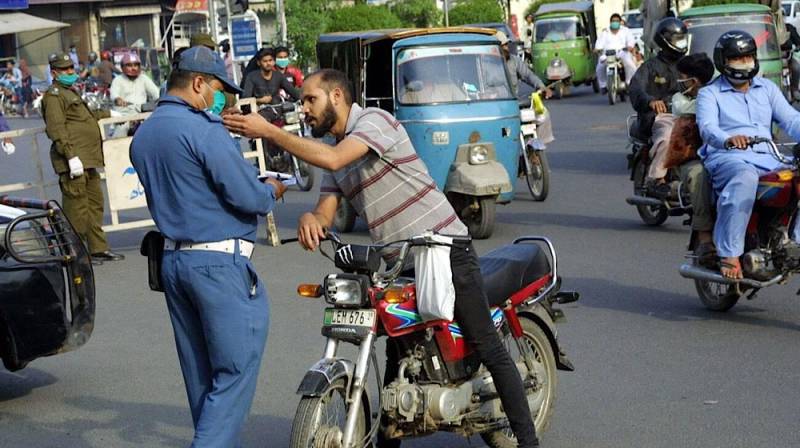

The Punjab government has revised and reduced fines for various traffic violations across the province, while also updating the “One App” system to streamline traffic enforcement and challan issuance.
According to the revised traffic penalty structure, no relief has been granted to motorcyclists violating helmet rules.
Authorities said the fine for riding a motorcycle without a helmet, driving against one-way traffic, or operating a motorcycle without a valid driving licence will remain Rs2,000.
Officials further announced that commercial vehicles would also start receiving challan tickets for traffic violations from today under the updated enforcement mechanism.
Under the new fine structure, motorcyclists violating rules related to mobile phone usage while driving, lane line violations, disruption of traffic flow, use of pressure horns and other minor offences will face a fine of Rs1,000.
Meanwhile, drivers of vehicles with engine capacities up to 2,000cc will be fined Rs2,000 for lane line violations, while jumping a traffic signal will result in a Rs3,000 penalty.
Authorities said commercial vehicle drivers operating without a licence or violating traffic signals would face a fine of Rs5,000.
The revised penalties also include strict action against smoke-emitting vehicles. Motorcycles and rickshaws found emitting excessive smoke will be fined Rs2,000, while cars will face a Rs3,000 fine. Commercial vehicles violating environmental emission standards will be fined Rs5,000.
Officials stated that fines for several traffic violations involving cars, motorcycles and commercial vehicles had been reduced as part of the government’s revised traffic management policy.
Speaking on the occasion, Lahore Chief Traffic Officer Syed Abdul Rahim Shirazi said the purpose of traffic challans was not merely punishment but the reform of citizens and the promotion of responsible driving behaviour.
He urged the public to follow traffic laws to ensure safe travel and protect lives on roads, stressing that adherence to traffic regulations was essential for public safety.