
78 years of Pakistan: What we achieved and what we lost
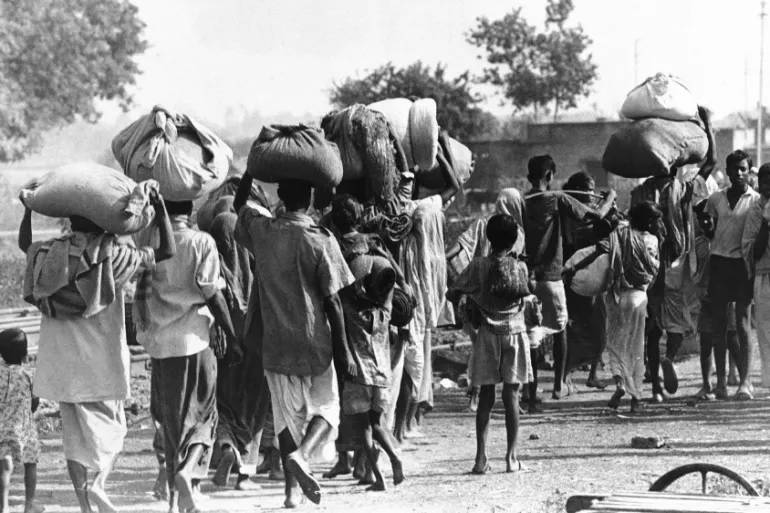
Seventy-eight years have passed since Pakistan came into being. In August 1947, our elders made huge sacrifices to create a homeland where we could live with freedom, dignity, and justice. Millions left their homes, wealth, and loved ones behind in pursuit of the dream of a fair society. As Quaid-e-Azam Muhammad Ali Jinnah said in his first address to the Constituent Assembly in Karachi, “You are free; you are free to go to your temples, you are free to go to your mosques or any other place of worship… You may belong to any religion or caste or creed that has nothing to do with the business of the State.”
Today, as we look back, we must honestly ask ourselves: what have we gained, and what have we lost in these 78 years?
Pakistan has made some great achievements. We have one of the strongest armies in the world, along with nuclear power, which gives us a strong position on the global stage. Pakistan became the seventh country in the world to successfully develop and test a nuclear weapon. Our brave soldiers defended the country in wars, like the 1965 war, when India failed to capture Lahore, which became a symbol of courage and victory. Recently, in May 2025, we celebrated another military success after a short but intense conflict with India, which brought unity and pride to the nation.
Our farmers feed millions, even in tough times. Our sportsmen, from cricket legends to hockey champions, have made us proud. Recently, Pakistan won its first-ever individual Olympic gold medal in athletics at the Summer Games, a historic moment in our sports history. Our artists, musicians, and writers have shown the beauty of our culture to the world.
We have also improved in infrastructure. Motorways connect our cities, we have modern airports, and many new universities. Technology has reached rural areas through mobile phones and the internet. In times of crisis, like the 2005 earthquake or the 2022 floods, Pakistanis stood together to help one another. These moments prove our unity, strength, and resilience.
Yet our losses are just as real. The dream of justice for all remains far away. According to recent reports, around 40% of Pakistan’s population lives below the poverty line, struggling to meet basic needs like food, shelter, and clothing. Millions of children cannot attend school, and many families have no access to clean drinking water or quality healthcare. Hospitals in rural areas often lack doctors, medicine, and proper facilities. Corruption and weak governance have damaged institutions and broken the trust between people and their leaders. Political instability has slowed down progress; governments change, but problems remain. Instead of becoming more united, we are often divided by politics, ethnicity, and religion.
Our environment has suffered badly. Pakistan is ranked among the top countries most affected by climate change. Our rivers are polluted, forests are shrinking, and the air in cities like Lahore and Karachi is dangerously polluted. In summer, heatwaves have become unbearable, and in winter, smog makes breathing difficult.
The biggest loss is moral. The values that were part of the vision of Pakistan, such as honesty, tolerance, hard work, and respect for each other, are slowly disappearing. We have allowed selfishness, dishonesty, and intolerance to grow, and without moral strength, no nation can truly succeed.
Pakistan today faces many challenges at once. Inflation has made life harder for ordinary families. Prices of basic items like flour, sugar, and fuel have reached record highs, making it difficult for the poor to survive. The job market is shrinking, and many young people cannot find work even after getting the highest degree. Load-shedding continues in many areas, and power shortages affect businesses and homes.
In rural regions, farmers face water shortages, and in cities, public transport is often poor. Law and order problems create fear and insecurity in some areas. Education remains in crisis. Many government schools lack trained teachers, proper classrooms, and basic facilities. This not only affects children today but also the country’s future. Without an educated population, Pakistan cannot compete with other nations in the modern world.
Over the years, Pakistan has faced many losses. One of the biggest was the separation of East Pakistan in 1971, which became Bangladesh. We have also lost many great leaders and personalities who shaped our nation. These include Muhammad Ali Jinnah, the founder of Pakistan; Liaquat Ali Khan, our first Prime Minister; Zulfikar Ali Bhutto, Benazir Bhutto, the first woman Prime Minister; and renowned scientist Dr. Abdul Qadeer Khan, the “father” of Pakistan’s nuclear program.
Our agriculture sector, once a strength, is now collapsing, with a growth rate of only about 0.56% last year—the lowest in nine years—due to poor policies. Education has also suffered as private school mafias have monopolized the system, lowering quality and turning learning into a money-making business. Public institutions have lost their prestige.
Economically, Pakistan has struggled for stability, seeking help from the International Monetary Fund (IMF) 24 times since 1950. These loans aim to bring economic stability and growth, but our system still faces serious challenges.
Indeed, Pakistan’s journey has not been easy. We have faced wars, floods, earthquakes, and a very complex geopolitical situation. Our location in the region has brought both opportunities and problems. Despite all this, ordinary Pakistanis have shown courage and generosity in the hardest times. Whenever disaster strikes, our people come forward to help, even if they have little to give.
But we cannot use challenges as an excuse to remain stuck. Many countries started with fewer resources than us and have moved ahead because of honest leadership, strong institutions, and responsible citizens. The last 78 years are not only a record of what we have done; they are also a lesson for the future.
The achievements show what we can do when we are united, while the failures warn us about what happens when we forget our responsibilities. The way forward is clear: we must invest in education so no child is left behind, protect the environment for the next generation, fight corruption and strengthen institutions, create jobs and support small businesses, and bring back the values of honesty, tolerance, and service to others.
This is not just the work of the government; it is the duty of every Pakistani. Teachers, farmers, workers, businessmen, and students all have a role to play.
When we celebrate Pakistan’s 100th year, will we tell the story of a country that wasted its potential, or a nation that learned from its past and built a better future? The choice is ours, and the time to act is now.