
Pakistan's population exceeds 245m with 64% youth under age of 30
First State of Freedom Report of Mishal Pakistan compares legal rights with public experiences: Survey finds growing reliance on digital platforms for information access: Majority express satisfaction with opportunities for women: Climate change, unemployment, water scarcity identified as key challenges
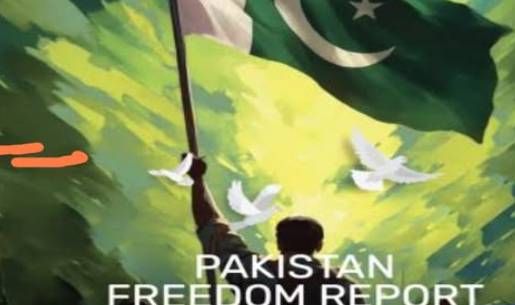

Mishal Pakistan has released the country's first State of Freedom Report 2026 and disclosed that Pakistan’s population has surpassed 245 million, with 64 percent of citizens under the age of 30, reported 24NewsHD TV channel on Monday.
The Mishal Pakistan's report presents a comprehensive comparison between the institutional and personal freedoms guaranteed under the Constitution and laws of Pakistan and the practical experiences of citizens. It is based on a nationwide survey of 2,000 respondents, including 67 per cent graduates, 32 per cent postgraduates and one per cent doctorate holders.
--Digital data--
The report highlights Pakistan’s growing digital economy, noting that information technology and freelance exports have exceeded $3 billion. P
Pakistan now has more than 195 million mobile phone connections, although women are reported to be 20% less likely than men to own a mobile phone.
According to the findings, 24% of respondents rely on Facebook for information, while 19.9% use WhatsApp, 18 per cent access websites and 15 per cent obtain information through X.
The report notes that public access to information is increasingly shifting towards digital platforms, with many citizens viewing digital connectivity and freedom as important drivers of economic progress.
However, concerns remain regarding the quality and reliability of online information. Around 55% of respondents expressed concerns about access to impartial information through digital platforms.
The report states that despite improving access to information, digital channels continue to contribute to misinformation, social polarisation and online harassment.
The report also notes that Pakistan has more than 120 television channels and hundreds of FM radio stations, reflecting a diverse media landscape.
--Women--
On gender issues, 75 percent of respondents said they were satisfied with opportunities available to women.
--Banking--
Economic indicators included in the report show that between 110 and 120 million Pakistanis use branchless banking wallets.
--Business--
Approximately 77% of respondents said they felt free to choose their profession, while 75% expressed positive views regarding the freedom to conduct business.
At the same time, 58% reported concerns about financial security, and only 34% believed market competition was relatively fair.
--Labour--
Pakistan’s labour force now exceeds 70 million people, according to the report. Female participation in the labour market remains between 20% and 25%, highlighting the continuing gender gap in employment.
--Religions--
On religious freedom, 65% of respondents expressed satisfaction with the protection of religious rights. The report states that Pakistan has approximately 600,000 mosques, 36,000 religious seminaries, 2,000 churches and hundreds of temples and gurdwaras. It also notes that minorities hold 10 reserved seats in the National Assembly.
The report recorded approximately 344 allegations of blasphemy during 2024, with 62% reported in Punjab and 30% in Sindh. Of the total allegations, 243 involved Muslims and 101 involved non-Muslims.
--Politics--
Pakistan has around 128.5 million registered voters. For the 2024 general election, 92,353 polling stations were established, and approximately 1.4 million election personnel were deployed. The National Assembly’s 336 seats form the basis of democratic representation, including 60 reserved seats for women. Women account for between nine and ten members of the federal cabinet.
The survey found that 62 percent of citizens believe they have limited influence over government decision-making. Meanwhile, 35% expressed optimism about the country’s future direction, and 45% said gender, religious and ethnic equality is improving.
--Justice--
The report also highlights challenges facing Pakistan’s justice system. More than 59,000 cases are pending before the Supreme Court of Pakistan, while over 450,000 cases remain pending in the high courts, and more than 1.74 million cases are awaiting disposal in district courts. Pakistan’s prisons hold more than 102,000 inmates, with prisons in Punjab operating at 166% of capacity and those in Sindh at 161%.
--education--
Primary school enrolment stands at 69 per cent, while the higher education enrolment rate remains around 13%.
--Challenges--
The report concludes that climate change, cyber security threats, misinformation, water scarcity, rapid urbanisation, youth unemployment and economic inequality represent some of the most significant challenges facing Pakistan in the years ahead.
--About Mishal Pakistan--
Mishal Pakistan is the Country Partner Institute for the World Economic Forum (WEF) and publishes several key strategic, economic, and institutional assessment surveys. Its primary initiatives include the annual Pakistan Reforms Report and the Executive Opinion Survey.
Reporter: Ahmad Mansoor