
UK court upholds terrorism ban on pro-Palestinian group
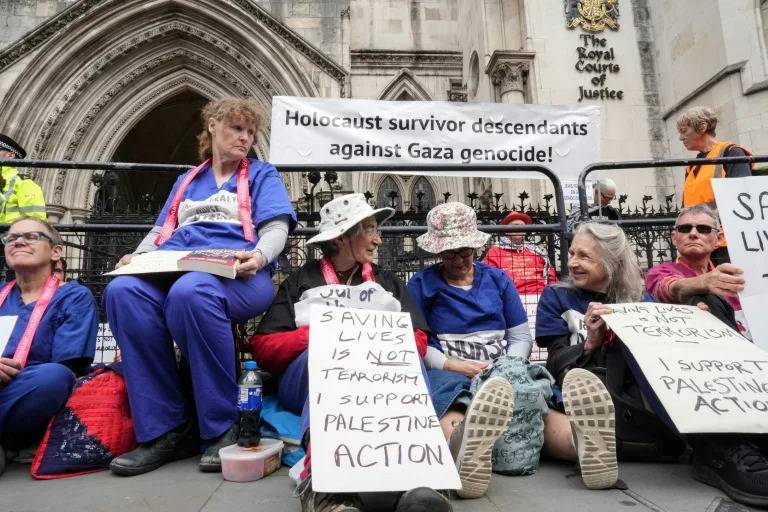

London's Appeals Court on Monday upheld a UK government ban on activist group Palestine Action that has seen thousands of people -- from students to an 83-year-old retired vicar -- arrested and carried away from protests by police.
The ban, which came into force on July 5, 2025, was imposed under the country's Terrorism Act.
It made membership of or support for the pro-Palestinian group a criminal offence punishable by up to 14 years in prison under the counter-terrorism legislation.
Palestine Action's co-founder Huda Ammori had challenged the ban, but the Court of Appeal ruled "the proscription decision was not unlawful", saying it was "justified and proportionate".
Palestine Action "is not, as it claims, a direct action civil disobedience protest group like the suffragettes operating transparently in the open," said judge Sue Carr, one of a panel of five judges, reading their decision.
Describing the group as "a covert organisation operating with secret cells," she added it was "a fundamental mistake to overlook the fact that Palestine Action overtly promotes unlawful violence amounting to terrorism".
The ban, which has led to more than 3,000 arrests, puts the group on a government blacklist that also includes Palestinian militants Hamas and the Lebanese Iran-backed armed group Hezbollah.
Acts of terrorism
Ammori vowed on X to appeal to the Supreme Court and "take it up to the European Court of Human Rights, if needs be".
In a statement read outside the court, Palestine Action vowed: "We will not stop fighting to overturn one of the most extreme attacks on free speech and the right to protest in modern British history."
Amnesty International UK's Legal Programme Director Tom Southerden said the ruling "represents another step in the ongoing crackdown on the right to protest in this country".
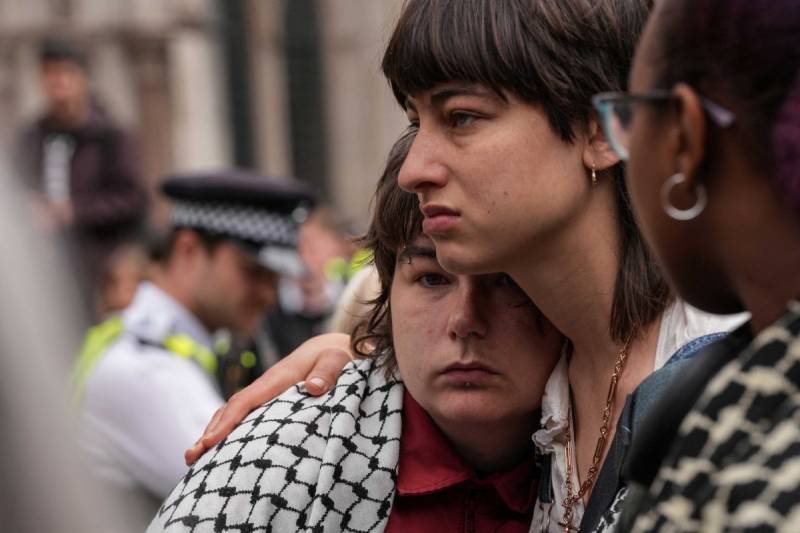
Protestors holding signs supporting Palestine Action gathered outside the court, with London's Met police saying later Monday it made 117 arrests for "expressing support for a proscribed organisation".
Ex-interior minister Yvette Cooper, who is now foreign secretary, had defended her proscription decision, arguing the group's supporters were unaware of its "full nature".
"This is not a non-violent organisation," she said last year.
Set up in 2020, Palestine Action's stated goal on its website -- blocked to UK internet users -- was to end "global participation in Israel's genocidal and apartheid regime".
It gained visibility following the war in Gaza triggered by the deadly October 7, 2023 Hamas attack on southern Israel.
Current interior minister Shabana Mahmood welcomed the decision, insisting it did not "affect lawful protest in support of the Palestinian cause, which remains a fundamental democratic right".
She said the court "found that Palestine Action has carried out acts of terrorism... and promoted the use of violence".
Disproportionate
Palestine Action has mainly targeted weapons factories in the UK, especially those belonging to the Israel-based defence group Elbit.
Since the ban came into force, protesters have held a string of rallies holding up signs saying: "I oppose genocide, I support Palestine Action".
Hundreds have been charged and are awaiting court hearings.
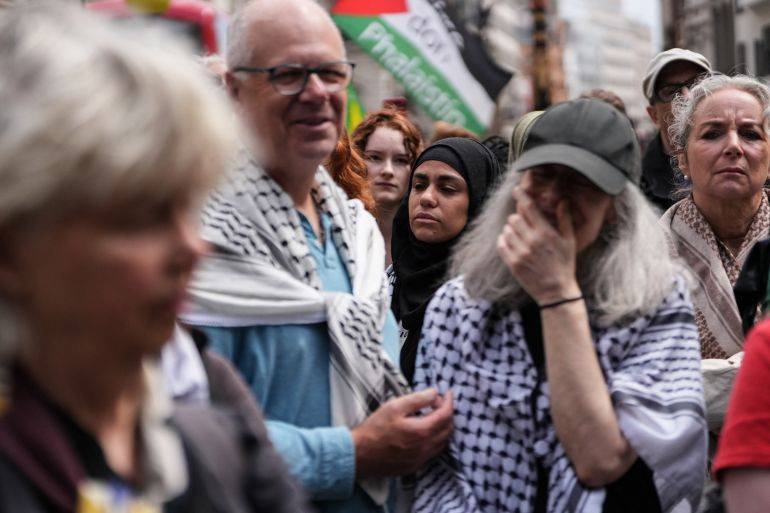
"The decision is terrible," protester Chris, 65, a retired IT consultant, told AFP Monday.
"I don't know what happened to British democracy, to the right to protest. I just feel very sad, that's all."
The group challenged the ban in the UK courts on the basis that it was "disproportionate" and had a "very significant" impact on human rights.
The High Court in London in February agreed, ruling in its favour, but the government then appealed.
However, Monday's appeals court ruling reverses the High Court judgement, finding in favour of the interior ministry.
It follows a judge on Friday jailing four activists for between four years and eight months to seven years and eight months for raiding an Elbit site near Bristol in western England, causing over a million pounds in damage.
One of them hit a police officer twice on the back with a sledgehammer, leaving her with a fractured spine in the August 2024 raid.
The group said their aim was to "dismantle drones and weaponry" they believed would be used to kill people, particularly in Gaza.