
German investor morale misses expectations as Mideast war weighs
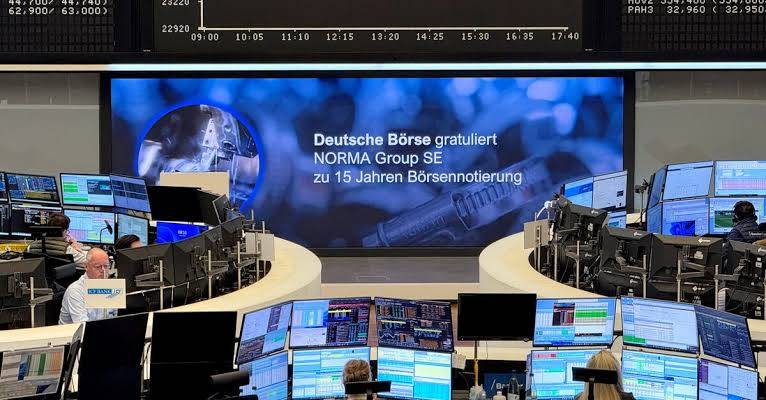

German investor sentiment rose much less than expected in September, a closely watched survey showed Tuesday, underscoring the economy's fragility as the Mideast war persists and suspected attacks on infrastructure unnerve investors.
The ZEW institute's economic expectations index edged up just 0.5 points to 34.7, the survey found, its fifth rise in a row.
That was far below forecasts of a 10-point increase in a poll of analysts by the financial platform FactSet.
Expensive energy resulting from the US war against Iran and the near total closure of the Strait of Hormuz were weighing on sentiment, ZEW president Achim Wambach said.
Petrol prices on Monday reached a record of 2.286 euros ($2.64) a litre in Germany as the war pushes up oil and gas prices worldwide.
German Chancellor Friedrich Merz said Tuesday that the government "had to act" on fuel costs, adding that it would have concrete measures to announce "very soon".
"The risks are nevertheless considerable," Wambach said, citing "high energy prices amid the ongoing war in Iran and further uncertainty caused by hybrid attacks are weighing on the economy".
Germany said this month that Russia was responsible for an attempted attack using an explosive-laden drone at an airport in the eastern city of Leipzig, a key transport hub for military equipment sent to Ukraine.
Russia denies any role in the attempted attack.
The disappointing report comes after some brighter-than-expected indicators in recent weeks had boosted hopes the German economy was turning a corner after years of stagnation.
Several economic institutes upgraded their 2026 growth forecasts earlier this month, predicting the economy would expand by 1.3 to 1.4 percent, substantially higher than just a few months ago.
Suffering from subdued demand at home as well as US tariffs and fierce Chinese competition abroad, Germany's economy has picked up in recent months after posting virtually no growth since a burst of pent-up pandemic demand at the end of 2022.
Merz has promised to borrow and spend hundreds of billions of euros in a bid to upgrade infrastructure and kick-start the economy.
Many economists have warned that the money alone will do little in the long-run without potentially painful welfare reforms and deregulation.