
The truth about Punjab Police’s investigation system exposed in court
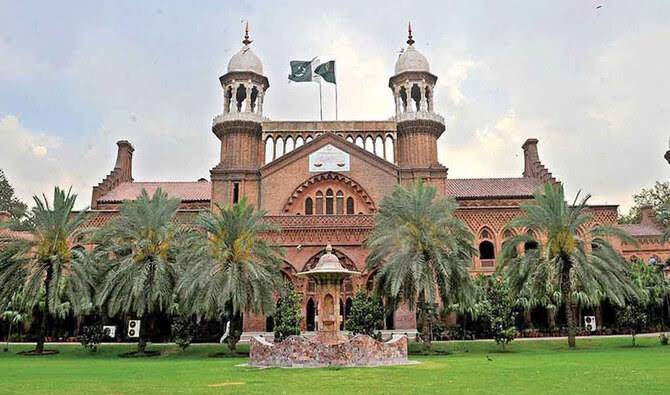

The hearing of a murder case before the Lahore High Court turned out to be much more than an ordinary bail proceeding. It exposed deep-rooted flaws in Punjab Police’s investigation system and highlighted practices that have long been criticized by lawyers, judges, and human rights advocates. The case once again demonstrated that when investigations are weak, unlawful, or conducted in bad faith, innocent people may be implicated while actual offenders escape punishment.
The most extraordinary aspect of the hearing was that the Additional Inspector General (Investigation), Punjab, Shahzada Sultan, openly acknowledged the institutional weaknesses within the police department. His candid admissions carried particular significance because they came not from a critic of the police, but from the officer responsible for overseeing investigations across the province.
Addressing the court, he stated that the law does not recognize the concept of a “supplementary statement” (Tatimma Bayan) as it is commonly used by police, nor does it permit implicating a person merely on the basis of “credible sources.” He further admitted that, despite the absence of legal backing, such practices have become routine.
His most striking observation was that these mechanisms had evolved as tools to facilitate corruption and protect dishonest practices within the police force. According to him, supplementary statements and claims based on unnamed “credible sources” have often been used to justify unlawful actions and abuse of investigative powers. He acknowledged that misuse of authority has occurred and that the institution bears responsibility for these shortcomings.
These admissions cast serious doubt on countless criminal cases in which suspects have been nominated solely on the basis of undisclosed informants or alleged “credible information.”
Justice Muhammad Tariq Nadeem also raised significant legal questions during the proceedings. The court observed that once a First Information Report (FIR) has been registered on the basis of a written complaint, what legal authority permits investigators to implicate additional persons later through a so-called supplementary statement? More importantly, the very supplementary statement repeatedly referred to by the police was missing from the official record.
The court further questioned the evidentiary value of an eyewitness who admitted that he identified the accused only after being informed by an unidentified source. Justice Nadeem remarked that while confidential informants may occasionally play a role in narcotics investigations, relying on an anonymous informer to identify a suspect in a murder case is inconsistent with the basic principles of criminal justice.
This case is not an isolated incident. For years, the Lahore High Court has repeatedly criticized police investigations in numerous criminal cases. Courts have summoned investigating officers, sought explanations from District Police Officers, and observed in several judgments that weak investigations frequently allow actual offenders to escape conviction while innocent individuals spend years fighting for justice.
In any criminal justice system, investigation is the foundation upon which the entire prosecution is built. If the investigation itself is unlawful, biased, or deficient, the judicial process that follows is inevitably compromised. Courts can only decide cases on the basis of the evidence presented before them. If that evidence is fabricated, incomplete, or unreliable, securing a lawful conviction becomes exceedingly difficult.
During the hearing, the court also referred to its earlier directions regarding the audit of police investigations. The Additional Inspector General informed the court that investigations conducted over the past ten years are currently being audited. While this represents a positive initiative, the fundamental question remains: if the leadership itself acknowledges systemic failures, when will meaningful reforms actually be implemented?
Comprehensive reforms are urgently needed. The practice of relying on supplementary statements and unnamed “credible sources” without legal foundation must be abolished. Investigations into murder and other serious offences should be conducted using forensic science, digital evidence, and other modern investigative techniques. Officers responsible for dishonest or negligent investigations should face not only departmental proceedings but, where appropriate, legal accountability. Regular training, strict supervision, and independent performance audits should become integral components of the investigation process.
The admissions made by Additional IGP Shahzada Sultan have exposed an uncomfortable reality. Acknowledging institutional failures is an important first step toward reform, but acknowledgment alone cannot restore public confidence. Unless these admissions are followed by concrete structural changes, they will remain little more than noteworthy courtroom statements.
Punjab Police undoubtedly includes many honest and dedicated officers committed to upholding the law. However, when the overall investigative framework is weakened by unlawful practices, inadequate oversight, and insufficient accountability, even sincere officers struggle to deliver justice effectively.
This case sends a powerful message: justice does not begin in the courtroom—it begins with a lawful, impartial, and professional investigation. Until criminal investigations are insulated from corruption, political influence, personal bias, and unlawful practices, even the most serious offences, including murder, will continue to produce wrongful prosecutions while the real perpetrators evade justice.
The Lahore High Court has once again held up a mirror to the policing system. The responsibility now rests with the Government of Punjab, the police leadership, and the Investigation Wing to translate these judicial observations into meaningful institutional reforms. If no action follows this historic acknowledgment, future cases will continue to raise one unavoidable question:
Has the investigation system itself become the greatest obstacle to justice?