
The mosaic of terrorism in Pakistan: Part 2
From Partition to Zia’s martial law, Pakistan’s turbulent history reflects how religion, politics, and power struggles shaped its journey toward extremism
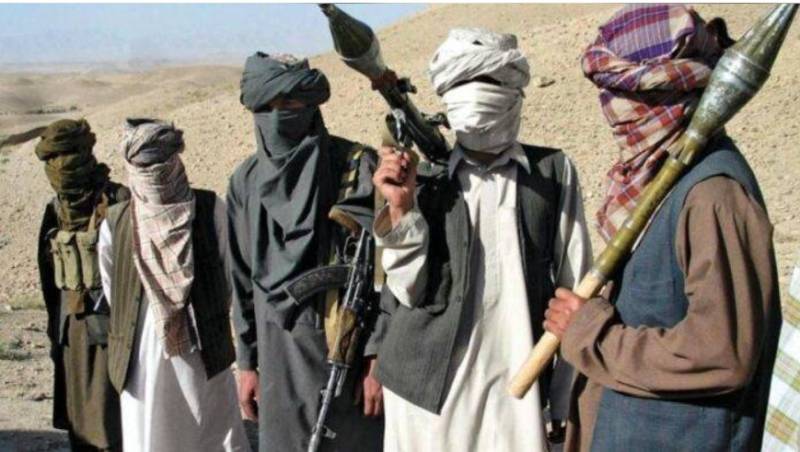
Religion, deprivation, socio-economic malaise and other factors had played their role in the armed struggle by Muslims, Hindus and Sikhs in India to fight the British. From 1857 till 1947, independence was the ultimate goal of these freedom fighters, branded as mutineers, terrorists and arsonists by the British.
1947 witnessed the birth of Pakistan, the first country to be made in the name of religion. But the horrors of partition and mass migration of people across imaginary lines, drawn by the British with the blood of the people of India, meant the continuation of a serious existential threat to Pakistan. Subsequent events, both external and internal, made religion the glue that held Pakistan together. This was further reinforced by the adoption of the “Objectives Resolution”, enacted by the Constituent Assembly in 1949. It became the foundational document in Pakistani constitutional history, outlining the guiding principles and objectives for the future Constitution of Pakistan, emphasising an Islamic ideological framework while ensuring democratic principles.
Poor governance, parochial and immature leadership, and West Pakistan’s intransigence to keep the power levers firmly in their hands led to a simmering discontent in East Pakistan. However, before 1953, the situation was peaceful with occasional public order situations. The Frankenstein monster of terrorism was asleep.
The "Four Waves of Modern Terrorism" is a theory proposed by David C. Rapoport, which suggests that terrorism has evolved through four distinct waves, each lasting approximately a generation and driven by different ideologies. These waves are: Anarchist (1878–1919), Anti-Colonial (1920s–1960s), New Left (1960s–1990s), and Religious (1979–present). Although it can be argued against vehemently, for academic purposes as per this classification, India had experienced Anarchist and Anti-Colonial terrorism till 1947. However, anti-state terrorism declined after partition. The prevalent pattern of strife was religious and generally related to the Shia–Sunni divide, but it was nothing in comparison to what was to come.
1953 changed Pakistan. After the slogan "Pakistan ka matlab kya, La Ilaha Illal Allah" was coined in 1943 by the Urdu poet Asghar Sodai, it became a powerful battle cry for the Muslim League, which was fighting for an independent Muslim state in South Asia. The slogan was used during the Pakistan movement to express the religious identity of the proposed new nation. Then came the Objectives Resolution. The religious parties led by Jamaat-e-Islami became ascendant and partially filled the vacuum caused by the assassination of Liaqat Ali Khan, as the Muslim League, robbed of its two senior leaders, began to disintegrate.
In February 1953, Majlis-i-Ahrar gave an ultimatum to the government to remove Ahmadis from key official positions, especially Sir Zafarullah Khan (who was the Foreign Minister), and declare them non-Muslims. Prime Minister Khawaja Nazim-ud-Din rejected it. This resulted in the 1953 Lahore riots, an anti-Ahmadiyya movement in Pakistan, which saw unparalleled violence in Lahore and the Punjab region. The demonstrations involved widespread looting, arson, and murder, with varying estimates of deaths ranging from 200 to 2,000. The situation was eventually brought under control by the Pakistan Army, which declared three months of martial law.
As was to be the pattern in later years, the government gave in and removed Muhammad Zafarullah Khan from the Foreign Ministry, and many other prominent Ahmadis were sacked from all high-level government positions. These riots also led to significant political consequences, including the removal of Mumtaz Daultana as Punjab Chief Minister on 24th March 1953 by Governor General Ghulam Muhammad, allegedly for manipulating the religious element in anti-Ahmadi violence for political benefits. Secondly, the army tasted absolute power for the first time.
Although the rioting of 1953 was not terrorism per se, it was the harbinger of worse times to come.
In Balochistan, an insurgency marked by a series of resistance movements against Pakistan's rule, fuelled by grievances over perceived marginalisation and forced integration, had started since the 1948 accession of the Kalat State. Baloch nationalists engaged in various insurgencies, with major uprisings occurring in the 1950s, 1960s, and 1970s. However, this still could not be termed as terrorism in the classical sense. However, the spiral of violence continued to increase and reached its climax in East Pakistan.
In the subcontinent, it is a matter of record that India laid the foundation of cross-border terrorism. RAW and its predecessor, the Intelligence Bureau (IB), had already begun sowing cross-border seeds to what would later become the Mukti Bahini. The Mukti Bahini guerillas—along with RAW operatives and regulars from the Indian Army—operated training camps in the Indian states of West Bengal, Arunachal Pradesh, Bihar, Assam, Nagaland, Mizoram, and Tripura, much before 1971. By late 1970, the Mukti Bahini, armed and trained by India, had begun undertaking subversive activities targeting power plants, railways, industries, bridges, fuel depots, looting banks, raiding warehouses, mining ships and killing non-Bengalis. This was the first spectacle of terrorism tasted by Pakistan and initiated by India.
From 1971 to 1978, West Pakistan was primarily in shock after Bangladesh became a reality. However, Pakistan's political landscape was more characterised by internal power struggles and political instability than by large-scale terrorist attacks. Although Prime Minister Bhutto was successful in signing the Simla Accord, bringing back the POWs and most notably promulgating the 1973 Constitution, still the entire edifice of the partition of 1947 had undergone a somersault. Religious parties gained power, leading to the government’s appeasement by declaration of Ahmadis as non-Muslims, banning of liquor, declaring Friday as a holiday and many other such steps. However, terrorism remained very low except for the violence in Balochistan and occasionally in the Frontier.
The Tehreek Nizam-e-Mustafa was launched against the government, resulting in deaths and violence, leading to the imposition of martial law by General Zia-ul-Haq on 5th July, 1977.
And Pakistan changed forever.
Writer Aamir Zulfiqar Khan has served as Inspector General of Police, Punjab, Islamabad and National Highway and Motorways Police. He is a senior public policy expert with deep insight in conflict resolution and regional affairs. He can be reached at amzkhan.lhr@gmail.com