
Pakistan turned May 2025 conflict in cognitive warfare
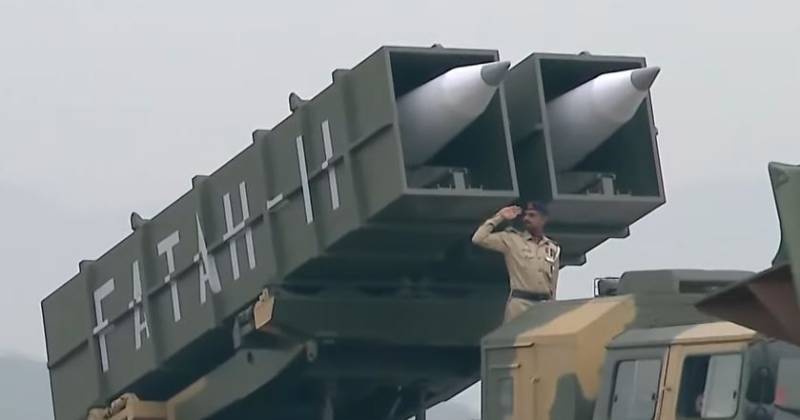

The nature of warfare has changed dramatically in the twenty-first century. Modern wars are no longer fought only with tanks, fighter jets, artillery, and infantry divisions. Today’s battlefield is multidimensional, where cyber operations, electronic warfare, drone swarms, artificial intelligence, satellite surveillance, psychological manipulation, media narratives, and public perception often matter as much as missiles and bombs. This transformation has given rise to what many strategic thinkers describe as the “Modern Warfare Disorientation Strategy” — a method of warfare designed not merely to destroy an enemy physically, but to confuse, paralyze, psychologically exhaust, and strategically isolate the adversary.
The India-Pakistan conflict of May 2025 demonstrated this transformation more clearly than any South Asian conflict in recent history. The short but intense confrontation between the two nuclear powers became a defining example of hybrid warfare, drone warfare, electronic warfare, and information warfare operating simultaneously. It was one of the first major “cognitive wars” of South Asia, where perception and disruption became central military objectives.
Factually, the Modern Warfare Disorientation Strategy is a military doctrine aimed at overwhelming an opponent mentally, electronically, digitally, diplomatically, and operationally before decisive physical destruction occurs. Its core purpose is to create uncertainty inside enemy command systems, confuse political leadership, weaken public morale, interrupt communications, distort media narratives, and exhaust enemy decision-making capability.
In traditional warfare, armies targeted military infrastructure. In modern disorientation warfare, the target is the enemy’s ability to think coherently and respond effectively. This strategy operates through several interconnected dimensions. The first dimension is electronic warfare. Modern militaries attempt to jam radars, intercept communications, manipulate GPS systems, and blind enemy surveillance assets. During the May 2025 conflict, drone operations and electronic countermeasures became highly visible. Both India and Pakistan relied heavily on unmanned systems, while electronic warfare exposed vulnerabilities in air-defense coordination and command structures.
The second dimension is drone warfare. Drones are inexpensive compared to fighter aircraft, but they can produce enormous psychological and strategic effects. Swarm drones can saturate defenses, force expensive interceptions, create panic among civilians, and continuously pressure military installations. The May 2025 confrontation was the first major drone war between India and Pakistan. The extensive use of loitering munitions, surveillance drones, decoys, and electronic warfare-enabled UAVs revealed how future wars may increasingly depend on autonomous systems rather than conventional air battles alone.
The third and most powerful dimension is information warfare. In modern conflicts, social media has become an active battlefield. False videos, manipulated images, deepfakes, fabricated victories, and psychological propaganda spread faster than official military briefings. During the May 2025 conflict, misinformation flooded digital platforms from India. The AI-generated disinformation and recycled combat footages from India tried to distort public understanding of the war. In many cases, perception itself became a weapon.
The fourth dimension is cyber warfare. Cyberattacks target communication networks, government systems, military databases, banking infrastructure, and media organizations. Modern warfare increasingly seeks to cripple an enemy without directly occupying territory. Cyber disruption can create nationwide paralysis at minimal physical cost.
The fifth dimension is psychological warfare. The objective here is not only to damage military capability but to weaken the enemy’s confidence. Fear, confusion, uncertainty, and internal political pressure become strategic tools. A nation that loses psychological stability may fail even before suffering catastrophic battlefield losses. The constant stream of contradictory claims, viral rumors, exaggerated damage reports, and emotional media coverage during the May 2025 conflict demonstrated how modern warfare targets civilian psychology alongside military assets.
Pakistan’s handling of the May 2025 conflict is viewed by many observers inside Pakistan as an example of effective multi-domain defensive warfare. Pakistan’s military strategy appeared focused on rapid response, integrated air defense, electronic countermeasures, and narrative management. Pakistani officials claimed success in neutralizing multiple hostile drones and maintaining operational continuity under intense pressure. Independent assessments acknowledged that the conflict demonstrated the growing sophistication of Pakistan’s defensive and retaliatory capabilities, especially in electronic and drone warfare environments.
Pakistan’s perceived success was not necessarily based on territorial conquest or prolonged military occupation. Rather, it emerged from denying India the strategic dominance it expected to achieve quickly. In modern warfare, survival itself can become victory if a smaller or pressured state successfully absorbs aggression, preserves command integrity, maintains public morale, and imposes strategic uncertainty on a larger adversary.
Another important factor was escalation management. Despite intense exchanges, both states remained aware of the nuclear dimension. This forced both militaries to rely heavily on stand-off weapons, drones, missiles, cyber operations, and media narratives instead of massive ground invasions. The conflict broke several previous operational norms while remaining below the nuclear threshold. This reflects the future direction of regional warfare: high-intensity but short-duration conflicts fought under the shadow of nuclear deterrence.
The war also exposed a major global reality: conventional military superiority alone no longer guarantees strategic victory. A technologically adaptive state with effective electronic warfare, resilient communications, strong intelligence coordination, cyber capability, and psychological preparedness can offset numerical disadvantages. This is why the May 2025 conflict is increasingly discussed as a future case study in military academies and strategic circles.
For smaller powers confronting external aggression, the lessons are profound. First, information dominance is becoming as important as air superiority. Second, drones and cyber tools are reducing the strategic gap between large and medium-sized militaries. Third, national resilience, public morale, and strategic communication now form an essential part of defense doctrine. Finally, modern warfare is no longer limited to battlefields; it extends into smartphones, television screens, satellite systems, financial networks, and social media platforms.
The emerging reality is clear: future wars will not be won solely by destroying enemy armies. They will be won by disorienting the enemy state psychologically, electronically, digitally, economically, and politically. The battlefield of the future is the human mind itself.
The May 2025 India-Pakistan conflict demonstrated that modern warfare has entered a new era — an era where perception competes with firepower, drones compete with fighter jets, algorithms compete with missiles, and information competes with armies. Whether one views the outcome through political, military, or strategic lenses, the conflict undeniably showed that modern warfare disorientation strategy has become one of the defining doctrines of contemporary global conflict.