
Amnesty condemns Bihar CM over woman hijab removal; case filed in Lucknow court
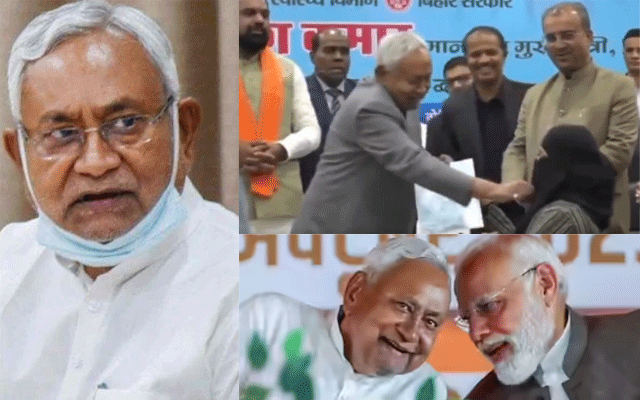

A routine government ceremony in India’s Bihar state has escalated into an international human rights controversy after Chief Minister Nitish Kumar was filmed pulling a Muslim woman’s niqab during a public event, an act widely condemned as intrusive, humiliating and unlawful.
The incident took place earlier this week in Patna (city in Bihar, India) during the distribution of appointment letters to AYUSH (Ayurveda, Yoga & Naturopathy, Unani, Siddha, and Homeopathy) doctors.
As Dr Nusrat Parveen stepped onto the stage to receive her certificate, Kumar gestured for her to remove her niqab. Before she could respond or give consent, he reached out and pulled it himself, briefly exposing her mouth and chin.
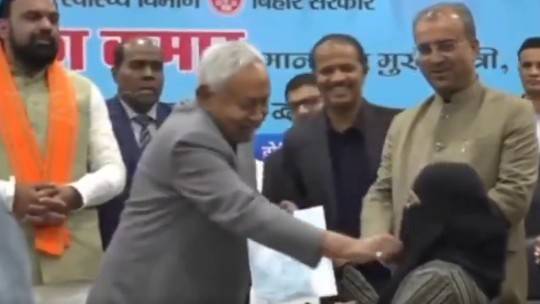
The moment, captured on video, appeared to catch Parveen off guard.
Two men on stage, including Bihar Home Minister Samrat Choudhary, made half-hearted attempts to stop the chief minister, while others laughed, treating the moment as an awkward misstep rather than a serious breach of personal autonomy.
The clip has since gone viral, triggering outrage across India and Pakistan.
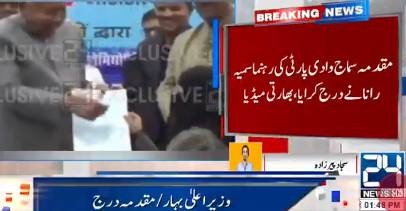
Following the incident, a formal case has reportedly been registered in Lucknow, the capital of Uttar Pradesh.
The complaint was filed by Samajwadi Party leader Samiya Rana, who described the act as degrading and unlawful.
The filing of the case marks a significant development, as demands grow within India for legal accountability and a harassment inquiry against the chief minister.
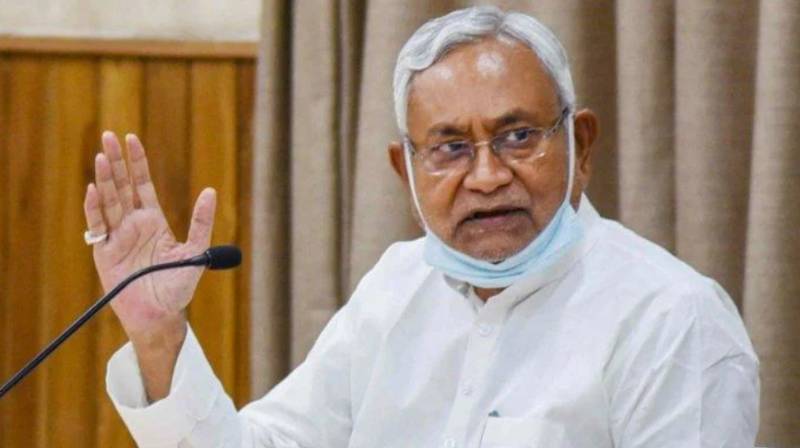
The incident has also intensified calls for Kumar’s resignation, with critics arguing that such conduct is incompatible with public office.
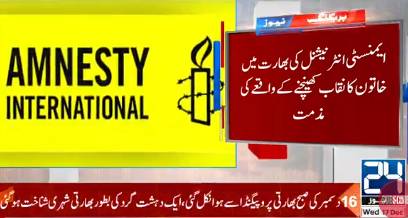
Amnesty International has described the act as a “serious attack on a woman’s dignity.”
In a statement condemning the incident, the global human rights organisation called for the removal of Bihar Chief Minister Nitish Kumar from office.
“Any public office-holder forcibly removing a woman’s hijab or niqab is committing a grave assault on her dignity, identity and personal freedom,” the organisation said. Amnesty added that such actions not only violate women’s fundamental rights but also promote fear and insecurity in society.
Human rights activists and civil society figures have echoed these concerns, calling for immediate, transparent and lawful action against those responsible.
As reported earlier by Dawn News on December 16, condemnation of the incident has extended beyond India.
The Human Rights Council of Pakistan described the act as “highly shameful, reprehensible and inhumane,” urging the Indian government to conduct an impartial investigation.
“This incident is not merely an insult to an individual but an open attack on human dignity, religious freedom, women’s personal autonomy and fundamental human rights,” the council said, calling on international human rights bodies to take notice and demand accountability.
The council also demanded a formal apology to Dr Parveen at both personal and official levels, alongside institutional safeguards to prevent similar incidents in the future.
Dr Parveen was reportedly one of 1,283 AYUSH doctors present at the ceremony. For many observers, what makes the incident particularly troubling is how casually it unfolded, not in a hostile confrontation, but on a formal stage, under state authority, with laughter in the background.
Covering one’s face with a niqab is a personal choice, shaped by religious, cultural or individual conviction. Regardless of broader debates around veiling, forcibly removing it, particularly by a man, and particularly in public, is widely recognised as humiliating and invasive.
While it is acknowledged that veiling can, in some contexts, be influenced by social pressure, rights advocates stress that this complexity does not grant anyone the right to violate a woman’s bodily autonomy. Consent, they argue, is the only acceptable standard, especially for political leaders entrusted with upholding constitutional values.