
First monsoon spell to hit country from June 25, says Met Office
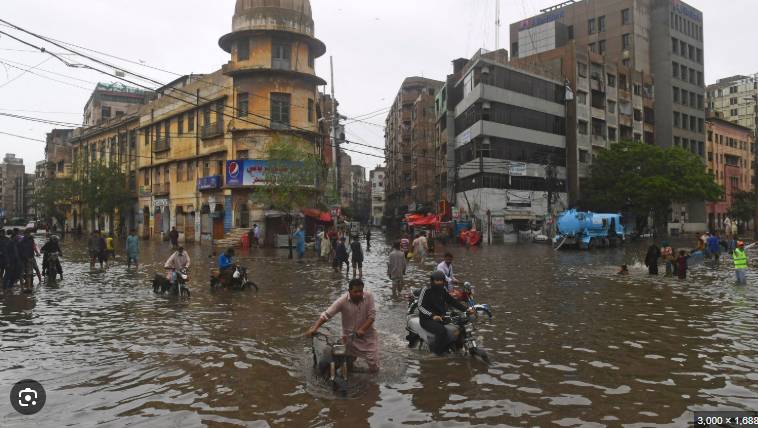

Different parts of the country, including Karachi, would receive the first spell of monsoon rains from June 25 to July 2, reported 24NewsHD TV channel.
Deputy Director Met Office Anjum Nazir Zegham said on Tuesday that from June 19 onwards, the weather in Karachi would remain cloudy with chances of drizzle in the morning and in the evening.
He said that presently the weather was hot in the port city on account of a low pressure that had formed over the Arabian Sea.
Met Office forecasts rain
Meanwhile, the weather department said on Tuesday that rain, accompanied by strong winds, was expected at a few places in eastern Punjab, south-eastern Sindh, Gilgit-Baltistan and Kashmir during the next 24 hours.
It said that elsewhere in the country, the weather would remain and hot, while extremely hot in the plains.
Around a month ago, the National Disaster Management Authority (NDMA) had informed the Senate Standing Committee on Climate Change that the upcoming monsoon season was expected to begin earlier than usual and bring heavier rainfall. During the committee’s visit to NDMA headquarters, NDMA Chairman Lt Gen Inam Haider Malik warned that the monsoon may begin around June 26–27, roughly three to four days ahead of its typical onset.
Rainfall across the country is likely to exceed normal levels by up to 5%, with northeastern Punjab bracing for a 50% increase.
The NDMA chief briefed the members on key monsoon and temperature forecasts based on 30 years of climate data.
He said that Punjab typically received 344mm of rainfall during the monsoon. “This year, it may receive around 388mm,” he said, adding, “Cities like Gujranwala, Lahore, Sialkot, and Narowal are projected to receive up to 380mm of rain. Similarly, rainfall in KP is expected to rise from the usual 243mm to nearly 300mm, with southern KP receiving normal or more than normal rainfall. Southern Punjab is also expected to see an increase.
However, northern KP and Balochistan are expected to receive below-normal rainfall, with temperatures likely to be higher than average. Azad Kashmir will also receive more rain, the NDMA chairman briefed.
The NDMA also warned of increased cloudbursts and potential flooding, particularly in glacial regions during the monsoon. “Rapid glacier melting due to elevated temperatures could trigger floods in Gilgit-Baltistan, KP, and Azad Kashmir,” the chairman noted.