
Venue changed for signing deal: Iran says US talks will proceed in two phases
US–Iran deal hosted by Pakistan to be signed in central Switzerland: MoU now scheduled to be signed on June 19: PM Shehbaz Sharif to attend with delegation: Trump says agreement includes commitment against nuclear weapons development: FM Araghchi says talks to be held in two phases: Strait of Hormuz to be first focus and blockade issues: Infrastructure reconstruction to be addressed before nuclear programme talks
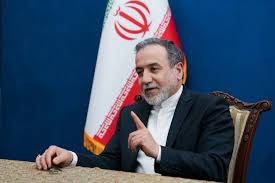

The venue for the signing of the United States–Iran peace agreement has been changed, while Iran has also unveiled details of the next phase of negotiations with Washington, the 24NewsHD TV channel reported on Wednesday.
Under the revised arrangements, the Memorandum of Understanding (MoU) between the United States and Iran will be signed in central Switzerland on 19 June.
The agreement is being hosted by Pakistan, and Prime Minister Shehbaz Sharif will attend the ceremony along with a high-level delegation. He will leave for Switzerland tomorrow.
The development comes as Iranian Foreign Minister Abbas Araghchi outlined a two-phase framework for upcoming talks between Tehran and Washington, which are scheduled to begin on Friday.
According to Araghchi, the first phase of the negotiations will focus on the Strait of Hormuz, maritime access and issues related to blockades.
He added discussions will also cover the reconstruction of infrastructure and other immediate concerns before the parties move on to broader strategic matters.
He said the second phase of the talks would address Iran’s nuclear programme, indicating that progress on earlier issues would pave the way for discussions on longer-term security and diplomatic arrangements.
Meanwhile, US President Donald Trump said the agreement contains a commitment that Iran will not pursue the development of nuclear weapons.
Trump described the accord as an important safeguard designed to prevent nuclear proliferation and strengthen regional security.
US President Donald Trump has said that it is clearly laid down in the MoU that Iran will not make nuclear weapons.
He has declared that the deal is a bulwark against Iran’s capability to make nuclear weapons.
The US president has said that the draft of the deal will be sent to the Congress, while the Strait of Hormuz will be completely opened by Friday.
Trump has said that Iran wants to resolve the issue at the earliest and do business. “Now there will be a progress on Abraham Accords,” he has hoped.
He has gone on to say that he is not pleased with the bombardment of Lebanon by Israel.
“Had there not been the USA, there would have been no Israel,” he has said, adding that the US does not want the peace deal to be scuttled merely because of one person.
He has said he did not like Israeli attack on Beirut. “Innocent civilians are being killed in these attacks,” Trump has said, adding that Israel’s prolonged conflict with Lebanon is having negative effects on deal with Iran.
According to the 24NewsHD TV channel, Iranian Foreign Minister Abbas Araghchi has said that upcoming negotiations between Iran and the United States will be conducted in two distinct phases.
He said initial discussions will focus on security and economic issues before addressing Tehran’s nuclear programme.
Speaking to diplomats in Tehran, Araghchi outlined the proposed framework for the talks and said the first stage would concentrate on matters related to the Strait of Hormuz and issues surrounding blockades and restrictions affecting regional trade and maritime activity.
The foreign minister said discussions would also cover the reconstruction and restoration of infrastructure affected by recent tensions and instability.
He described these issues as immediate priorities that require attention before broader strategic matters can be addressed.
According to Araghchi, negotiations on Iran’s nuclear programme will take place during the second phase of the dialogue process.
He indicated that discussions on nuclear-related issues would follow progress on the earlier agenda items.
The Iranian foreign minister also warned that any attack on Lebanon would constitute a violation of the agreement reached between the parties.
He stressed the importance of respecting commitments aimed at reducing tensions and preserving regional stability.
Earlier, AFP reported that the United States and Iran are to launch talks on a final settlement to their conflict on Friday in Switzerland, officials said, as news that the Strait of Hormuz will reopen sent world oil prices tumbling.
Negotiations over a final deal are to start immediately after a signing ceremony and continue during a 60-day window, leading to decisions on the fate of Iran's nuclear programme and a plan for the lifting of international economic sanctions.
Optimism that the war triggered by the February 28 US-Israeli strikes on Tehran might be coming to an end was dented, however, by fresh Israeli strikes on south Lebanon.
Iran's central military command, Khatam al-Anbiya, warned that Israel should "await a harsh response" to the strikes, which Lebanon's state news agency said targeted two vehicles in the town of Mayfadoun and another in nearby Shukeen, near the town of Nabatieh in southern Lebanon, killing four.
The Israeli military said it conducted a strike after it "identified a suspicious vehicle" near where its soldiers were operating and that its forces intercepted several rockets and carried out an air strike against a launcher.
- Oil prices tumble -
Friday's signing ceremony will take place at Switzerland's mountainside Burgenstock resort, perched high above Lake Lucerne, the Swiss foreign ministry said.
According to a senior US official, speaking on condition of anonymity, the framework agreement has already been signed electronically by President Donald Trump, Vice President JD Vance, Iran's deputy foreign minister Majid Takht-Ravanchi and top negotiator Mohammad Bagher Ghalibaf.
"Likely on Friday... a new round of negotiations between Iran and the United States to reach a final agreement will begin," Iranian Foreign Minister Abbas Araghchi said. "In the final agreement, decisions will be made on the nuclear issues and the lifting of sanctions."
Ghalibaf will attend the signing and the US side will be represented by Vance, who said Trump might also attend.
The developments came after Trump said an Iranian blockade on the crucial Hormuz strait oil and gas route would be fully lifted by Friday, in a major boost to the global economy.
"Ships are starting to move, many loaded up with Oil, out of the Strait of Hormuz," Trump said Monday.
Optimism over the reopening of Hormuz has sent the price of the international benchmark Brent North Sea crude tumbling 5.1 percent to just under $79 a barrel. The main US oil contract, West Texas Intermediate, dropped 5.8 percent to slightly over $76 a barrel.
The US had, in retaliation for Iran's action, imposed its own blockade on Iranian ports. But Iranian state television said Iranian tankers had resumed shipping following the deal, as Takht-Ravanchi said the US blockade "has been lifted prior to the formal signing".
Sporadic episodes of violence since an April ceasefire had threatened a deal, but weeks of indirect negotiations mediated by Pakistan and Qatar built momentum for an interim deal.
Yet a comprehensive agreement on Iran's nuclear ambitions and Western sanctions remains elusive.
- 'Broken commitments' -
The US and Israel are pressing to strip Iran of its stockpile of highly enriched uranium, said to have been buried by US strikes last year, while Iran has insisted on its right to enrichment.
The agreed framework has however paved the way for talks on those key disputes.
Asked at the G7 in France when the text would be released, Trump said: "It's a very powerful document, and I want it to be released. So probably pretty soon."
Iran's ultraconservative newspaper Vatan-e Emrooz praised the agreement as a "Trump surrender document".
But Araghchi struck a more cautious note.
"We have a history of broken commitments... we have a history of agreements being torn up. All of this is present in our minds," he said.
In a flurry of interviews to talk up the deal, Vance said no US taxpayer money would go to Iran under the deal, as Iranian media reported $12 billion of frozen assets would be released.
Vance told NBC that nuclear inspectors would also be allowed to enter Iran.
Analysts have warned that the parallel conflict in Lebanon between Israel and Iran-backed Hezbollah presents the biggest threat to the diplomatic thaw.
Lebanon was pulled into the war in March when Hezbollah launched rockets at Israel after the killing of Iran's supreme leader, prompting Israeli strikes and a ground invasion.
That theatre of the conflict could be "the biggest ultimate spoiler" of the coming negotiations, said Ross Harrison, a senior fellow at the Middle East Institute.