
‘The Last Titan’: Scientists discover Southeast Asia’s largest dinosaur hidden in Thailand
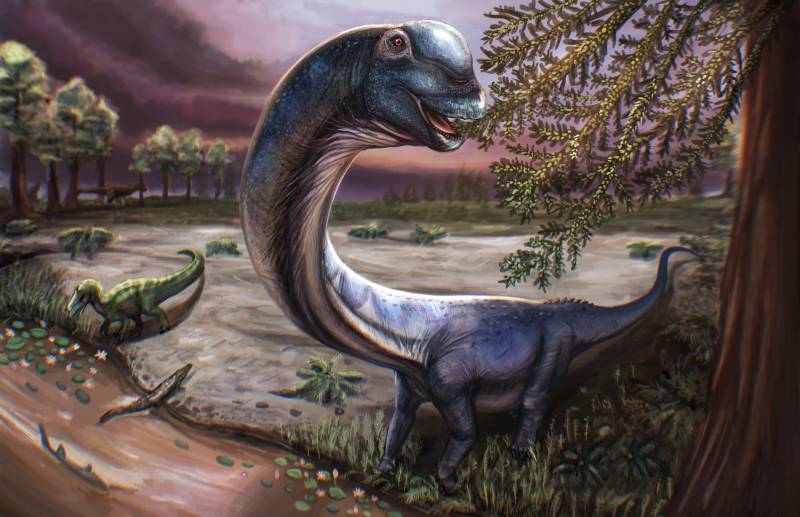

Paleontologists in Thailand have uncovered a gigantic new species of long-necked dinosaur that is now believed to be the largest dinosaur ever discovered in Southeast Asia.
The newly identified species, named Nagatitan chaiyaphumensis, was discovered from fossils found near a pond in Thailand’s Chaiyaphum province more than a decade ago. After years of detailed research by scientists from University College London, Mahasarakham University, Suranaree University of Technology, and Thailand’s Sirindhorn Museum, the findings have now been published in the journal Scientific Reports.
Researchers estimate the dinosaur measured nearly 27 meters (89 feet) in length and weighed around 27 tonnes — roughly equal to nine adult Asian elephants. One of its front leg bones alone measured 1.78 meters, nearly the height of an average human.
The dinosaur’s name combines “Naga,” the mythical serpent of Southeast Asian folklore, with “Titan,” inspired by the giants of Greek mythology. The species name honors Chaiyaphum province, where the fossils were discovered. With this discovery, Thailand now officially has 14 named dinosaur species.
Scientists say Nagatitan lived between 100 and 120 million years ago during the Early Cretaceous period. It belonged to the sauropod group of dinosaurs, famous for massive plant-eaters such as Diplodocus and Brontosaurus.
Lead researcher Thitiwoot Sethapanichsakul described the dinosaur as enormous even by sauropod standards, saying it was at least 10 tonnes heavier than the famous Diplodocus skeleton known as “Dippy.” However, he noted it was still smaller than prehistoric giants such as Patagotitan and Ruyangosaurus.
Researchers have nicknamed the discovery “the last titan” because the fossils were found in Thailand’s youngest dinosaur-bearing rock formations. Scientists believe later geological changes transformed the region into shallow seas, potentially making Nagatitan one of the last giant sauropods to roam Southeast Asia.
The ancient environment where the dinosaur lived is believed to have been dry to semi-dry, crossed by river systems filled with fish, freshwater sharks, crocodiles, and flying reptiles known as pterosaurs. The area was also inhabited by smaller plant-eating dinosaurs and massive predators including carcharodontosaurians and spinosaurids.
Experts classified Nagatitan as part of the somphospondylan sauropods and specifically within the Euhelopodidae group, a lineage found only in Asia. Scientists say its unique spine, pelvis, and leg bone structures make it stand out from previously discovered species.
To showcase the scale of the prehistoric giant, a life-size reconstruction of Nagatitan is now on display at the Thainosaur Museum in Bangkok, allowing visitors to walk beneath what is considered Southeast Asia’s largest known dinosaur.