
Senate approves bill to abolish death penalty for public stripping, sheltering hijackers
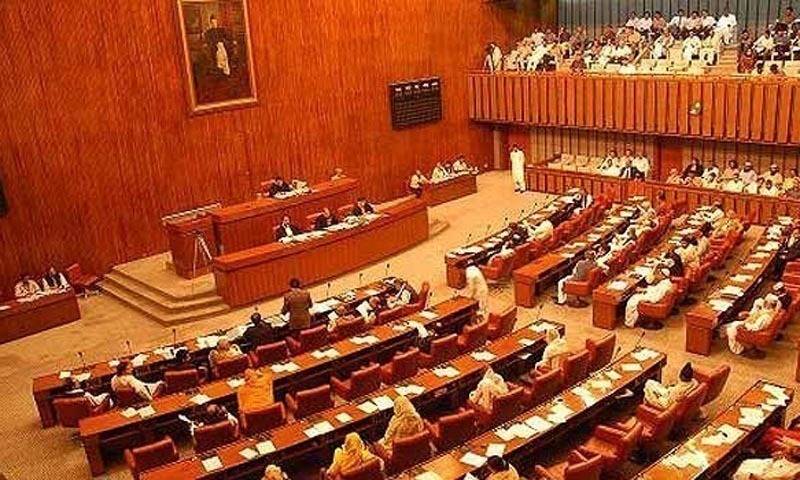

The Senate of Pakistan Friday passed a controversial bill amending the Criminal Laws, proposing to abolish the death penalty for two serious offences: publicly stripping a woman and sheltering hijackers, reported 24NewsHD TV channel.
The legislation, introduced by Minister of State for Interior Talal Chaudhry, passed with a majority vote, igniting a fierce debate in the Upper House.
Under the proposed amendments, individuals convicted of criminally assaulting or exposing a woman in public will no longer face the death penalty. Instead, the punishment will include life imprisonment, property confiscation, and heavy fines. The crime remains non-bailable, non-compoundable, and the accused may be arrested without a warrant.
Similarly, the bill abolishes capital punishment for providing shelter to hijackers, replacing it with life imprisonment and a fine. Like the other offence, this too will be non-bailable and non-compoundable, with initial arrests allowed without warrants.
The bill sparked intense criticism from several senators, particularly women lawmakers. Senator Samina Mumtaz lashed out, saying, "We’re weakening laws that protect women. This is an Islamic state, and we’re making laws softer just to please the world. Why reduce punishments for those who strip women in public?"
Echoing her sentiment, Senator Ali Zafar argued that stripping a woman in public deserved the death penalty, saying it was a crime of such intensity that "life imprisonment is not enough."
On the other side of the aisle, Law Minister Azam Nazir Tarar defended the move, challenging the notion that harsher penalties reduce crime. "We already have the death penalty for over 100 crimes, and crime is still rampant. Europe has abolished capital punishment and has empty prisons being turned into museums," he said.
Tarar also highlighted the potential for false accusations, particularly in rural disputes.
"People make false claims in minor disputes, such as over water, alleging a woman’s clothes were removed to get the accused the death penalty. That's a serious misuse of the law," he warned.
He added that during General Zia-ul-Haq's era, the punishment for this crime was escalated to death, a shift that led to a sharp rise in case registrations, not necessarily a decrease in offences.
Tarar said that only four crimes under Sharia law warrant the death penalty, and that broadening capital punishment dilutes its seriousness and opens the door to legal misuse. He asserted that life imprisonment remains a "very serious" punishment, and that removing the death penalty in these cases is a step toward judicial balance.
The bill now moves forward for approval in the National Assembly, where it is likely to face further scrutiny amid the ongoing national discourse on justice, gender rights, and penal reform.