
Italy returns seven more stolen Pakistani artefacts as cultural cooperation deepens
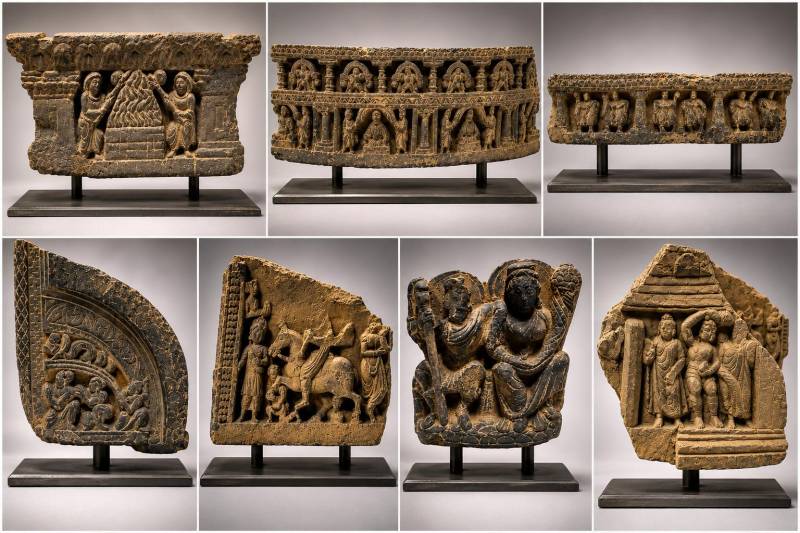

Seven historical artefacts recovered by Italian authorities have been returned to Pakistan, marking another milestone in ongoing cooperation between Islamabad and Rome in combating the illegal trafficking of cultural heritage, the Embassy of Pakistan in Rome said on Thursday.
According to the embassy's spokesperson, the seven artefacts were recovered by the Italian Guardia di Finanza, a law enforcement agency operating under Italy's Ministry of Economy and Finance, and were formally handed over for repatriation to Pakistan.
The spokesperson said the artefacts had initially been transferred to the Consulate General of Pakistan in Milan in April 2025 as part of the repatriation process.
The recovered items arrived in Islamabad on Thursday, completing their return to Pakistan after being recovered from Italy.
The latest repatriation follows an earlier return of 90 historical artefacts to Pakistan in October 2025.
According to the embassy, those artefacts had been seized in 2007 by the Carabinieri Command for the Protection of Cultural Heritage, a specialised unit operating under Italy's Ministry of Culture that is responsible for combating the illicit trade of cultural property and recovering stolen antiquities.
The embassy described the return of the artefacts as another example of the strong cooperation between Pakistan and Italy in the protection and preservation of cultural heritage.
The spokesperson said Pakistan and Italy occupy an important place globally in terms of archaeological heritage, museums, historical sites and cultural reserves.
The two countries are actively promoting bilateral cooperation in archaeological research, protection of cultural heritage, capacity building and professional training.
Pakistan and Italy also share a long history of collaboration in archaeology dating back several decades.
The embassy recalled that the Italian Archaeological Mission was established in Swat in 1955 under the leadership of renowned Italian scholar Professor Giuseppe Tucci.
In recognition of his contributions to academic research and archaeology in Pakistan, the government awarded Professor Tucci the Hilal-e-Imtiaz in 1959.
The embassy also highlighted the contributions of other Italian archaeologists who have worked extensively in Pakistan.
Professor Luca Olivieri was awarded the Sitara-e-Imtiaz in 2016, while Professor Valeria Piacentini received the Tamgha-e-Pakistan in 2025 in recognition of their services to archaeological research and cultural preservation.
The spokesperson said Pakistan takes pride in being home to some of the world's oldest civilisations and described the country as a cradle of civilisation with a rich archaeological legacy.
The recovery and repatriation of the artefacts, the embassy said, demonstrate the effectiveness of mechanisms established to counter the illegal trafficking of cultural property and reflect both countries' commitment to safeguarding historical heritage.
It also highlights what the embassy described as exemplary diplomatic cooperation between Pakistan and Italy in protecting cultural assets and facilitating their return to their country of origin.
The Embassy of Pakistan in Rome expressed gratitude to the Carabinieri Command for the Protection of Cultural Heritage, the Guardia di Finanza, and the Office of Export Licensing of the Italian Ministry of Culture for their role in the recovery and repatriation process.
Officials said the return of the artefacts represents another step forward in efforts to preserve Pakistan's cultural heritage and strengthen bilateral cooperation between the two countries in the fields of archaeology, heritage conservation and cultural diplomacy.