
US-Iran agreement enters force with Pakistan's signing as mediator
PM Shehbaz signs memorandum: Iran announces immediate reopening of Strait of Hormuz: Islamabad Accord outlines sanctions relief, respect of sovereignty and path towards final settlement: Oil prices fall and Asian stock markets rise after signing Islamabad Accord
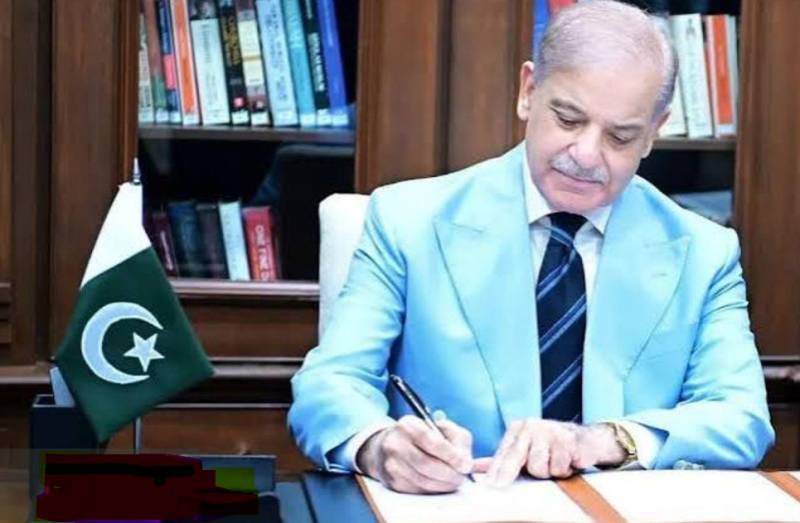

Pakistan has formally signed the Islamabad Memorandum of Understanding (MoU) as a mediator after the United States and Iran concluded a landmark agreement aimed at reducing tensions and laying the groundwork for a broader settlement between the two countries.
The 24NewsHD TV channel reported on Thursday that Prime Minister Shehbaz Sharif signed the historic memorandum on behalf of Pakistan. US President Donald Trump signed the document electronically from France, while Iranian President Masoud Pezeshkian signed it from Tehran.
Officials said the agreement came into force immediately upon completion of the signing process.
Following the implementation of the Islamabad MoU, Iran announced the immediate reopening of the Strait of Hormuz, one of the world's most important shipping routes for energy supplies.
The development was widely viewed as a major step towards restoring stability in regional trade and global energy markets.
According to 24NewsHD TV, President Trump adopted a notably conciliatory tone after the agreement was signed. Responding to a journalist's question about Iran's ballistic missile capabilities, he said it would be unfair to deprive Iran of ballistic missiles while other countries in the region maintained similar capabilities.
Trump stressed, however, that ballistic missiles were not part of the nuclear negotiations between Washington and Tehran.
The text of the agreement states that the United States will lift existing sanctions and refrain from imposing new ones under the framework of the accord.
Both sides have also agreed to halt military operations immediately and permanently across all fronts, including Lebanon. The memorandum further commits the two countries to respecting each other's sovereignty and territorial integrity.
American officials indicated that the United States could move towards releasing frozen Iranian assets. President Trump also suggested that Iran would gain access to a 300-billion-dollar investment fund and said that other countries would be free to invest in Iran if they wished.
Under the agreement, Iran's nuclear programme will remain at its current stage, while Tehran has reaffirmed that it will not seek to acquire nuclear weapons. Both countries have agreed to address the issue of enriched uranium stockpiles through future negotiations. The accord also states that no additional American troops will be deployed to the region.
The United States has pledged to issue all necessary licences, waivers and authorisations required for financial transactions linked to Iran. The final agreement is expected to receive international endorsement through a future resolution of the United Nations Security Council.
Russia and Türkiye welcomed the signing of the Islamabad MoU, expressing satisfaction with the breakthrough and its potential to contribute to regional peace and stability.
Financial markets responded positively to the development. Global oil prices fell sharply after the agreement was signed, with Brent crude dropping to 78 dollars per barrel and US crude declining to 75 dollars per barrel. UAE Murban crude was trading at 74 dollars per barrel.
Investor confidence also strengthened across Asia, where major stock markets reached new highs. Shares in Japan, South Korea and Taiwan posted gains as traders welcomed signs of easing geopolitical tensions and improved prospects for global economic stability.