
Pakistan ready for talks if Afghan Taliban hand over terrorists: ISPR DG
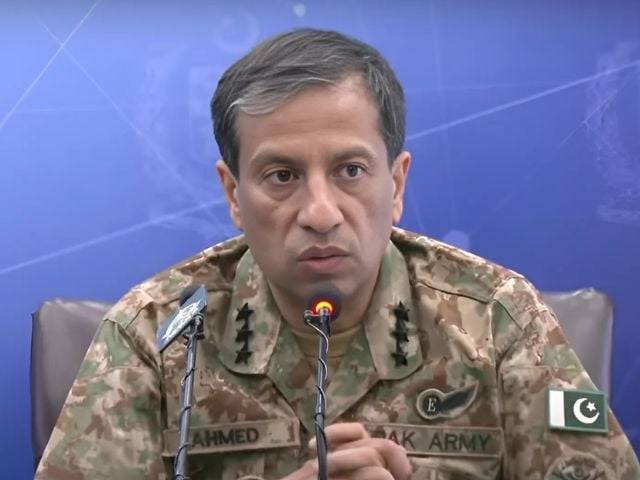

Director General of Inter-Services Public Relations (ISPR) Lieutenant General Ahmed Sharif Chaudhry said on Wednesday that Pakistan is ready to hold talks with the Afghan Taliban, but stressed that they must first hand over terrorists and dismantle terror infrastructure on their soil.
Speaking in a TV interview, the military spokesperson stated that the Afghan Taliban must decide whether they prioritise the Tehreek-i-Taliban Pakistan (TTP) or Pakistan, and whether they stand for terrorism or peace. He said that the Afghan Taliban regime was sheltering terrorists, including within government buildings, and called on them to hand over militants to Pakistan and eliminate centres of terrorism.
The DG ISPR said that the Afghan Taliban had invited Somalia’s Al-Shabaab to Afghanistan and were also in contact with Hamza bin Laden, son of Osama bin Laden, urging him to relocate there. He said Afghanistan had become a hub for global terrorism, adding that Pakistan was blocking their expansion and fighting not just for itself but for the entire region and the world.
Referring to recent military actions, he said Pakistan had targeted weapons depots and drone storage facilities in Kabul that were being used in terrorism against Pakistan. He added that these strikes were carried out in response to 53 attacks by Afghan Taliban forces on Pakistani check posts.
“They started, Pakistan has responded,” he said, adding that Pakistani forces had struck 81 locations, all of which were linked to infrastructure supporting terrorists.
The military spokesperson said that explosions from targeted ammunition depots were visible across the city, rejecting claims of civilian casualties as “propaganda”. He alleged that Taliban fighters often operate in civilian clothing and use drug addicts in suicide attacks.
He emphasised that Pakistan had no issue with the people of Afghanistan, describing them as “brothers and sisters” who were themselves victims of oppression under the current regime. “We did not target Afghans but terrorists,” he reiterated.
The DG ISPR also rejected the notion that Pakistan had imposed war on Afghanistan, stating instead that the war on terrorism had been imposed on Pakistan, which had lost thousands of lives over decades of conflict.
He said that foreign involvement, claiming that India was supporting terrorism and supplying drones to the Afghan Taliban, adding that Pakistan had intercepted drones entering from Afghanistan.
Highlighting past attacks, he said incidents such as the Tarlai mosque blast and the attack on Wana Cadet College were carried out by militants trained in Afghanistan. He also claimed that leaders of terrorist groups, including foreign nationals, were present there.
He concluded by stating that Pakistan had never refused dialogue but questioned the possibility of meaningful talks without guarantees, urging the Afghan Taliban to take concrete steps against terrorism.
Inter-Services Public Relations (ISPR) Director-General Lieutenant General Ahmed Sharif Chaudhry on Wednesday dismissed as “ridiculous” claims that Pakistan had targeted a drug rehabilitation centre in Afghanistan, stating that the military had in fact struck an ammunition storage depot.
Speaking in an interview on the private television programme Capital Talk, the military spokesperson questioned the claim, saying: “They’re saying that there was some drug rehabilitation centre there. Someone ask them why have you made a drug rehab centre in the middle of an ammunition storage. Which hospital in the world is there that is made beside an ammo storage where you have kept missiles and ammunition. Why was it made? because it was never there.”
He further questioned who could construct such a facility, rejecting the allegations outright.
The ISPR DG also alleged foreign involvement in terrorism, stating: “Every child in Pakistan knows that India is behind this terrorism, using Afghanistan as its base of operations. It is Indian-sponsored, funded terrorism whose base of operations is Afghanistan.”
Providing details of recent incidents, he said that Afghanistan had been used as a base of operations in every terrorism-related attack in Pakistan. Referring to a recent attack on worshippers in Tarlai, he said the attacker had come from Afghanistan after receiving training there.
He added that similar attacks had been carried out in Wana and Bannu, targeting mosques, police and civilians, and maintained that all attackers had come from Afghanistan. Questioning the whereabouts of terrorist leadership, he claimed that they were being sheltered in Afghanistan.
The military spokesperson rejected the notion that Pakistan had imposed war on Afghanistan, stating instead that the war on terror had been imposed on Pakistan, which had lost thousands of citizens over decades of conflict. He emphasised that no other country had fought terrorism in the same way as Pakistan, its people and its security forces.
At the same time, he clarified that Pakistan had no issue with the people of Afghanistan, describing them as “brothers and sisters” who were themselves victims of the same groups.
“They themselves are victims of their oppression, they themselves are under these warlords, who have imposed this war, who have no connection with Islam, they are on their mercy, they themselves are living under them,” he said.
He reiterated that Pakistani forces had targeted “terrorist hideouts” along the Pakistan-Afghan border last month. “We did not target Afghans; we targeted terrorists,” he stressed.
According to the ISPR DG, forces of the Afghan government subsequently struck Pakistani posts at 53 locations along the border. “They started it by attacking Pakistan along the border at regular posts, and this is our response,” he said, referring to Operation Ghazab Lil Haq, which has now been temporarily paused.
He added that Operation Ghazab Lil Haq was not a standalone campaign but part of Pakistan’s broader war against terrorism, which he said had been imposed by terrorists and their sponsors.
The ISPR DG stated that after Afghan Taliban forces struck at 53 locations, Pakistan responded by targeting them inside their territory, asserting that the neighbouring regime had initiated the conflict.
“We responded and now we are going to take them to task,” he said.
He concluded by stating that Pakistan had so far carried out airstrikes at 81 locations, all of which were aimed at terrorist support infrastructure.