
India will feel consequences for decades if it stops Pakistan's water: ISPR DG
Says India main sponsor, abettor of terrorism in region, especially Pakistan
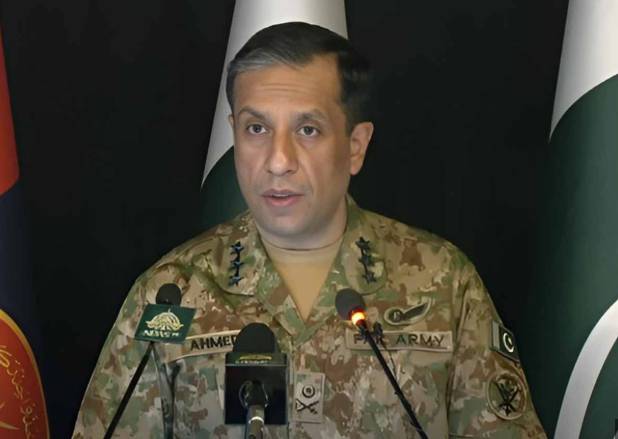

Lieutenant General Ahmed Sharif Chaudhry, director general of the Inter-Services Public Relations (ISPR), has said that Inia cannot deter, coerce or make Pakistanis bow down through aggression.
In an interview with R T Arabic, Lt-Gen Chaudhry said that India tried to deter Pakistanis, but it forgot that it could not do this to the people and armed forces of Pakistan. He said the world saw how the entire Pakistani nation stood like a Bunyan-um-Marsoos, an iron wall, against the Indian aggression.
When asked what will be Pakistan's reaction if India stops Pakistan's water, the ISPR DG said, “I think the government of Pakistan has made it absolutely clear. There is nothing more for the army to say. I can only say that it is some mad man who can think that he can stop water of 240 million plus people of this country. Dare not, cannot. You want me to explain those actions. I hope that time doesn’t come, but it will be such action that the world will see and the consequences of that will be felt for years and decades to come. Nobody dare stop water of Pakistan.”
The ISPR DG said that peace is the first choice of the Pakistani people and the international community understands this spirit of the Pakistani nation. He said that India was the main sponsor and abettor of terrorism in the region, especially in Pakistan, as it was funding Fitna al Khwarij and terrorist groups operating in Balochistan. He said that Indian policy of sponsoring terrorism is the main cause of tension with Pakistan.
Instead of acknowledging and dealing with this fact, he said, India hides behind its false narrative of terrorism and hubristically acts as a judge, jury and executioner. He said that India blamed Pakistan without any evidence said after the Pahalgam incident.
He said Pakistan had a categorical stance and asked India to provide evidence to any neutral body for probe and "we are ready to cooperate with it". But instead of opting for that rational approach, India unilaterally decided to attack mosques and innocent civilians in Pakistan.
The ISPR DG said it was then that Pakistan retaliated, and that too in a very mature, measured, proportionate and just manner. He said that Pakistan hit only military targets and not a single civilian infrastructure was targeted. He said Pakistan's retribution was swift and brutal, and put sense in the adversary to dial down and face the reality.
To a question, the DG said the Indian Defence Ministry requested de-escalation after Pakistan retaliated. As a peace loving country, he said, Pakistan accepted this request and then the interlocutors and international players stepped in to broker a ceasefire.
To another question, the DG said the armed forces performed the duty they were entrusted by the state and people of Pakistan, the duty of defending the country's sovereignty and territorial integrity, and they will continue to defend it at all costs.
The DG lauded the role of Pakistan's diplomatic corps and said they acted very finely and astutely, and engaged the international community in a remarkable manner.