
An all-weather Pak-China strategic cooperation
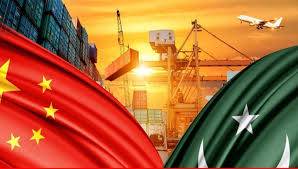

Over the decades, Pakistan and China supported each other during difficult times, whether in diplomatic forums, regional conflicts, or economic challenges. Their friendship gradually evolved beyond conventional diplomacy into what leaders of both countries proudly describe as an “all-weather strategic cooperative partnership.”
The completion of seventy-five years of diplomatic relations between Pakistan and China marks not merely the continuation of bilateral ties, but the evolution of one of the most enduring strategic partnerships in modern international politics. From diplomatic cooperation to economic integration, from defense collaboration to cultural exchanges, the relationship between the two neighboring countries has matured into a model of long-term trust, mutual respect, and strategic convergence. At a time when global alliances are rapidly shifting and geopolitical uncertainties dominate international affairs, the Pakistan-China partnership stands as a rare example of consistency and reliability.
One of the most defining moments in bilateral history was Pakistan’s facilitation of rapprochement between China and US during the early 1970s. Pakistan played a silent but critical diplomatic role in arranging the secret visit of Henry Kissinger to China, which eventually paved the way for normalization between Beijing and Washington. This diplomatic contribution strengthened China’s confidence in Pakistan as a dependable strategic partner.
CPEC has produced landmark achievements in Pakistan’s economic landscape. Massive investments in highways, energy projects, ports, and industrial zones have improved connectivity and reduced energy shortages that once crippled industrial growth. The development of Gwadar Port has given Pakistan strategic access to regional and international trade routes, while simultaneously providing China an important gateway to the Arabian Sea. Modern road networks connecting northern Pakistan to Gwadar have enhanced internal trade and regional mobility, reflecting the strategic depth of bilateral cooperation.
The most transformative phase of Pakistan-China relations emerged during the last three decades, particularly under the visionary leadership of Xi Jinping. His ambitious global development framework, the Belt and Road Initiative, changed the economic geography of Asia and elevated Pakistan’s strategic significance. Through CPEC, Pakistan became the flagship partner of the Belt and Road Initiative, opening a new era of infrastructure modernization and economic connectivity.
Under Xi Jinping’s leadership, China’s engagement with Pakistan expanded beyond infrastructure. Beijing invested heavily in energy production, helping Pakistan overcome years of electricity crises. Coal, solar, hydropower, and wind energy projects under CPEC significantly improved Pakistan’s power generation capacity. These projects not only stabilized industries but also created employment opportunities and encouraged foreign investment confidence.
Equally important is the diplomatic coordination between Islamabad and Beijing on international issues. China has repeatedly supported Pakistan’s position on key regional concerns at global forums, including the UN and SCO. Pakistan, in return, has firmly adhered to the One-China policy and supported Beijing on matters related to sovereignty and territorial integrity. Such mutual diplomatic backing reflects the depth of strategic confidence that few international relationships possess today.
Defense cooperation has also remained a central pillar of bilateral relations. China has consistently supported Pakistan’s defense modernization through technology transfer, military equipment, joint production ventures, and strategic coordination. Collaborative defense projects strengthened Pakistan’s deterrence capability and contributed to regional balance. Joint military exercises and intelligence cooperation further deepened mutual trust between the armed forces of both countries. In an increasingly volatile regional environment, this strategic partnership has emerged as a major stabilizing factor.
The leadership style of Xi Jinping deserves special attention in the context of Pakistan-China relations. His emphasis on connectivity, shared prosperity, and multipolar cooperation transformed China into a global economic force while simultaneously empowering partner nations through development-oriented diplomacy. Unlike traditional geopolitical models based purely on military alliances, Xi’s vision focused on economic interdependence and infrastructure-led development. Pakistan benefited enormously from this strategic outlook, particularly through long-term investments that addressed structural economic weaknesses.
Cultural and educational exchanges have also flourished over the years. Thousands of Pakistani students are studying in Chinese universities, while Chinese language institutions and cultural centers have expanded across Pakistan. Tourism cooperation, media partnerships, and people-to-people interactions have strengthened social understanding between the two nations. These cultural dimensions are essential because sustainable international partnerships are built not only through governments, but also through public goodwill and societal interaction.
As Pakistan and China celebrate seventy-five years of diplomatic relations, the partnership stands at a historic crossroads. The future demands expansion beyond infrastructure into advanced technology, artificial intelligence, agriculture modernization, digital connectivity, climate cooperation, and industrial innovation. Both countries possess enormous potential to shape regional economic integration and redefine Asia’s strategic future.
The Belt and Road Initiative and CPEC have already altered Pakistan’s development trajectory and enhanced China’s regional outreach. Despite global uncertainties and regional pressures, the friendship between Pakistan and China continues to grow stronger with time. The next phase of this partnership will likely determine not only the future prosperity of both nations, but also the broader geopolitical and economic direction of Asia in the twenty-first century. The seventy-five-year journey of Pakistan-China relations represents far more than ordinary diplomacy. It reflects a unique strategic partnership built upon trust, resilience, and mutual national interests. Under the visionary leadership of Xi Jinping, bilateral cooperation entered an unprecedented phase of economic transformation and regional connectivity.