
India’s Operation Sindoor against Pakistan breached int’l law: UN report
Special rapporteurs denounce Indian attacks on Pakistan: Say no country has the right to unilaterally suspend Indus Waters Treaty

The United Nations special rapporteurs have raised serious concerns over India’s recent military actions on Pakistani territory, declaring them a violation of the UN Charter, reported 24NewsHD TV channel on Friday.
Several UN experts urged India to respond and stress the importance of respecting international law.
The UN findings present a comprehensive critique that spans from the legality of cross-border strikes to non-compliance with a critical water-sharing Indus Waters Treaty.
The UN special rapporteurs issued a report analysing the Indo-Pak conflict, focusing on India’s May 7 Operation Sindoor. The report strongly objects to India’s unilateral use of force on Pakistani soil, calling it inconsistent with the UN Charter.
According to the experts, Pakistan denied involvement in the Pahalgam attack and demanded an impartial investigation. Despite this, India launched strikes without formally informing the UN Security Council.
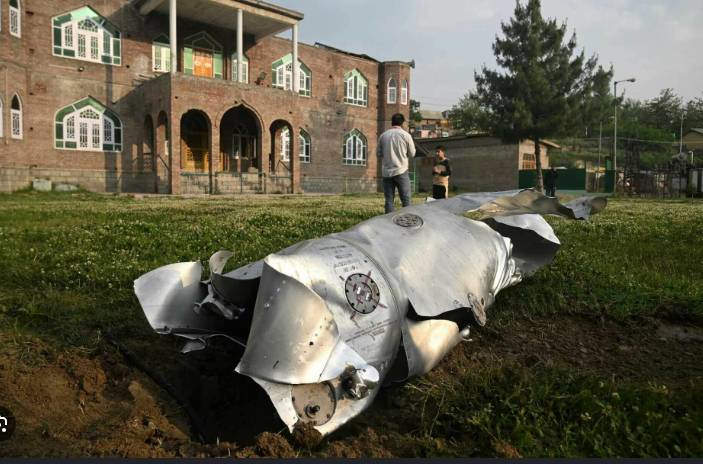
The report highlights that India’s actions damaged civilian infrastructure, including mosques, and resulted in multiple civilian casualties and injuries.
Experts emphasize that the use of force against civilians can violate the fundamental right to life under international law.
The UN experts note that India did not provide evidence linking Pakistan at the state level to the Pahalgam attack.
The report underlines that terrorism cannot justify unilateral military action, stressing that illegal use of force increases the risk of escalation.
Citing Article 51 of the UN Charter, Pakistan maintains the right to self-defence if Indian actions are deemed an armed attack.
The report underscores that India’s strikes constitute a serious breach of Pakistan’s sovereignty and the principle of non-interference.
The UN experts also reaffirmed Pakistan’s stance on the Indus Waters Treaty. They warned that any interruption or threat to water flow affects the basic rights of millions and cannot be used as political or economic leverage. No party has the right to unilaterally suspend the treaty, they add.
The UN report states that India has avoided arbitration and challenged the treaty’s established dispute-resolution mechanisms. The UN experts demand that India act in good faith, cease violating Pakistan’s rights under the treaty, and avoid creating human rights violations through water obstruction.
In a formal follow-up, UN Special Rapporteurs sent a detailed list of questions to the Indian government. This “council communication” demands India provide evidence for its earlier allegations, explain how it will compensate for the loss of civilian life, confirm its commitment to the Indus Waters Treaty, and state its intentions for a peaceful resolution in Jammu and Kashmir.
India was given a 60-day deadline to respond. The report stipulates that any answer would be published online and presented to the UN Human Rights Council. However, the report concludes by noting that India did not provide a response within the allotted timeframe, prompting the experts to release their findings publicly. The document stands as a formal, unanswered indictment of India’s actions from a UN mandate-holder perspective, escalating diplomatic pressure on New Delhi to address these international concerns.