Arab, Islamic FMs warn Iran of ‘high cost’ over violations

Arab and Islamic foreign ministers have warned that Iran will face a “high cost” if it continues its violations, stressing that countries in the region will not stand idle in the face of threats to their security and resources.
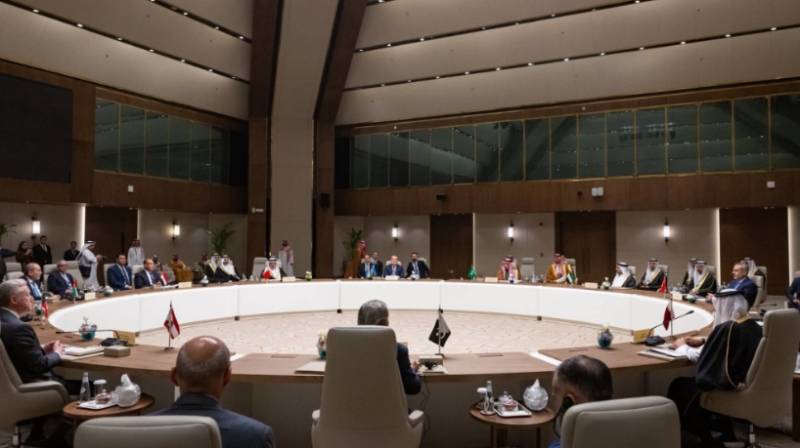
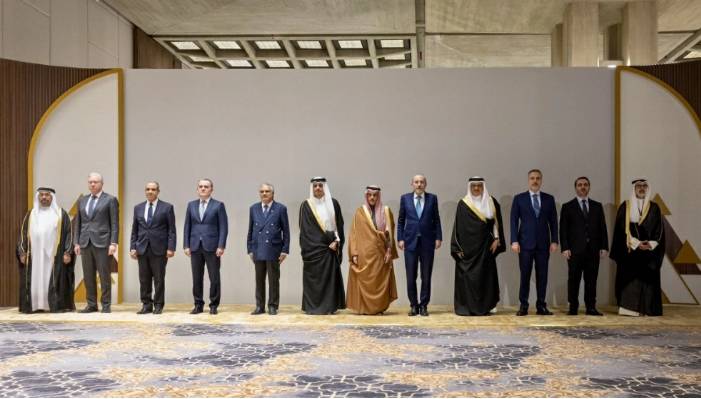
The warning came during a consultative ministerial meeting held in Riyadh on Wednesday, with the participation of Saudi Foreign Minister Prince Faisal bin Farhan and counterparts and representatives from Azerbaijan, Jordan, the UAE, Bahrain, Pakistan, Turkey, Syria, Qatar, Kuwait, Lebanon and Egypt.
The meeting emphasized the dangers of supporting militias and destabilizing regional security, urging Iran to seriously reconsider the “miscalculations”, and warning that continued violations of sovereignty and good neighbourly principles would have serious consequences for both Iran and regional stability.
The ministers strongly condemned Iranian missile and drone attacks, describing them as clear violations of sovereignty and international law, and holding Tehran fully responsible for the resulting damage.
They called for an immediate and unconditional halt to the attacks and urged Iran to comply with UN Security Council resolutions.
The meeting, convened by Saudi Arabia, aimed to address escalating tensions and strengthen regional coordination to safeguard stability.
United against attacks
Foreign ministers of Arab and Islamic countries strongly condemned Iranian attacks on regional states, calling for an immediate end to hostilities and respect for international law.
The ministers denounced the deliberate Iranian attacks using ballistic missiles and drones targeting residential areas and civilian infrastructure, including oil facilities, desalination plants, airports, housing sites and diplomatic missions.
They stressed that such attacks “cannot be justified under any pretext,” reaffirming the right of states to self-defence in accordance with Article 51 of the United Nations Charter.
The meeting called on Iran to immediately halt its attacks, respect international law and international humanitarian law, and adhere to principles of good neighbourliness as a first step toward de-escalation and restoring regional stability.
Participants emphasized that the future of relations with Iran depends on respect for state sovereignty, non-interference in internal affairs, and refraining from using military capabilities to threaten neighbouring countries.
They also urged Iran to comply with UN Security Council Resolution 2817 (2026), cease all attacks immediately, and avoid any provocative actions, including threats to close or disrupt international navigation in the Strait of Hormuz or undermine maritime security in Bab al-Mandeb.
The ministers further called on Iran to stop supporting, funding and arming affiliated militias in Arab countries, describing such actions as serving Iran’s interests at the expense of regional stability.
The meeting also reaffirmed support for Lebanon’s security, stability and territorial unity, backing efforts to ensure the Lebanese state maintains full control over its territory and monopoly over arms.
At the same time, the ministers condemned Israeli attacks on Lebanon and its expansionist policies in the region.
They pledged to continue close consultation and coordination to monitor developments, align positions and take necessary and legitimate measures to protect their security, stability and sovereignty, and to stop the ongoing Iranian aggression.–Saudi Gazette