
President Zardari renews Pakistan’s commitment to fight breast cancer
Calls for national solidarity, early detection and equal access to care on International Breast Cancer Awareness Day
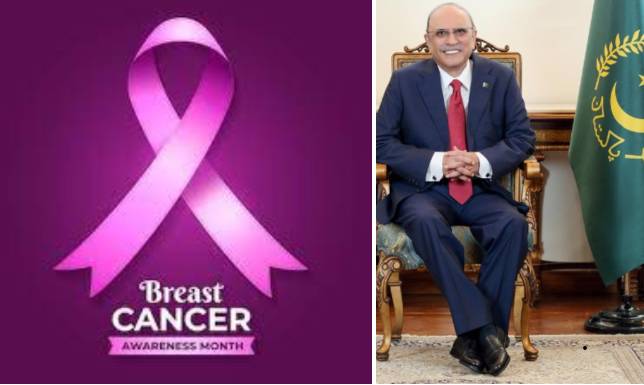

President Asif Ali Zardari has reaffirmed Pakistan’s unwavering commitment to fighting breast cancer, urging the nation to stand in solidarity with the global community in promoting awareness, prevention, and equitable access to care.
According to the 24NewsHD TV channel, President Zardari's statement was released on the occasion of International Breast Cancer Awareness Day, observed worldwide on October 19.
In his message, the president emphasised that the annual observance of this day brings nations together in their shared mission to reduce breast cancer mortality through early detection, timely treatment, and improved survival outcomes.
He highlighted that breast cancer remains the most commonly diagnosed cancer among women in Pakistan, accounting for nearly one-third of all female cancer cases in the country. Despite affecting women of all ages and backgrounds, he noted, the disease is highly treatable if detected early, with survival rates exceeding 90 percent.
“Our collective challenge lies in breaking the silence, dispelling the stigma, and ensuring that no woman delays screening or treatment due to fear or financial barriers,” the president said, according to a press release issued by the President’s Secretariat Press Wing.
President Zardari acknowledged the government’s efforts, led by the Ministry of National Health Services, Regulations & Coordination (MoNHSR&C), in addressing the growing health crisis. These efforts include establishing specialized breast cancer clinics at tertiary hospitals and select provincial teaching hospitals, offering free mammography and diagnostic services, and training lady health workers and primary care providers to identify early warning signs and refer patients for treatment.
He added that breast cancer screening is now being integrated into the broader framework of Primary Health Care (PHC) and Reproductive, Maternal, Neonatal, and Child Health (RMNCH) programs. Nationwide awareness campaigns are also launched every October through media outlets, educational institutions, and in collaboration with partners such as the World Health Organisation (WHO), UNFPA, and provincial health departments.
The president said the government is working on developing a National Cancer Registry and a comprehensive Cancer Control Program to provide population-based data that can inform policy decisions. He also highlighted the use of telemedicine and digital health platforms to deliver consultations, follow-ups, and counselling services to women in remote and underserved regions.
Beyond government-led initiatives, President Zardari underscored the importance of public-private partnerships in driving investment into cancer prevention, research, and support systems for patients. He encouraged greater involvement from the private sector and philanthropic organisations to strengthen the national response.
On this important day, he called upon all Pakistanis—regardless of gender—to play their part in the national movement for awareness and early detection. “Encourage your mothers, sisters, wives, and daughters to conduct regular self-examinations, participate in clinical screenings, and seek medical help without hesitation,” he urged. “Early diagnosis can save lives, preserve families, and strengthen our nation.”
As the president of the Islamic Republic of Pakistan, Zardari reaffirmed the state’s resolve to eliminate preventable breast cancer deaths through awareness, accessibility, and accountability. With science, compassion, and sustained national effort, he expressed hope that every woman in Pakistan can live a life of health, dignity, and hope.
He concluded his message with prayers for the success of national efforts, healing for the ailing, and continued resilience for the nation.