
IMF mission coming on Feb 24 for talks on $1 billion climate fund
Finance Minister Aurangzeb says govt's plan for departments’ rightsizing is ready: Maintains govt is trying to make privatization process more transparent: Stresses structural reforms for sustainable growth to avoid boom-and-bust cycles
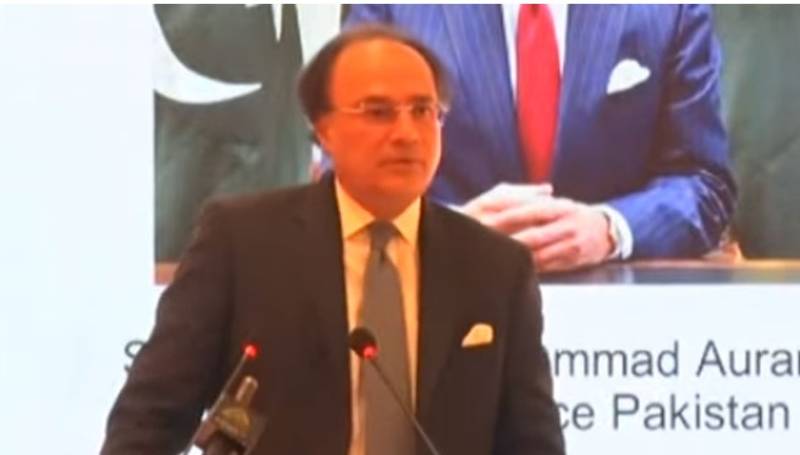

Federal Minister for Finance Senator Muhammad Aurangzeb has said that the another International Monetary Fund (IMF) delegation will reach Pakistan on February 24 to hold negotiations on the Climate Fund, under which Pakistan can over $1 billion funds, reported 24NewsHD TV channel.
Addressing a ceremony organized by Pakistan Retail Business Council in Islamabad on Thursday, Senator Aurangzeb said the country was expected to receive over $1 billion under the Fund, while Fund’s second delegation would arrive in Pakistan in March.
The minister said that everything regarding the IMF loan programme was on track.
He said that the country’s economy should grow in a calculated manner so that it does not enter the boom-and-bust cycles again and move towards sustainable and inclusive growth.
Aurangzeb said that faults would be removed from economy’s DNA through structural reforms.
The minister said that the government had finalized the plan for the rightsizing of the departments. He said the government was mindful of the economic targets it had set. “The country’s economy is moving in the right direction,” he said, adding, “The government is trying to make the privatization process more transparent.”
The minister added that the introduction of reforms had resulted in an increase in tax collection. “We simply cannot afford that people continue to avoid paying taxes,” he added.
Besides that, he went on to say, the government was also taking steps to cut down its expenditures. “The interest rate is continuously on a decline benefitting industrialists and traders.”
Aurangzeb said it was heartening to see that the provincial governments were working on the introduction of agriculture tax.
He said these structural reforms are already underway in areas such as taxation, energy, State-Owned Enterprises (SOEs), and public finance. He expressed satisfaction that the country is heading in the right economic direction with macroeconomic stability achieved.
On the taxation side, the minister mentioned that a real transformation is underway with a focus on utilizing latest technology to bring transparency and check leakages. He emphasized that it is also important to restore trust in the tax authority.
He noted that the disproportionate tax burden on the salaried class is not sustainable, stressing that other sectors, such as retail, wholesale, real estate and agriculture, will have to step up and contribute their fair share in taxes.
On the energy side, Aurangzeb stated that tough measures are being implemented to move towards competitive energy.
Regarding SOEs reforms, he mentioned that the process has already started, and the rightsizing process will be completed by June this year. He also affirmed that the privatization process will be taken forward.
Aurangzeb said country’s retail sector, which contributes a significant 19% to the country’s GDP, is paying a mere 1% in taxes, sparking concerns over the sector’s lack of contribution to the national exchequer.
The minister said, the disproportionate burden of taxes on the manufacturing, services industry, and salaried class is unsustainable. “We need to bring other segments, including agriculture, real estate, retail, and wholesale, into the tax net.” He lauded provincial government for taking measures towards this end by passing bills in their respective assemblies for imposing agricultural taxes.
He said, the government has been engaging with the retail sector, requesting them to formalize their businesses and pay their due share of taxes. For national interest, “we cannot afford to have people taking a free ride anymore,” adding documentation was key to achieving this goal.
He said, there has been Rs9.4 trillion rupees in cash circulation, which needed to be brought into the formal economy, acknowledged that this could not be done overnight however the government was determined to move in the right direction.
Reporter: Waqas Azeem